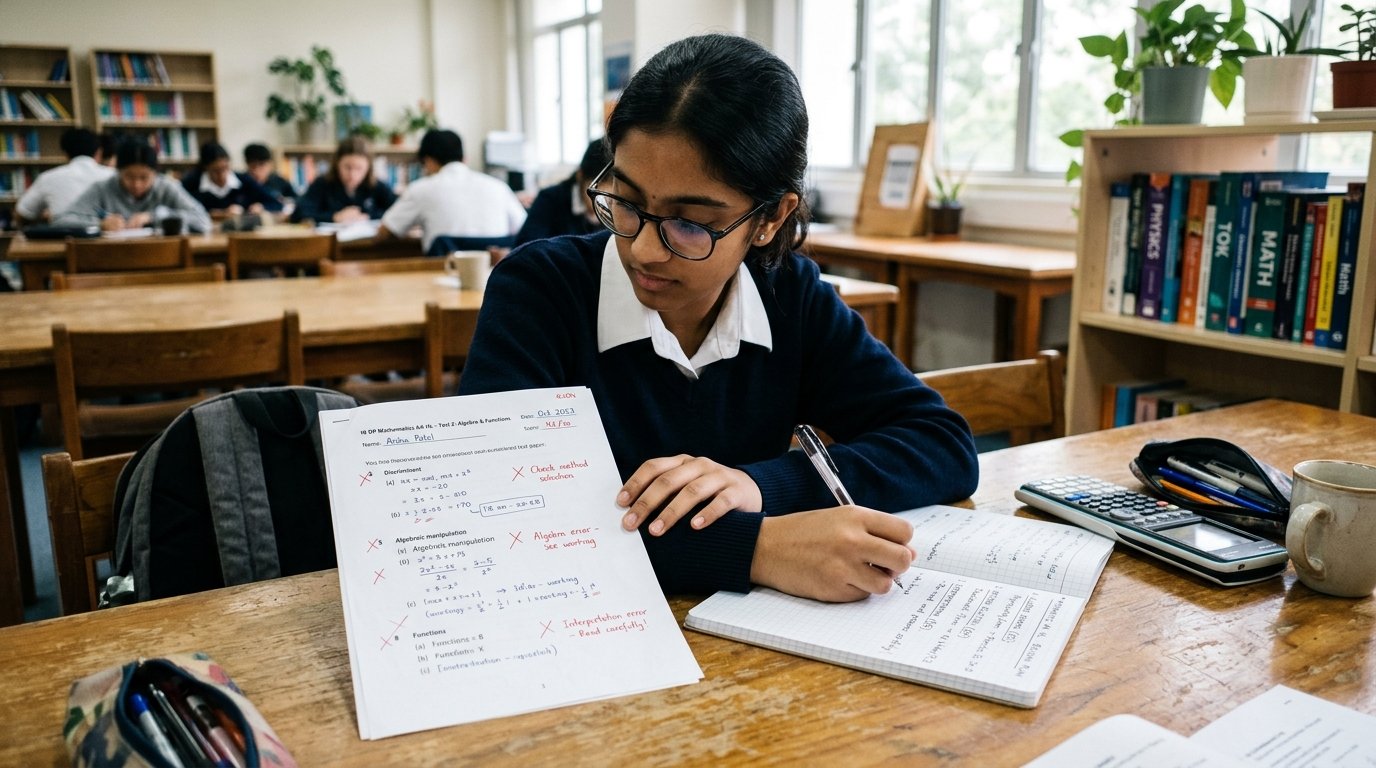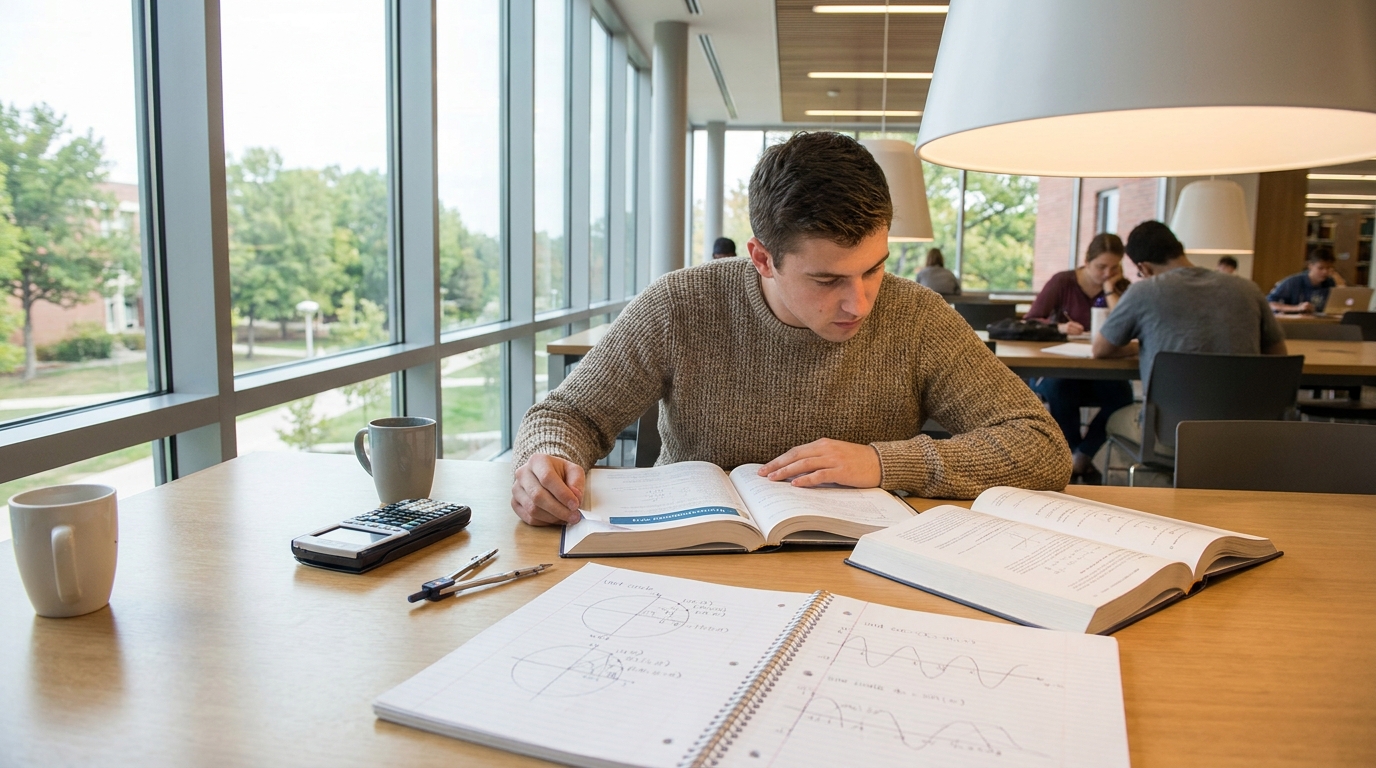
Trigonometry for IB Maths is a fundamental topic that appears frequently in both SL and HL exams. It connects geometry, algebra, and functions, making it essential for solving a wide range of problems.
Whether you’re just starting or looking to improve your performance, mastering trigonometry will significantly boost your confidence, especially in competitive academic environments like Denmark and Switzerland.
Table of Contents
What Is Trigonometry in IB Maths?
Trigonometry studies the relationships between angles and sides of triangles.
According to the International Baccalaureate Organization, IB Maths students must:
- Understand trigonometric ratios
- Work with angles in radians and degrees
- Apply trigonometry in real-world contexts
1. Basic Trigonometric Ratios
The foundation of trigonometry is based on three key ratios:
- Sine (sin)
- Cosine (cos)
- Tangent (tan)
These are used to relate angles to side lengths in right-angled triangles.
Tip:
Remember the relationships clearly and practice applying them in different problems.
2. The Unit Circle
The unit circle is essential for understanding trigonometry in IB Maths.
Key concepts:
- Radius = 1
- Coordinates represent cosine and sine values
- Helps understand angles beyond 90°
Mastering the unit circle makes advanced topics much easier.
3. Trigonometric Graphs
Graphs of sine, cosine, and tangent functions are commonly tested.
Key features:
- Amplitude
- Period
- Phase shift
Understanding these features helps you interpret and sketch graphs quickly.
4. Trigonometric Identities
Identities are equations that are always true.
Common identities:
- sin²x + cos²x = 1
- tan x = sin x / cos x
These are used to simplify expressions and solve equations.
5. Solving Trigonometric Equations
IB Maths exams often include trig equations.
Steps:
- Simplify the equation
- Use identities if needed
- Solve for angles
- Consider all possible solutions
Accuracy is key in these questions.
Why Trigonometry Is Important in IB Maths
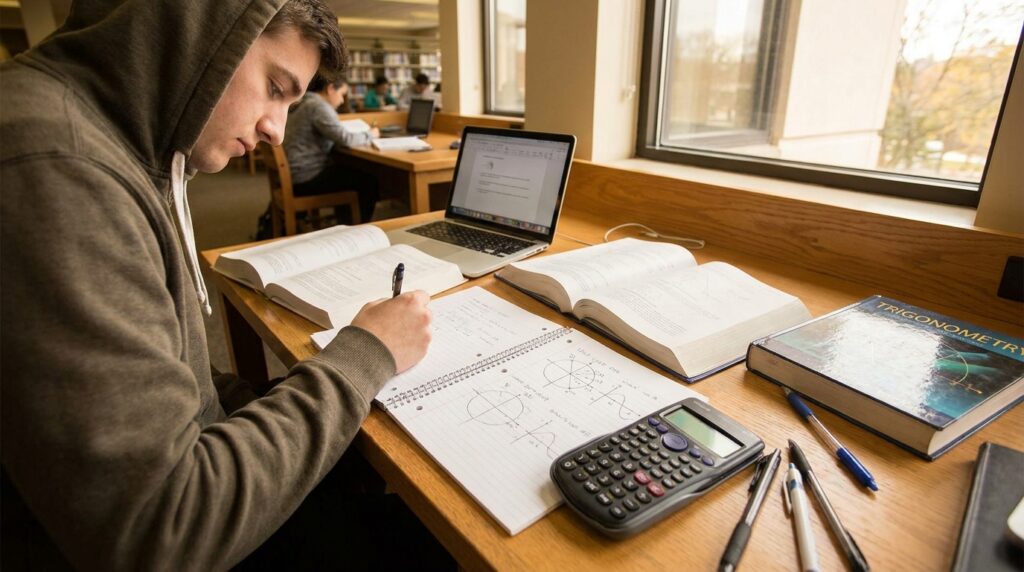
Trigonometry appears in
- Functions
- Calculus
- Geometry
A strong understanding helps in multiple topics across the syllabus.
How to Study Trigonometry Effectively
1. Memorize Key Formulas
Learn identities and ratios thoroughly.
2. Practice Graphs
Understand how trig functions behave visually.
3. Solve Different Problems
Work on:
- Equations
- Identities
- Graph questions
Using Past Papers for Trigonometry
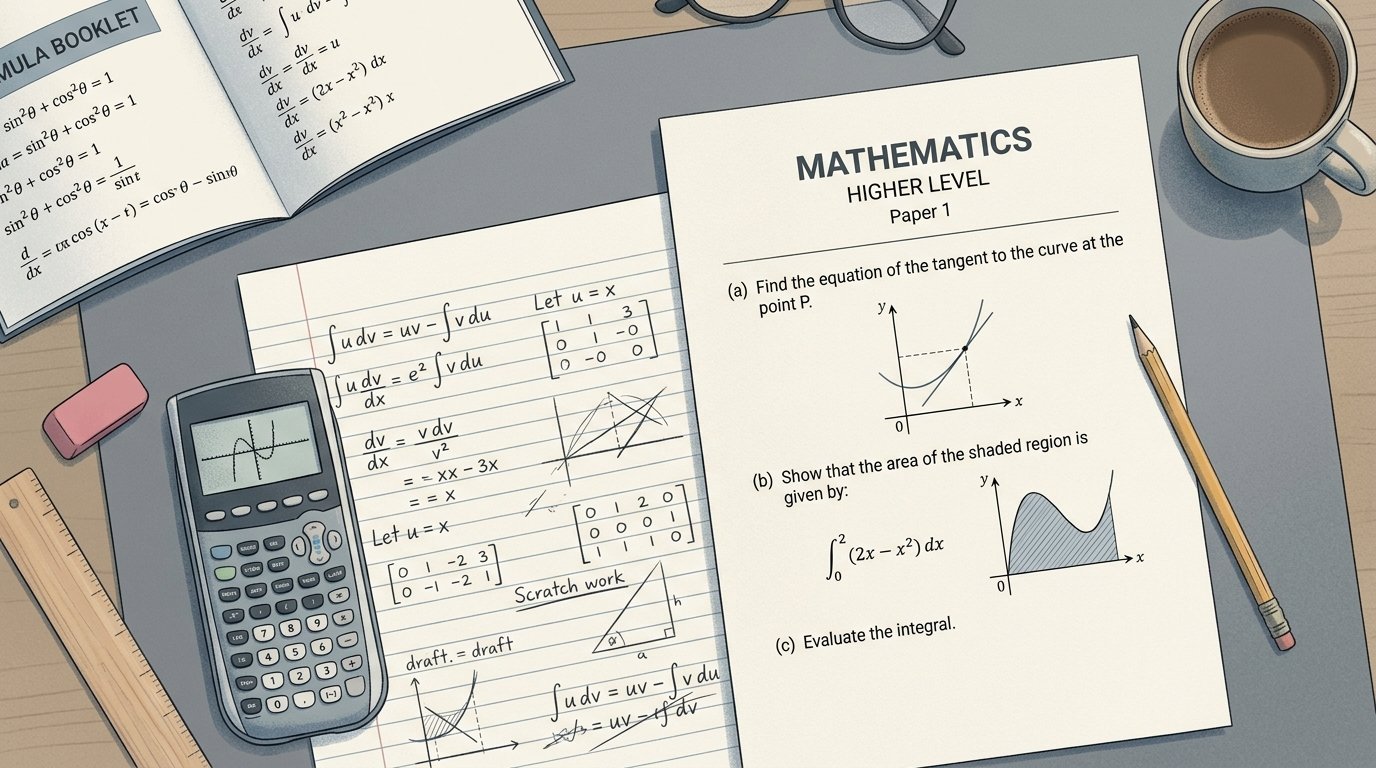
Past papers are essential for improvement.
Focus on:
- Equation solving
- Graph interpretation
- Identity questions
Practice under timed conditions to simulate exams.
Common Mistakes to Avoid
Avoid these common errors:
❌ Mixing up sine, cosine, and tangent
❌ Forgetting to convert radians and degrees
❌ Incorrect use of identities
❌ Missing multiple solutions
Awareness of these mistakes improves accuracy.
Tips to Improve Trigonometry Quickly
Simple strategy:
- Practice regularly
- Focus on weak areas
- Use diagrams
- Review mistakes
Consistency leads to improvement.
Micro FAQs About Trigonometry for IB Math
Is trigonometry difficult in IB Maths?
It can be challenging at first but becomes easier with practice and understanding.
Do I need trigonometry for IB Maths HL?
Yes, trigonometry is important for both SL and HL, with more depth in HL.
How can I improve in trigonometry?
Practice regularly, memorize formulas, and understand graphs.
Final Thoughts
Mastering trigonometry for IB Maths is essential for achieving strong exam results. By understanding key concepts, practicing consistently, and applying exam strategies, you can significantly improve your performance.
If you want structured guidance and expert-level preparation:
👉 Start here:
https://mathzem.com/membership-pricing/