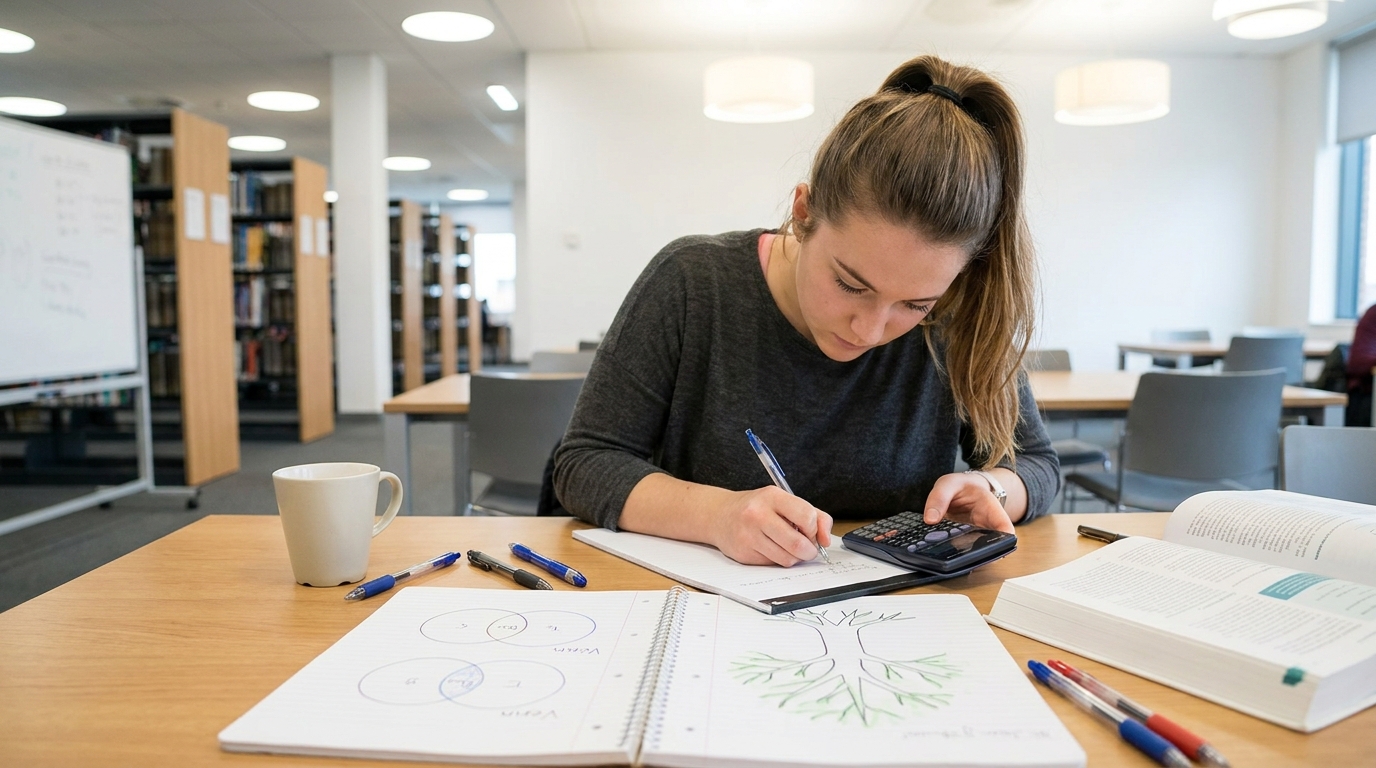
Understanding probability in IB Maths is essential for success in both SL and HL. Probability helps you calculate the likelihood of events and is widely used in real-world applications such as finance, science, and decision-making.
In this guide, we’ll break down key probability concepts, rules, and strategies to help you improve your performance—especially if you’re studying in competitive academic environments like Denmark and Switzerland.
Table of Contents
What Is Probability in IB Maths?
Probability measures how likely an event is to happen.
Values range from:
- 0 → Impossible event
- 1 → Certain event
According to the International Baccalaureate Organization, IB Maths students must:
- Understand probability rules
- Solve probability problems
- Apply probability in real-world contexts
Basic Probability Rules
To master probability in IB Maths, you need to understand key rules.
1. Probability Formula
Probability = (Number of favorable outcomes) / (Total number of outcomes)
2. Complement Rule
P(A’) = 1 – P(A)
This is useful when it’s easier to calculate the opposite event.
3. Independent and Dependent Events
Understanding the difference is crucial.
Independent Events
- One event does not affect the other
- Example: Tossing a coin twice
Dependent Events
- One event affects the outcome of another
- Example: Drawing cards without replacement
4. Combined Probability Rules
Addition Rule
Used when finding the probability of one event OR another.
Multiplication Rule
Used when finding the probability of events happening together.
These rules are commonly tested in IB exams.
5. Tree Diagrams
Tree diagrams help visualize probability problems.
Why they are useful:
- Show all possible outcomes
- Help calculate combined probabilities
- Reduce errors
Practice drawing tree diagrams for complex questions.
6. Venn Diagrams
Venn diagrams are used to represent relationships between events.
Key uses:
- Finding overlapping probabilities
- Understanding unions and intersections
They are especially useful for combined probability questions.
Why Probability Is Important in IB Maths
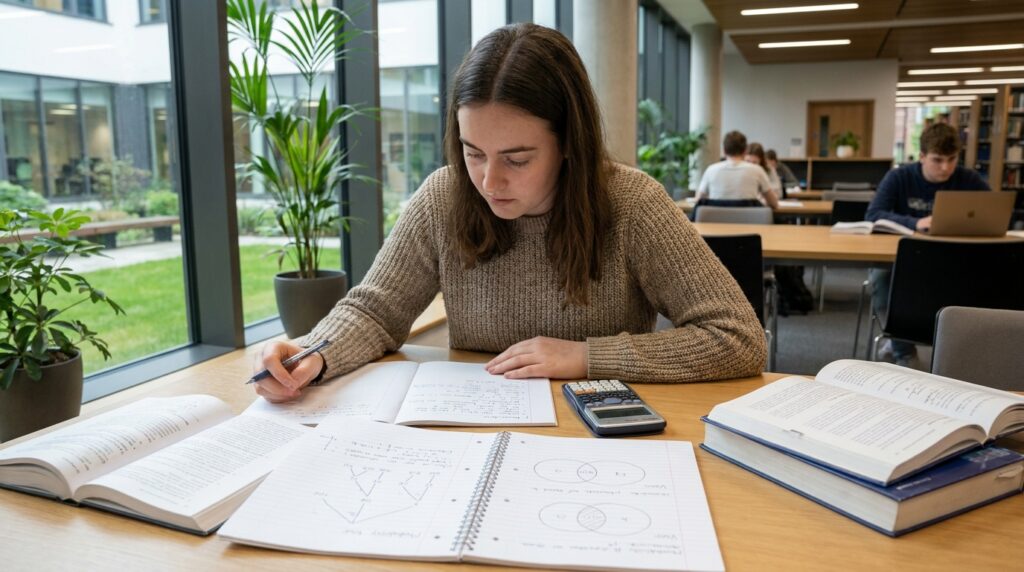
Probability is a key part of statistics and appears in many exam questions.
It is used in:
- Data analysis
- Risk assessment
- Real-world problem-solving
A strong understanding of probability improves your overall performance.
How to Study Probability Effectively
1. Understand the Concepts
Focus on rules and when to apply them.
2. Practice Different Question Types
Solve:
- Basic probability problems
- Tree diagram questions
- Venn diagram questions
3. Check Your Work
Probability errors often come from small mistakes.
Using Past Papers for Probability
Past papers are essential for improving.
Focus on:
- Combined probability questions
- Diagram-based problems
- Real-world applications
Practice under timed conditions to build confidence.
Common Mistakes to Avoid
Avoid these common errors:
- ❌ Confusing independent and dependent events
- ❌ Incorrect use of formulas
- ❌ Misreading questions
- ❌ Calculation errors
Being aware of these mistakes improves accuracy.
Tips to Improve Probability Quickly
Simple strategy:
- Practice regularly
- Focus on weak areas
- Review mistakes
- Use diagrams
Consistency leads to improvement.
Micro FAQs About Probability in IB Maths
Is probability difficult in IB Maths?
It can be tricky at first but becomes easier with practice and understanding.
Do probability questions appear in IB Maths exams?
Yes, they are a key part of the syllabus and frequently tested.
How can I improve in probability?
Practice regularly, use diagrams, and understand the rules clearly.
Final Thoughts
Mastering probability in IB Maths is essential for improving your exam performance. By understanding key rules, practicing consistently, and applying exam strategies, you can significantly boost your score.
If you want structured guidance and expert-level preparation:
Start here:
https://mathzem.com/membership-pricing/