Introduction
After solving an IB Math question, most students do one thing.
They compare their final answer with the mark scheme.
If the answer matches, they move on.
If it does not, they read the solution and try another question.
While this approach is common, it misses one of the most important parts of learning mathematics.
IB Math exams are not marked solely on the final answer. Examiners also award marks for mathematical methods, logical reasoning, correct notation, and clear working.
This means two students can arrive at the same final answer but receive different marks.
Likewise, a student with an incorrect final answer may still earn valuable method marks by demonstrating the correct approach.
Understanding how your work is assessed is one of the most effective ways to improve your IB Math performance.
Table of Contents
Why Final Answers Tell Only Part of the Story
A final answer shows the outcome of a question.
It does not explain the process used to reach that answer.
When students only compare answers, they cannot always identify the following:
- Which step caused the mistake
- Whether the correct mathematical method was used
- Where method marks were lost
- Whether notation followed IB expectations
- Which skills need further practice
As a result, many students continue repeating the same mistakes.
How IB Math Exams Award Marks
IB Mathematics assessments reward mathematical thinking as well as accuracy.
Examiners commonly award marks for:
- Choosing an appropriate method
- Showing logical working
- Using correct mathematical notation
- Applying formulas correctly
- Reaching accurate conclusions
This marking approach encourages students to communicate their mathematical reasoning clearly.
It also means that incomplete working can reduce marks, even when the final answer is correct.
A Simple Example
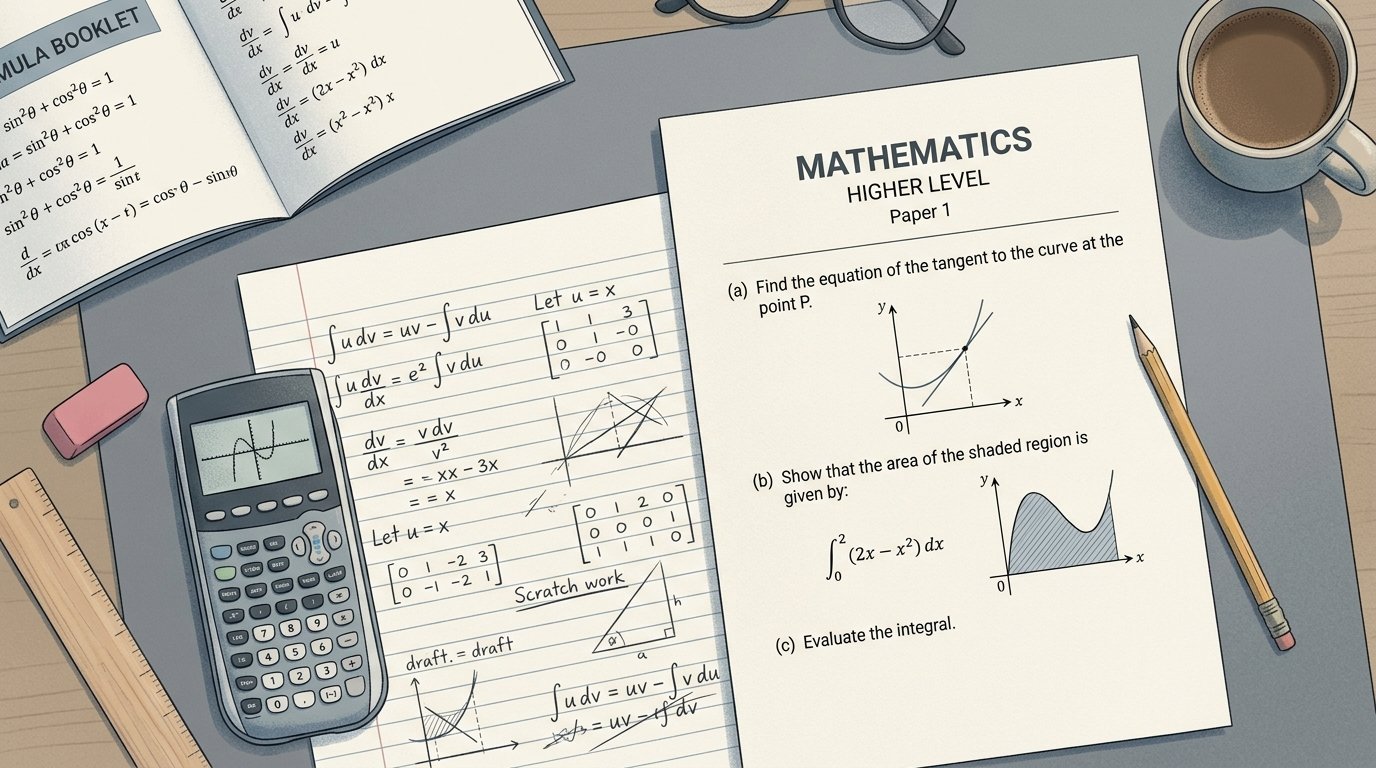
Imagine two students solving the same calculus question.
Student A
- Writes only the final answer.
- Does not show any intermediate steps.
Student B
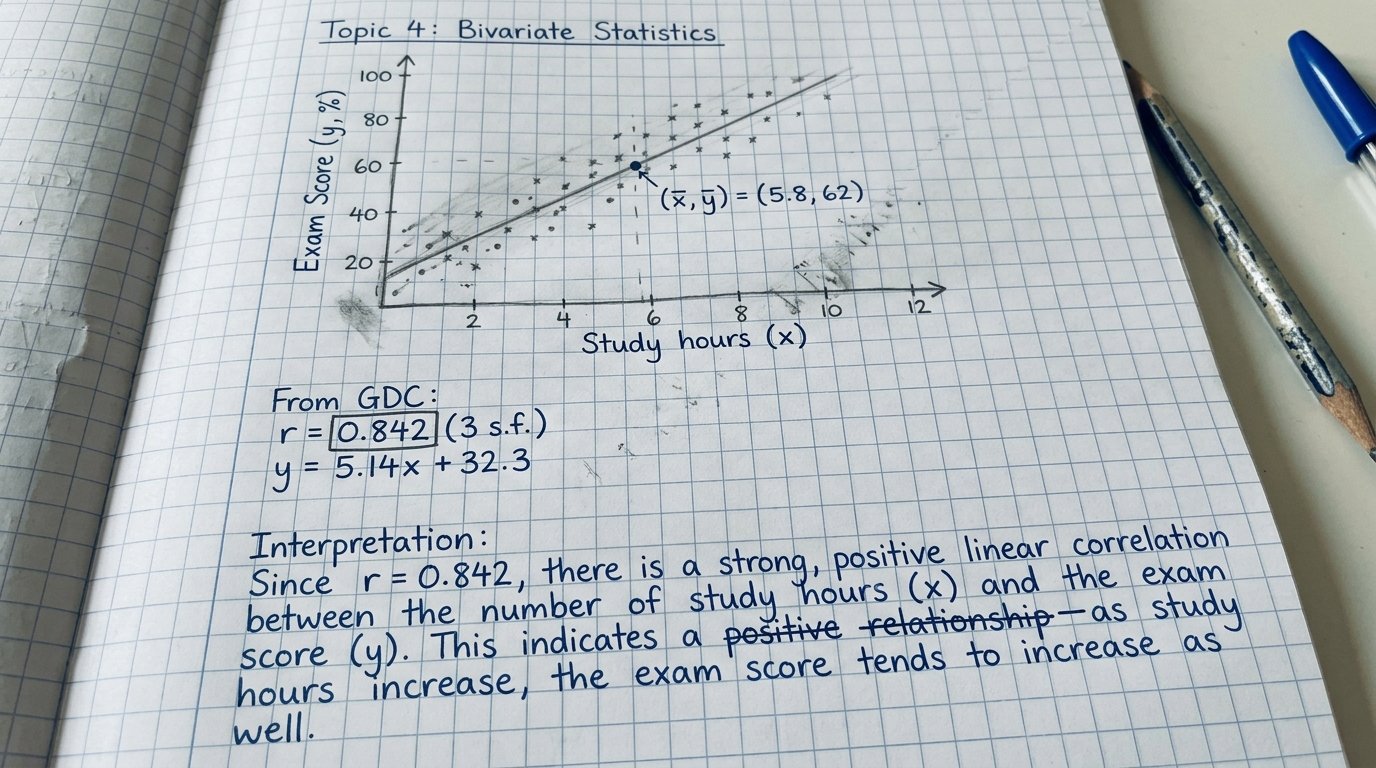
- Shows each stage of differentiation.
- Uses correct notation.
- Makes a small arithmetic error in the final line.
Although Student B reaches the wrong final answer, they may still receive several method marks because the mathematical process is correct.
Student A, despite having the correct answer, may lose marks if the question required working to be shown.
This demonstrates why analysing your working is just as important as checking your answer.
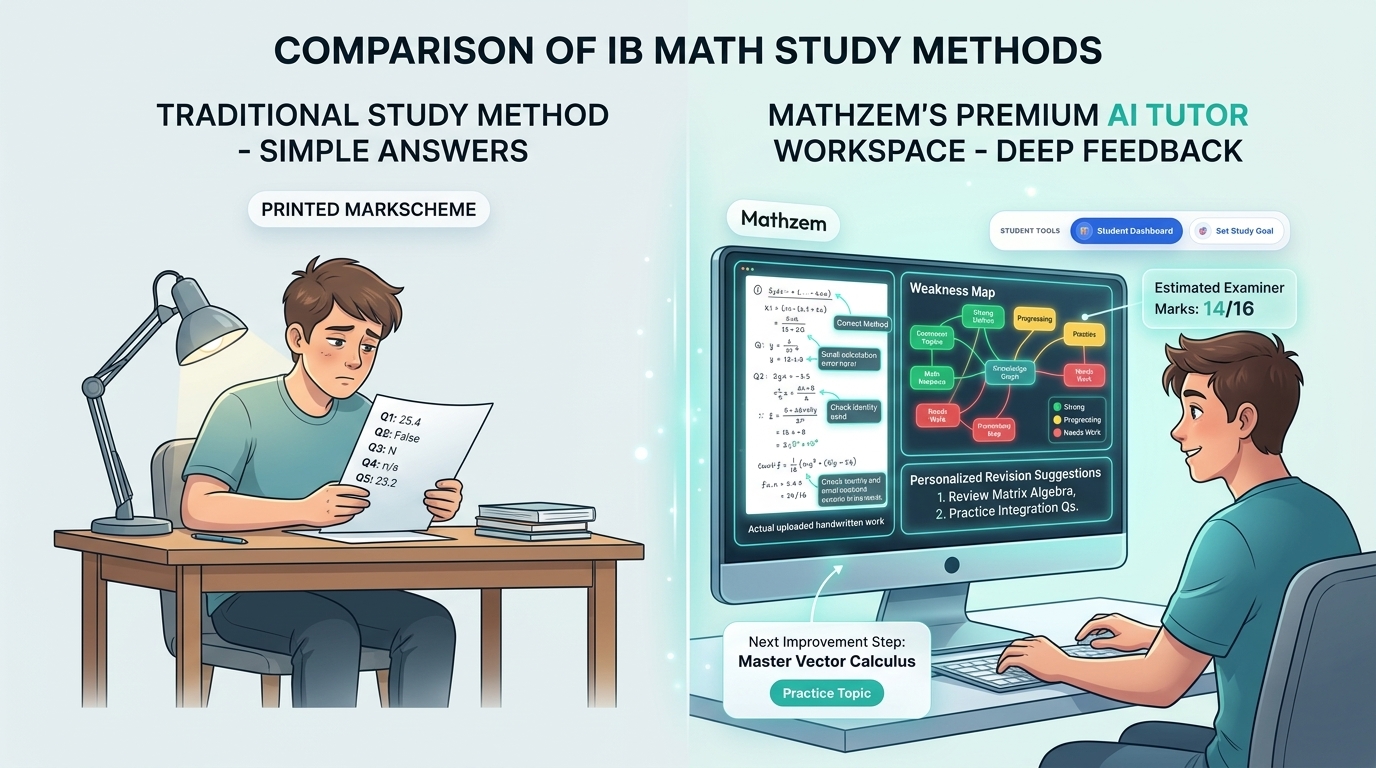
The Limitations of Traditional Answer Checking
Most answer keys and markschemes are designed to explain the expected solution.
They are not personalised.
They cannot explain:
- Why you lost marks
- Whether your reasoning was correct
- Which mistakes occur repeatedly
- Which topic needs additional revision
Students are left to interpret this information themselves, which is not always easy.
Why Uploading Your Working Creates Better Learning
Uploading your complete solution provides a much richer picture of your understanding.
Instead of asking:
“Did I get the answer right?”
Students begin asking the following:
- Was my method correct?
- Which step caused the mistake?
- Did I lose accuracy or method marks?
- What should I practice next?
These questions lead to deeper learning.
How Mathzem Reviews Your Complete Solution
Mathzem is designed to analyse the full problem solving process.
After students practise IB style questions, they upload their complete working.
The platform then provides AI examiner style feedback that includes:
- Estimated marks
- Method analysis
- Mistake identification
- Missing steps
- Topic specific feedback
- Next step recommendations
Rather than simply confirming whether an answer is correct, the system helps students understand how an examiner may evaluate their work.
Understanding Where Marks Are Lost
Many students believe they have weak calculus or probability skills.
However, detailed feedback often reveals a different picture.
The real issue may be the following:
- Algebra simplification
- Incorrect notation
- Calculator mistakes
- Missing reasoning
- Careless arithmetic errors
Identifying the true cause of lost marks allows revision to become much more focused.
How the Weakness Map Supports Smarter Revision
Each uploaded solution contributes to the student’s Weakness Map.
Instead of relying on guesswork, students can identify the following:
- Strong topics
- Developing topics
- Areas where marks are consistently lost
- Skills requiring immediate attention
This helps students spend more time on topics that will have the greatest impact on future performance.
The Mistake Journal Keeps Learning Moving Forward
Every uploaded solution also contributes to the Mistake Journal.
Students can identify recurring issues such as the following:
- Algebra mistakes
- Missing method steps
- Incorrect notation
- Probability misconceptions
- Calculator errors
Over time, patterns become clear.
Instead of making the same mistakes repeatedly, students can address them systematically.
From Every Question to a Personal Revision Plan
One practice question should lead to more than one answer.
It should also help students decide:
- Which topic to revise next
- Which mistakes require attention
- Which skills are improving
- Which question types need additional practice
Mathzem combines AI examiner feedback, the Weakness Map, and the Mistake Journal to help students create a personalised revision plan based on their own performance.
The Practice → Upload → Review → Improve Workflow
Effective revision follows a continuous cycle.
Practise
Complete realistic IB-style questions.
Upload
Submit your full mathematical working.
Review
Study AI examiner feedback and mistake analysis.
Improve
Focus revision on the areas identified by your performance.
Following this cycle helps ensure that every question contributes to long term improvement.
Conclusion
Checking the final answer is an important part of revision, but it should not be the final step.
The greatest learning opportunities come from understanding how a solution was produced, where marks were lost, and what should be improved next.
Uploading complete working allows students to receive richer feedback, identify recurring mistakes, and build more effective revision plans.
By combining practice questions with AI examiner feedback, Weakness Maps, Mistake Journals, and personalised recommendations, Mathzem helps students turn every question into meaningful progress toward stronger IB Math performance.
Start Improving With Mathzem
Find your strongest and weakest IB Math topics
Practise IB-style questions and upload your working
Receive AI examiner-style feedback and personalised revision guidance
FAQ About Uploading Your Working IB Math
Why should I upload my IB Math working?
Uploading your working allows your complete mathematical process to be reviewed, helping identify mistakes, lost method marks, and areas for improvement.
Do IB examiners mark working as well as answers?
Yes. IB Mathematics assessments award marks for correct methods, reasoning, notation, and mathematical communication, not only the final answer.
Can I still receive marks if my final answer is wrong?
In many cases, yes. If your mathematical method is correct, you may receive method marks even if an arithmetic mistake leads to an incorrect final answer.
How does Mathzem analyse my uploaded work?
Mathzem provides AI examiner-style feedback, estimated marks, mistake analysis, topic insights, and personalised recommendations based on your complete solution.
How does uploading my working improve revision?
It helps identify recurring mistakes, updates your Weakness Map, contributes to your Mistake Journal, and guides your personalised revision plan, making every practice session more effective.