IB Maths past papers are one of the most effective revision tools available. They help students understand exam structure, improve time management, identify weak areas, and build confidence before exam day. The key is not simply completing papers but reviewing mistakes and learning from them. Students who regularly practice with past papers often perform significantly better than those who rely only on notes and textbooks.
Table of Contents
Why Past Papers Matter in IB Maths
Many students spend months studying theory but still struggle during exams. The reason is simple: understanding mathematics and applying mathematics under exam conditions are two different skills.
Past papers bridge this gap.
They help you:
- Understand IB question styles
- Practice exam timing
- Improve problem-solving speed
- Recognize recurring patterns
- Build confidence under pressure
At Mathzem, one of the most common differences we see between high-scoring students and average performers is their use of past papers. Top students treat past papers as a learning tool, not just a test.
When Should You Start Using Past Papers?
Three to Six Months Before Exams
This is the ideal time to begin.
Start by focusing on individual topics before attempting complete papers.
For example:
- Functions
- Calculus
- Statistics
- Probability
- Trigonometry
This approach strengthens your understanding before introducing time pressure.
One to Two Months Before Exams
Begin working through full papers under timed conditions.
At this stage, your goal shifts from learning content to improving exam performance.
The Biggest Mistake Students Make
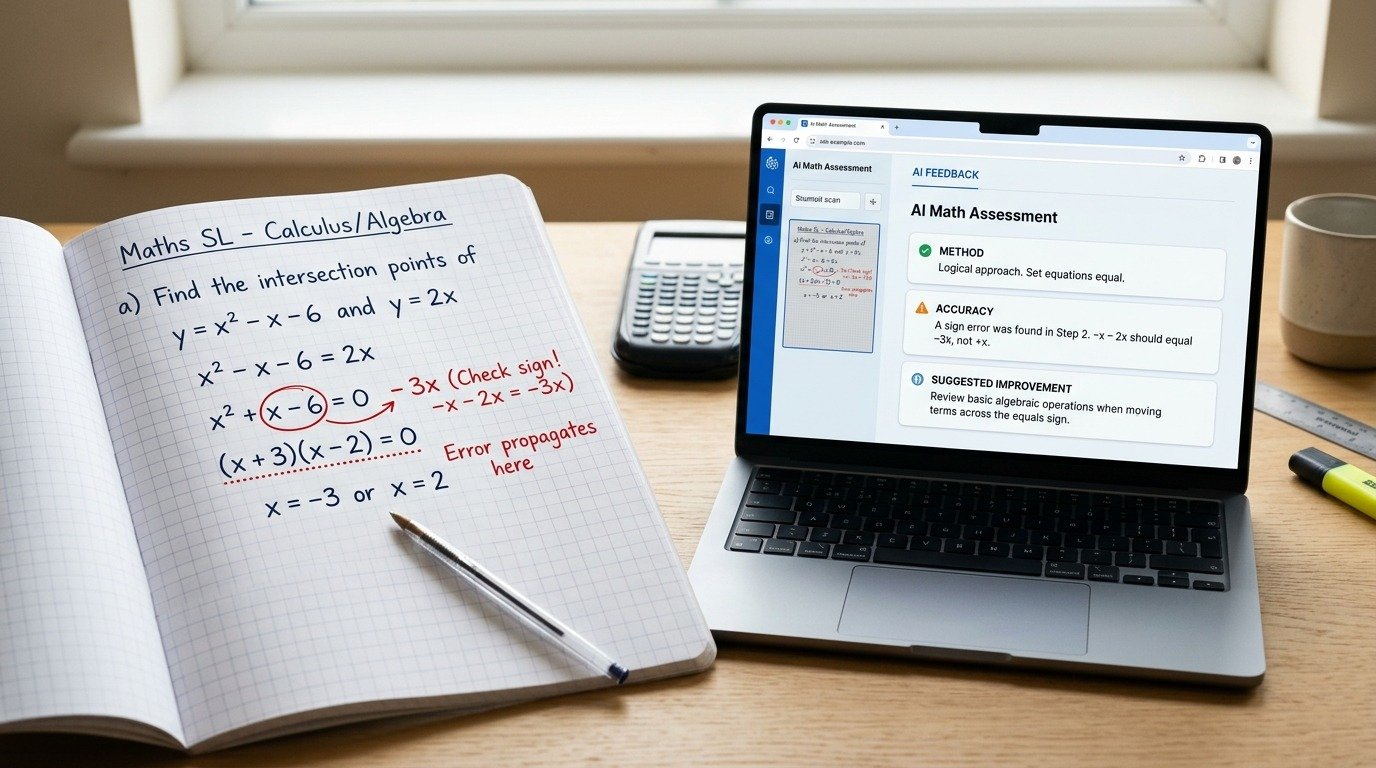
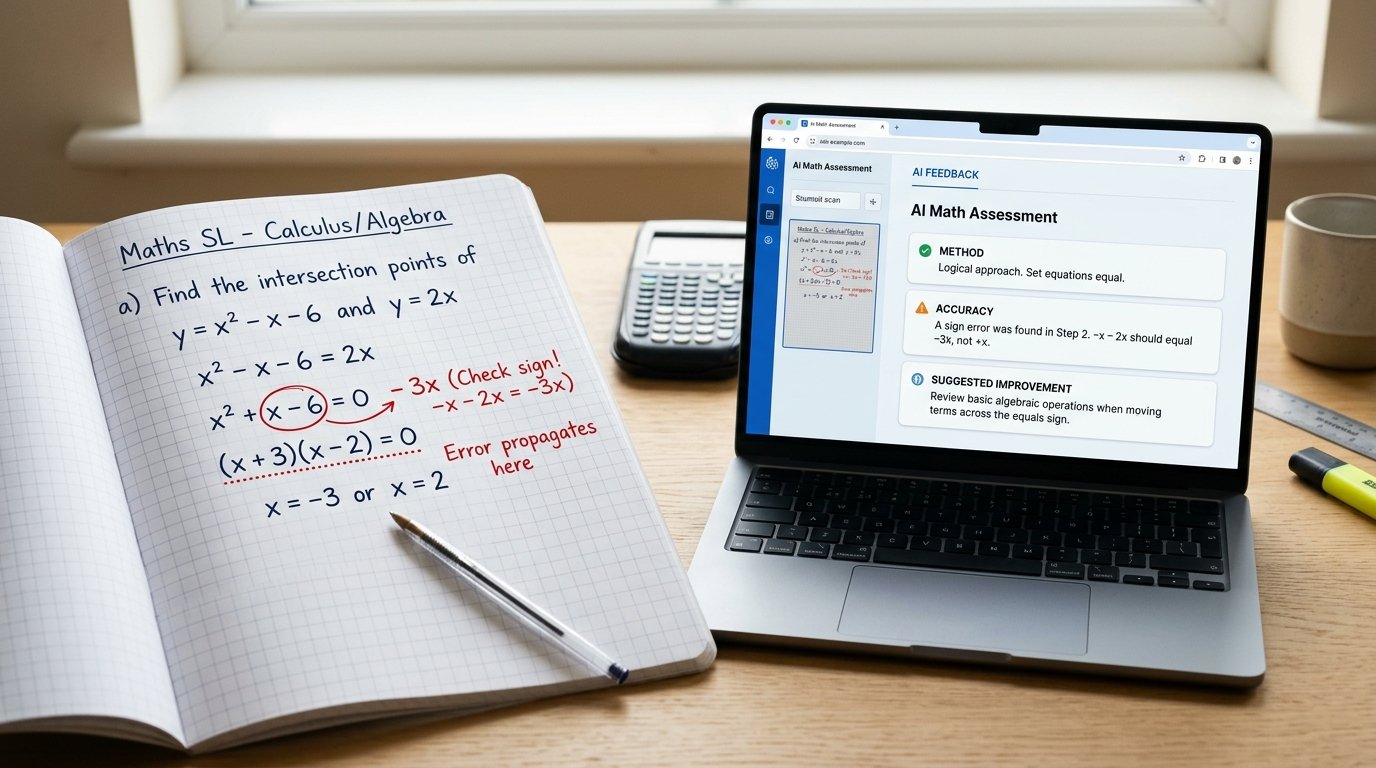
Many students complete a paper, check the answers, record their score, and move on.
This wastes valuable learning opportunities.
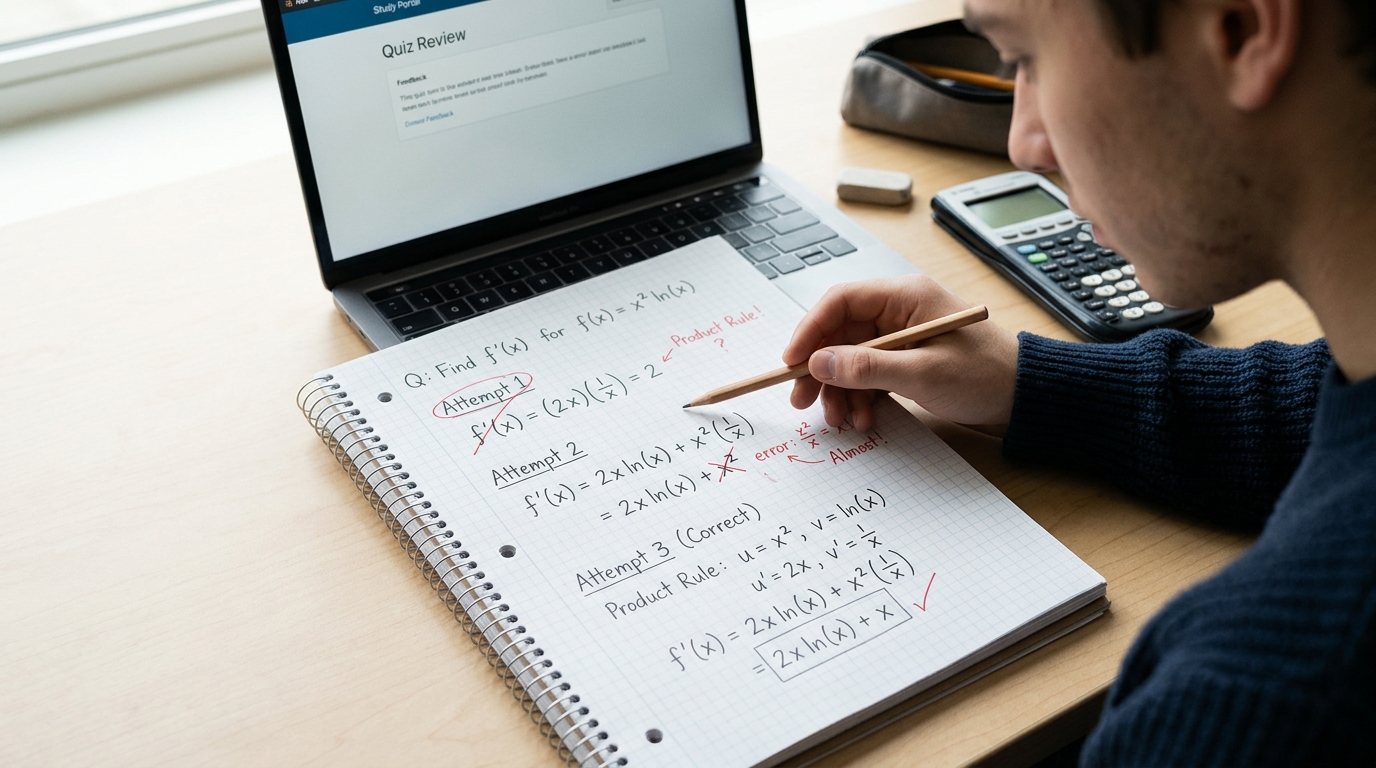
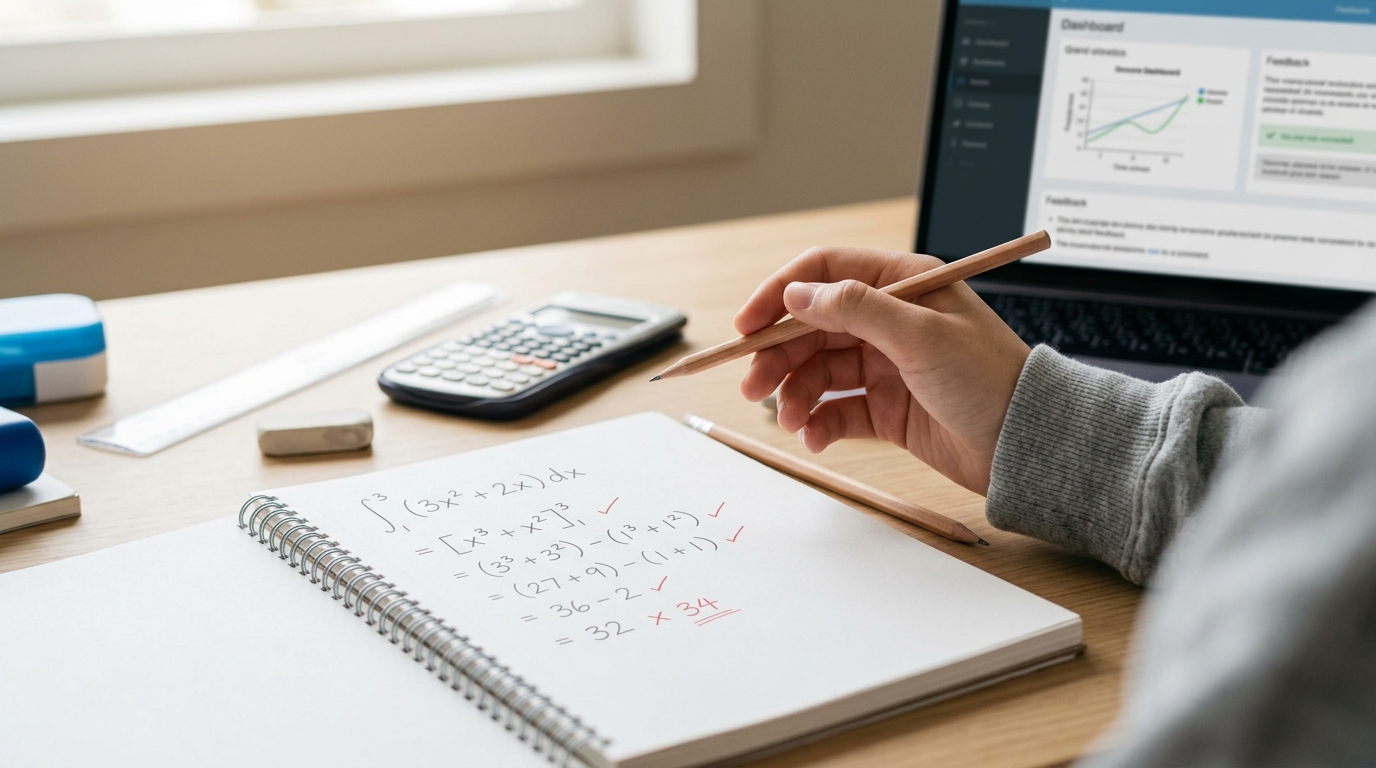
The real value comes from analyzing mistakes.
After every paper, ask:
- Why did I lose marks?
- Did I misunderstand the concept?
- Was it a calculation error?
- Did I misread the question?
- Did I run out of time?
This reflection process leads to rapid improvement.
Create an Error Log
An error log is one of the most powerful revision tools available.
For every mistake, record:
- Topic
- Question type
- Cause of error
- Correct solution
- Key takeaway
Over time, patterns begin to emerge.
You may discover that:
- Most mistakes occur in calculus
- You rush algebra simplification
- Probability questions require more practice
Knowing your weaknesses allows you to revise more efficiently.
Identify Your Weakest Topics First
Before diving into dozens of past papers, it helps to know where you currently stand.
Use the Math Skill Scanner to identify strengths and weaknesses across key IB Maths topics. This allows you to focus your revision where it matters most.
How Many Past Papers Should You Complete?
Quality matters more than quantity.
A student who carefully reviews five papers often learns more than someone who rushes through twenty.
A realistic target is
SL Students
- 6 to10 full papers
HL Students
- 10 to15 full papers
Remember to review every paper thoroughly.
How to Use Past Papers for AA Students
Students studying analysis and approaches should focus on
- Algebraic manipulation
- Functions
- Calculus
- Proof techniques
- Non-calculator accuracy
AA papers often reward strong mathematical reasoning and methodical working.
How to Use Past Papers for AI Students
Applications and interpretation students should focus on:
- Statistics
- Probability
- Mathematical modeling
- Technology use
- Data interpretation
AI students should become highly efficient with graphing calculator functions and statistical tools.
Simulate Real Exam Conditions
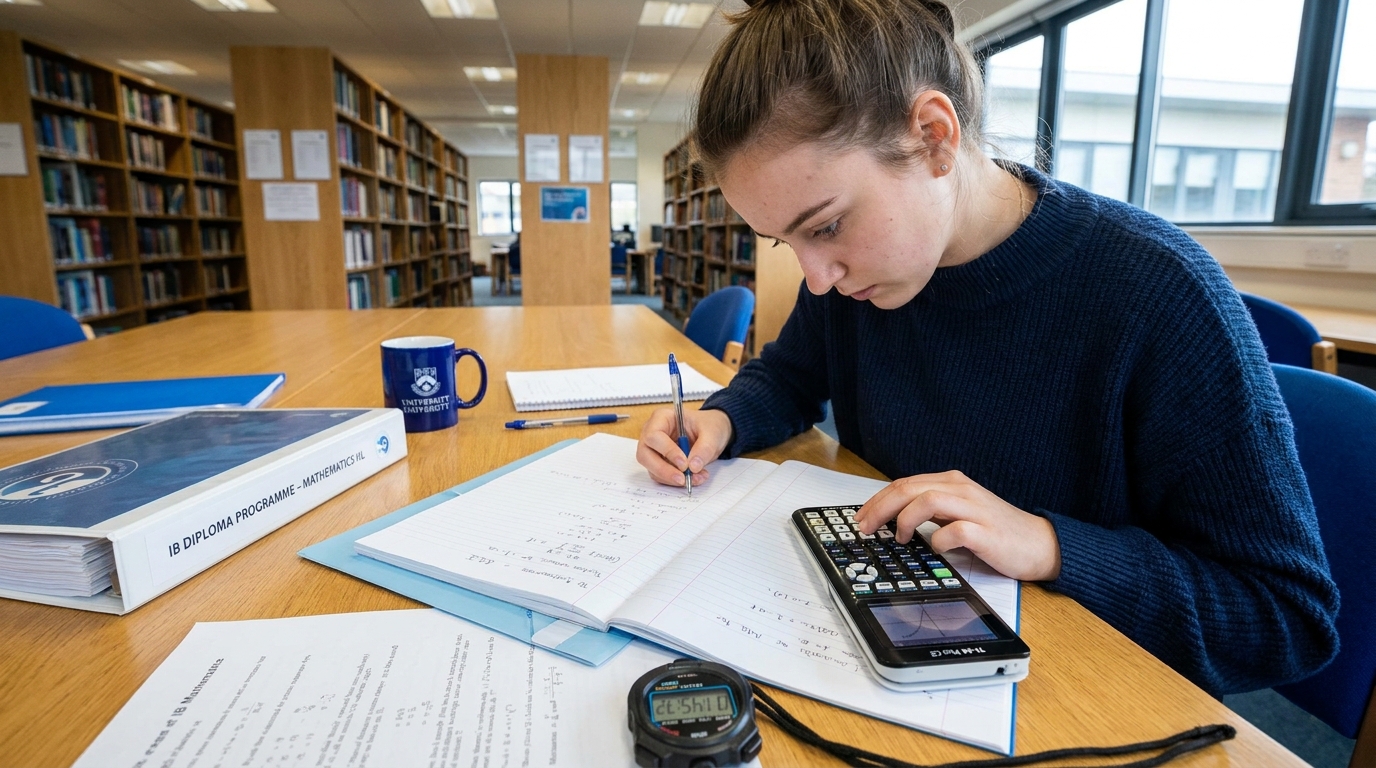
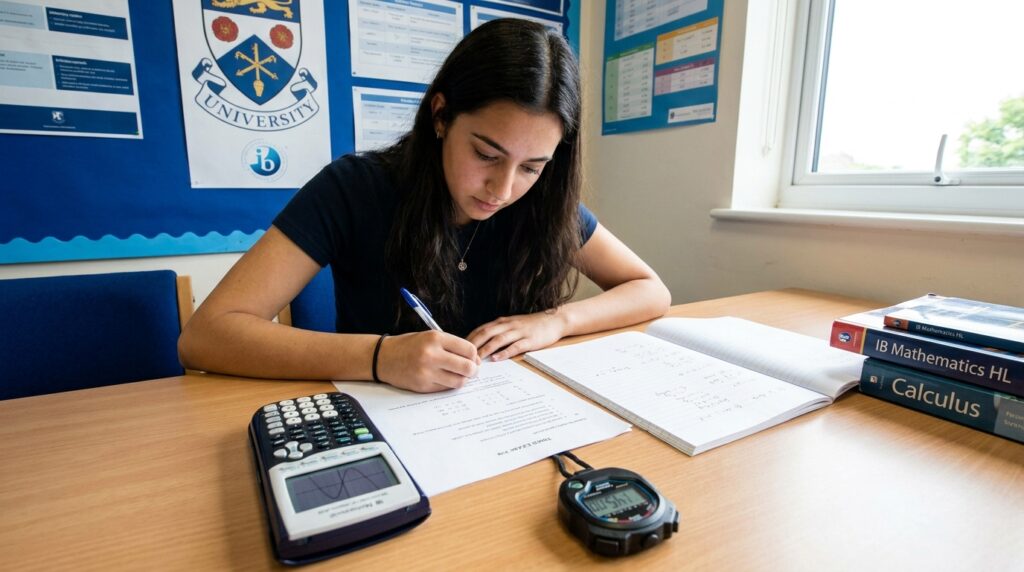
Many students practice in a relaxed environment and are surprised by exam pressure.
To prepare effectively:
- Use a quiet room
- Set a timer
- Avoid interruptions
- Follow official time limits
- Use approved calculators only
Exam conditions help develop stamina and concentration.
Combine Past Papers with Targeted Practice
Past papers show you where problems exist.
Targeted practice helps you fix them.
Strengthen Weak Areas with Topic Practice
After identifying challenging topics from your past paper results, use IB Practice Questions to focus on specific areas such as calculus, functions, probability, and statistics.
Combining targeted practice with past papers is one of the fastest ways to improve.
Common Past Paper Mistakes
Focusing Only on Scores
Your score matters less than what you learn.
Looking at Solutions Too Early
Attempt every question honestly before checking answers.
Ignoring Timing Issues
Many students know the content but struggle to finish on time.
Practicing Without Reflection
Mistakes become valuable only when you understand why they happened.
A Four-Week Past Paper Strategy
Week 1
Complete one paper and build an error log.
Week 2
Review weak topics and complete a second paper.
Week 3
Increase timed practice and improve exam technique.
Week 4
Focus on speed, accuracy, and confidence.
This approach balances learning and performance improvement.
Frequently Asked Questions About IB Maths Past Papers
Are past papers enough to prepare for IB Maths?
No. Past papers should be combined with concept review and targeted practice.
How many times should I redo a past paper?
Review difficult questions multiple times until the method becomes familiar.
Should I complete papers in order?
Not necessarily. Focus on papers that align with your syllabus and revision stage.
Final Thoughts
IB Maths past papers remain one of the most effective tools for exam preparation. They reveal weaknesses, improve confidence, and help students become familiar with the demands of the exam.
The most successful students do not simply complete past papers; they analyze them, learn from mistakes, and strengthen weak areas systematically.
If you want to maximize your revision efficiency, start by identifying your strengths with the Math Skill Scanner and reinforce challenging topics through IB Practice Questions.
Small improvements made consistently can lead to significant gains on exam day.
Author Bio
Mathzem helps IB Mathematics students succeed in AA and AI at both SL and HL levels through expert guidance, structured revision strategies, and targeted practice resources designed to improve confidence and performance.