Introduction
One of the biggest challenges IB Math student needs a weakness map to face is deciding what to revise next.
Many students create revision timetables that give equal time to every topic. Others spend extra time revising topics they enjoy while avoiding the ones they find difficult.
Although these approaches seem sensible, they often lead to inefficient revision.
The most effective revision plans are based on evidence rather than guesswork.
That evidence comes from understanding your strengths, recognising your weaknesses, and identifying the topics where you consistently lose marks.
This is exactly what a weakness map is designed to do.
Instead of asking, “What should I study today?” students can ask, “Which topic will improve my score the most if I revise it now?”
Table of Contents
Why Students Often Revise the Wrong Topics
Many students choose revision topics based on:
- Confidence
- Recent classroom lessons
- Upcoming homework
- Favourite chapters
- What their friends are revising
Unfortunately, these choices do not always reflect exam performance.
A student may feel confident in calculus but repeatedly lose marks because of algebra mistakes.
Another student may avoid probability because it seems difficult, even though their actual performance is improving.
Without objective information, it is difficult to know where revision time will have the greatest impact.
What Is a Weakness Map?
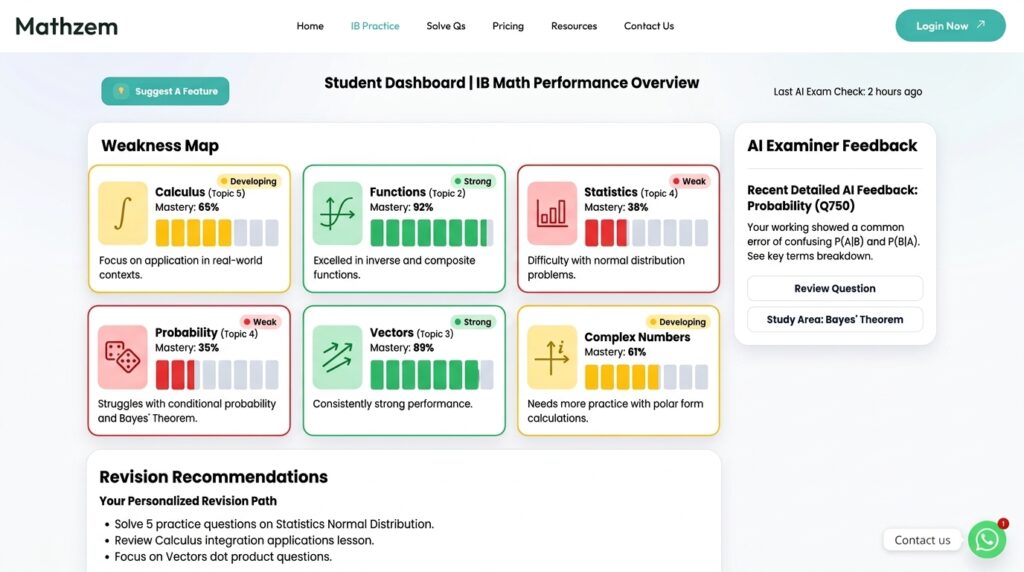
A Weakness Map is a visual summary of your performance across different IB Math topics.
Rather than simply recording scores, it highlights where you regularly lose marks and where you perform consistently well.
As students complete more practice questions, the map becomes a personalised guide for future revision.
Instead of treating every topic equally, students can focus on the areas that need the most attention.
Why a Weakness Map Is More Useful Than Overall Scores
Imagine two students both score 70% on a practice test.
At first glance, they appear to have the same level of understanding.
However, a closer look reveals something different.
Student A
- Strong in Calculus
- Weak in Probability
- Consistent algebra mistakes
Student B
- Strong in Probability
- Weak in Functions
- Frequently loses method marks
Although their overall scores are identical, their revision needs are completely different.
A Weakness Map helps identify these differences.
How Weak Areas Affect Final Grades
Small weaknesses often become larger problems during exams.
Students who repeatedly lose one or two marks on every question may lose dozens of marks across an entire examination.
Common weak areas include:
- Algebra simplification
- Functions
- Calculus
- Statistics
- Probability
- Mathematical notation
- Calculator use
Identifying these weaknesses early allows students to improve before final exams.
How Mathzem Builds Your Weakness Map
Mathzem creates a personalised Weakness Map through continuous practice.
The process is simple.
Step 1: Practise IB Style Questions
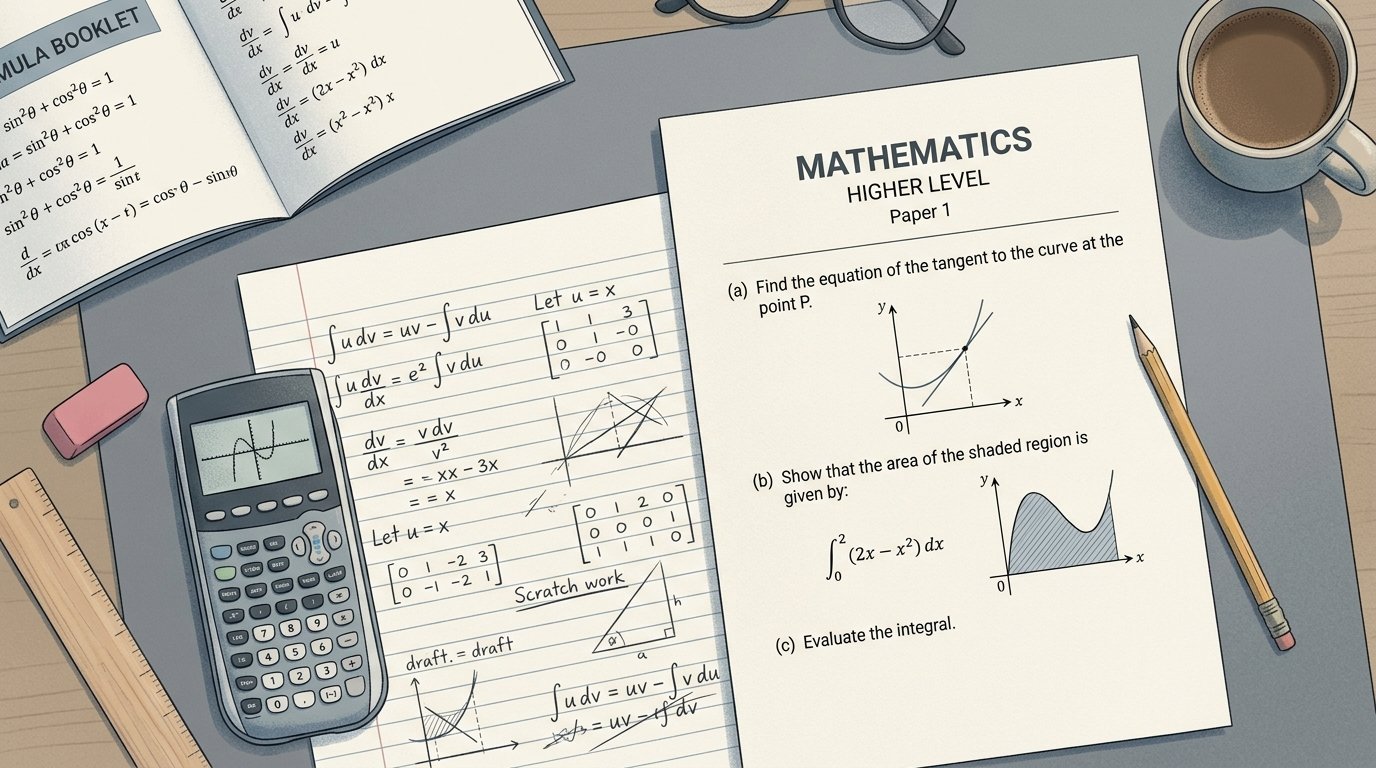
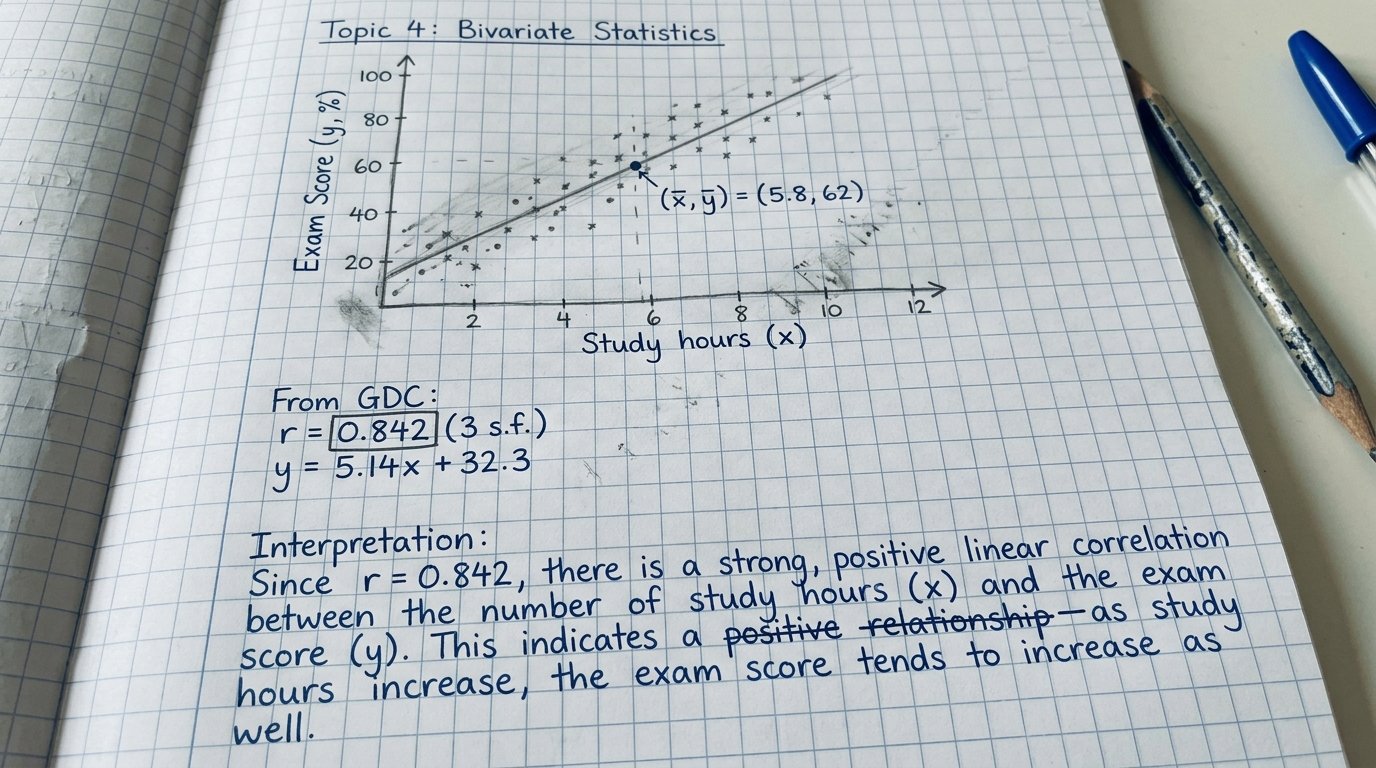
Students attempt questions that reflect the style and structure of IB examinations.
Every completed question provides useful information about current understanding.
Step 2: Upload Your Working
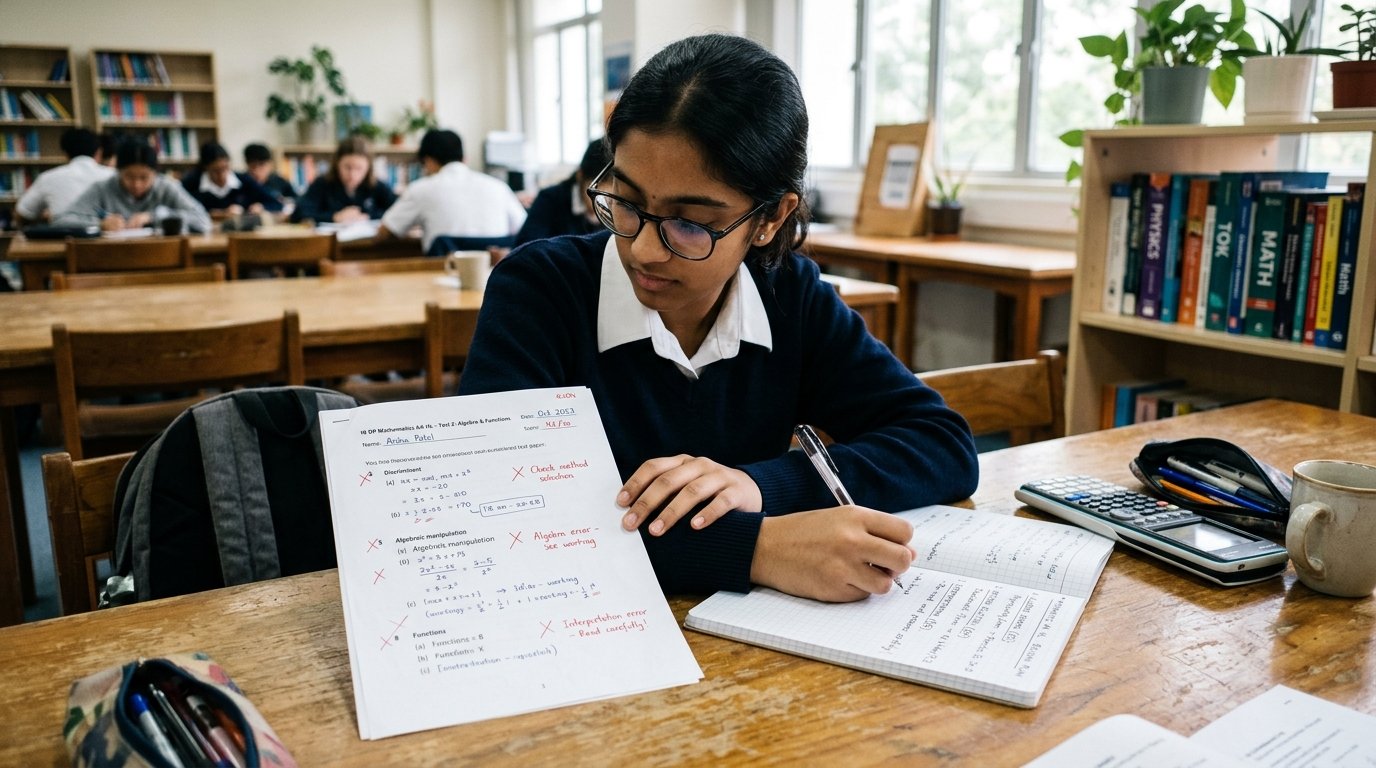
Instead of checking only the final answer, students upload their complete mathematical working.
This allows the platform to review the entire solution rather than only the result.
Step 3: Receive AI Examiner Style Feedback
Mathzem analyses the uploaded solution and provides feedback including:
- Estimated marks
- Method analysis
- Mistake identification
- Topic performance
- Revision suggestions
Each completed question contributes new information to the student’s Weakness Map.
How the Weakness Map Changes Over Time
A Weakness Map is not static.
It evolves as students continue practising.
For example:
Week One
- Calculus identified as a weak topic.
Week Three
- Calculus improves after targeted revision.
Week Five
- Probability becomes the main revision priority.
This helps students adjust their revision plans based on current performance rather than outdated assumptions.
Strong Topics Matter Too
A good revision plan is not only about identifying weaknesses.
Students should also recognise their strongest topics.
Knowing which areas are consistently performing well allows students to:
- Maintain confidence
- Spend less revision time on mastered topics
- Focus more attention on weaker areas
This creates a more balanced study plan.
Combining the Weakness Map With the Mistake Journal
The Weakness Map shows where marks are being lost.
The Mistake Journal explains why.
For example, a Weakness Map may highlight Calculus as a weak topic.
The Mistake Journal may reveal the underlying reason:
- Algebra simplification errors
- Incorrect differentiation rules
- Missing working
- Notation mistakes
Together, these tools help students understand both the topic and the specific skill requiring improvement.
From Weakness Map to Personal Revision Plan
Once weak topics have been identified, revision becomes much easier.
Instead of randomly selecting practice questions, students can focus on:
- Topics with the lowest performance
- Frequently repeated mistakes
- Skills that are improving
- Areas requiring additional practice
This creates a revision plan based on evidence rather than guesswork.
Why This Approach Supports Better Learning
Students often believe that completing more questions automatically leads to higher marks.
In reality, improvement comes from learning something useful after every question.
By combining:
- Practice questions
- AI examiner feedback
- Weakness Maps
- Mistake Journals
- Personalised revision recommendations
students gain a much clearer understanding of how to improve.
The Practice → Upload → Review → Improve Workflow
Mathzem is built around a continuous learning cycle.
Practise
Attempt IB-style questions.
Upload
Submit your complete mathematical working.
Review
Analyse AI examiner-style feedback.
Improve
Focus revision on the weakest topics identified by your performance.
Repeating this process helps students make steady progress throughout the IB course.
Conclusion
Knowing your weakest topics is one of the most effective ways to improve in IB Math.
Instead of relying on assumptions or revising every topic equally, students benefit from using real performance data to guide their revision.
A Weakness Map provides that information by highlighting where marks are consistently lost and helping students prioritise their study time.
Combined with AI examiner-style feedback, the Mistake Journal, and personalised revision recommendations, Mathzem helps students turn every practice session into a smarter revision strategy.
Start Improving With Mathzem
Discover your strongest and weakest IB Math topics
Practise IB-style questions and upload your working
Receive AI examiner-style feedback, track your Weakness Map, and build a personalised revision plan
FAQ About IB Math Student Needs a Weakness Map
What is a Weakness Map in IB Math?
A Weakness Map is a visual summary of your performance across IB Math topics, helping you identify where you consistently lose marks.
Why is a Weakness Map useful?
It helps you focus your revision on the topics that need the most improvement instead of revising everything equally.
How does Mathzem create a Weakness Map?
Mathzem analyses your uploaded working, AI examiner-style feedback, estimated marks, and topic performance from IB-style practice questions.
How often does the Weakness Map update?
It updates continuously as you complete more practice questions, giving you an up-to-date picture of your strengths and weaknesses.
How does a Weakness Map improve IB Math revision?
It helps you prioritise weak topics, track progress over time, and build a personalised revision plan based on real performance data.