Understanding statistics is a key part of the IB Maths syllabus. Whether you’re studying SL or HL, statistics helps you analyze data, interpret results, and solve real-world problems.
This IB Maths statistics guide will walk you through essential concepts, formulas, and strategies to help you perform better in exams, especially in academically competitive regions like Denmark and Switzerland.
Table of Contents
What Is Statistics in IB Maths?
Statistics involves collecting, analyzing, and interpreting data.
According to the International Baccalaureate Organization, IB Maths students are expected to:
- Interpret data sets
- Use statistical measures
- Apply probability concepts
Statistics is widely used in fields like economics, science, and social research.
Key Topics in IB Maths Statistics Guide
To succeed, you need to understand the main areas of statistics.
1. Measures of Central Tendency
These describe the center of a data set:
- Mean
- Median
- Mode
2. Measures of Spread
These show how data is distributed:
- Range
- Variance
- Standard deviation
Understanding both centre and spread is essential for data analysis.
3. Probability Basics
Probability measures the likelihood of an event.
Key concepts:
- Probability values range from 0 to 1
- Independent vs dependent events
- Combined probabilities
Probability questions often appear in exams, especially in SL.
4. Data Representation
IB Maths requires you to interpret different types of graphs.
Common types:
- Histograms
- Box plots
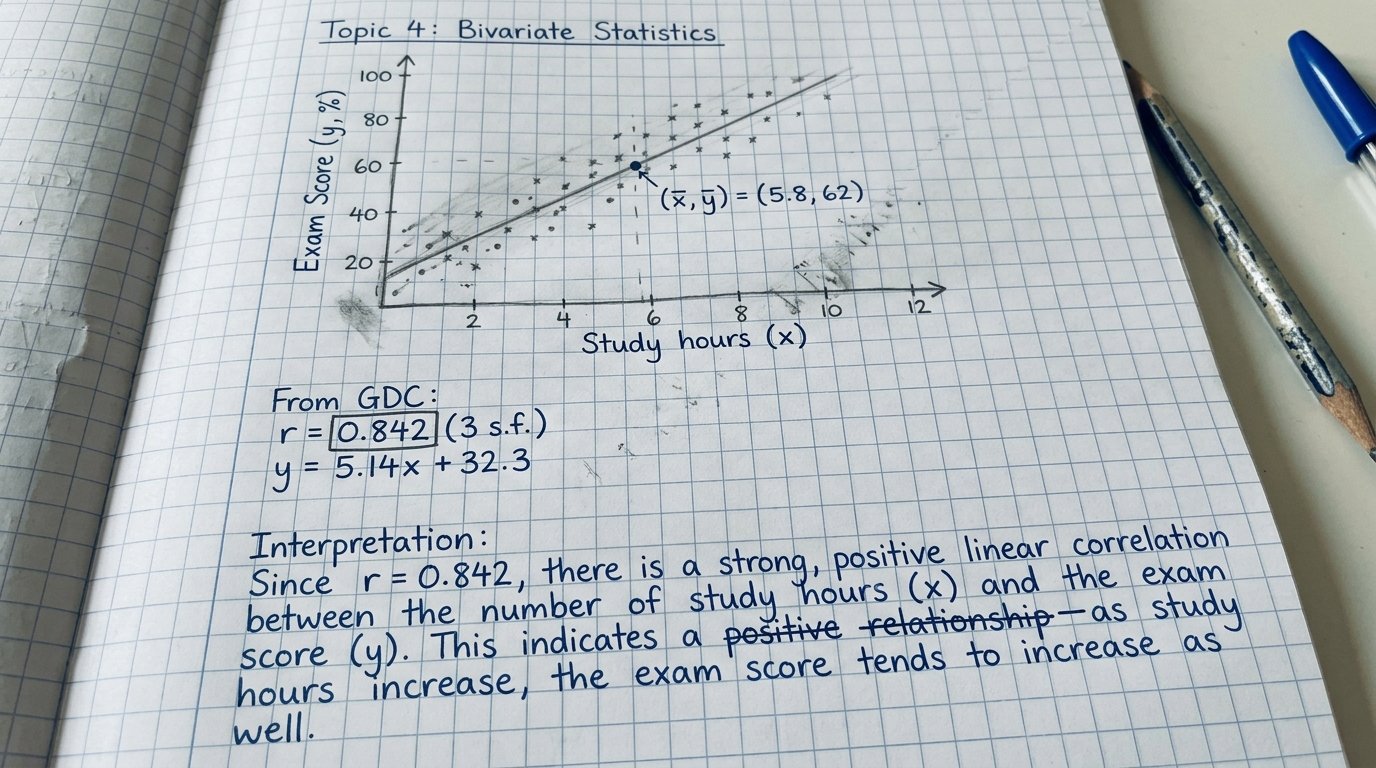
- Scatter plots
Key skills:
- Identifying trends
- Detecting outliers
- Interpreting distributions
5. Correlation and Regression
These concepts help analyze relationships between variables.
Important ideas:
- Positive vs negative correlation
- Strength of relationships
- Line of best fit
This is especially important for real-world applications.
Why Statistics Is Important in IB Maths
Statistics is one of the most practical topics in the IB syllabus.
It is used in:
- Real-world data analysis
- Internal Assessment (IA)
- Exam questions
A strong understanding of statistics can significantly boost your overall score.
How to Study IB Maths Statistics Effectively

1. Understand Concepts First
Don’t just memorise formulas; understand what they represent.
2. Practice Data Interpretation
Work with different graphs and data sets regularly.
3. Use Your Calculator
Learn statistical functions to save time during exams.
Using Past Papers for Statistics
Past papers are essential for mastering statistics.
Focus on:
- Data interpretation questions
- Probability problems
- Real-world scenarios
Practice under timed conditions for best results.
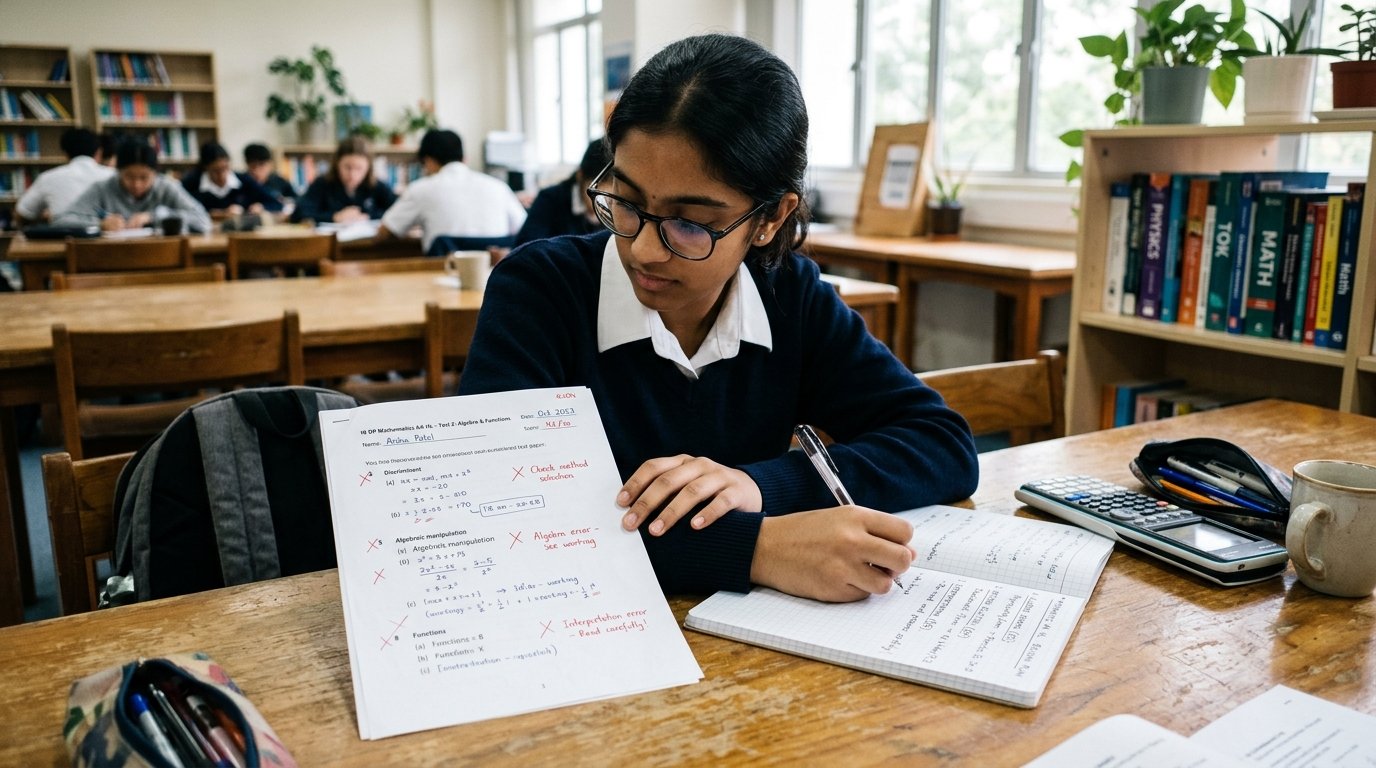
Common Mistakes to Avoid
Avoid these errors in IB Maths statistics:
❌ Misinterpreting graphs
❌ Confusing formulas
❌ Ignoring units
❌ Not using the calculator correctly
Awareness of these mistakes improves accuracy.
Tips to Improve Statistics Quickly
Simple strategy:
- Practice regularly
- Focus on weak areas
- Review mistakes
- Use real exam questions
Consistency leads to improvement.
Micro FAQs About IB Maths Statistics Guide
Is statistics easy in IB maths?
It is generally considered easier than calculus but still requires practice and understanding.
Do I need statistics for IB Maths HL?
Yes, statistics is included in both SL and HL, with more depth in HL.
How can I improve in IB Maths statistics?
Focus on concepts, practice data interpretation, and use past papers.
Final Thoughts
This IB Maths statistics guide covers the essential concepts you need to succeed. By understanding key topics, practicing regularly, and applying exam strategies, you can improve your performance significantly.
If you want structured guidance and expert-level preparation:
Start here:
https://mathzem.com/membership-pricing/