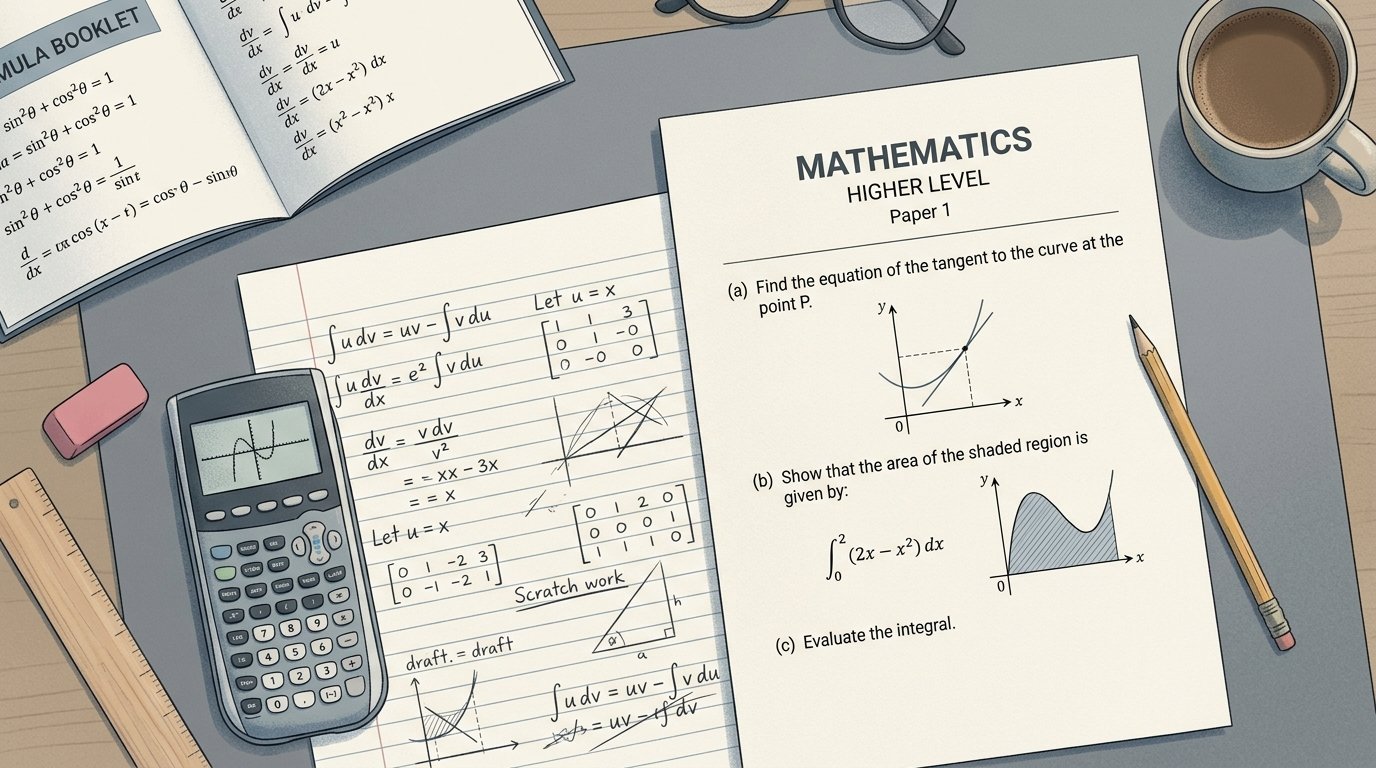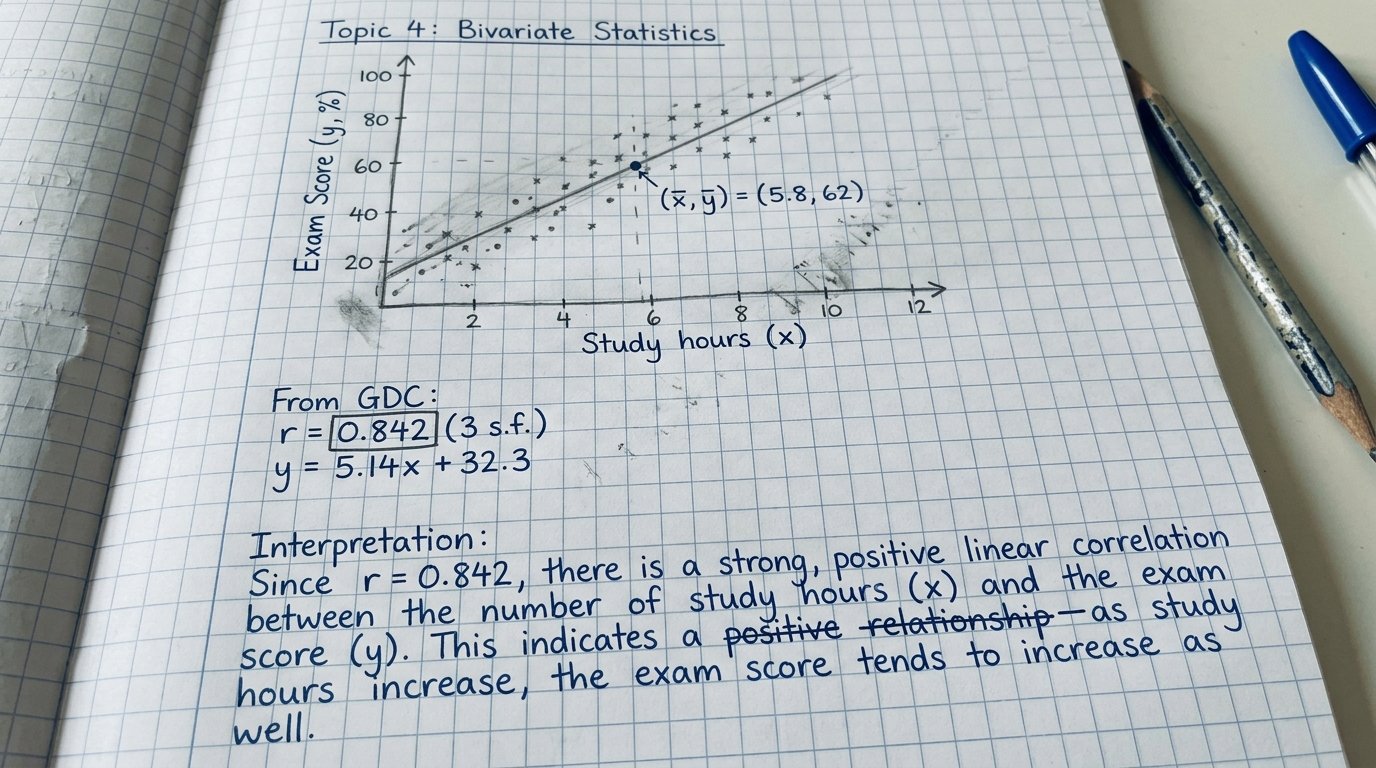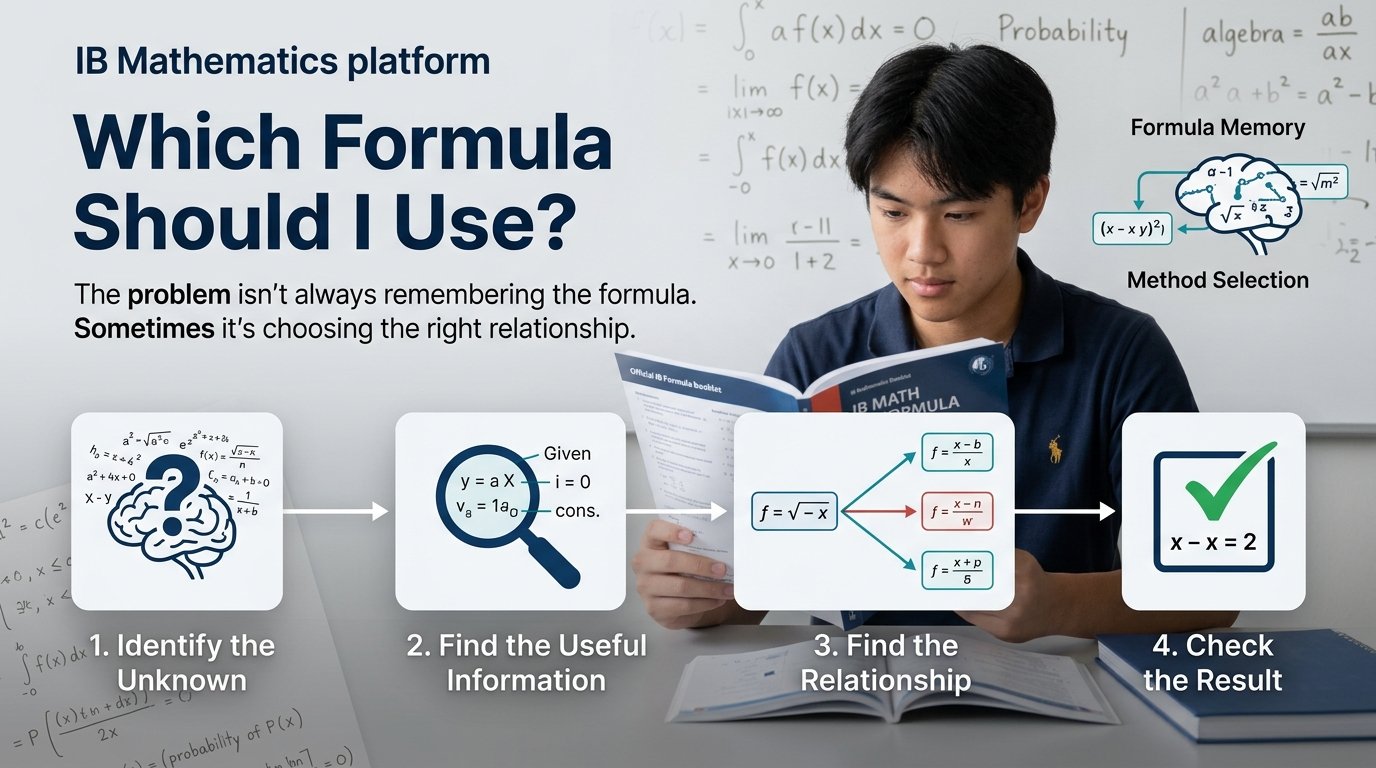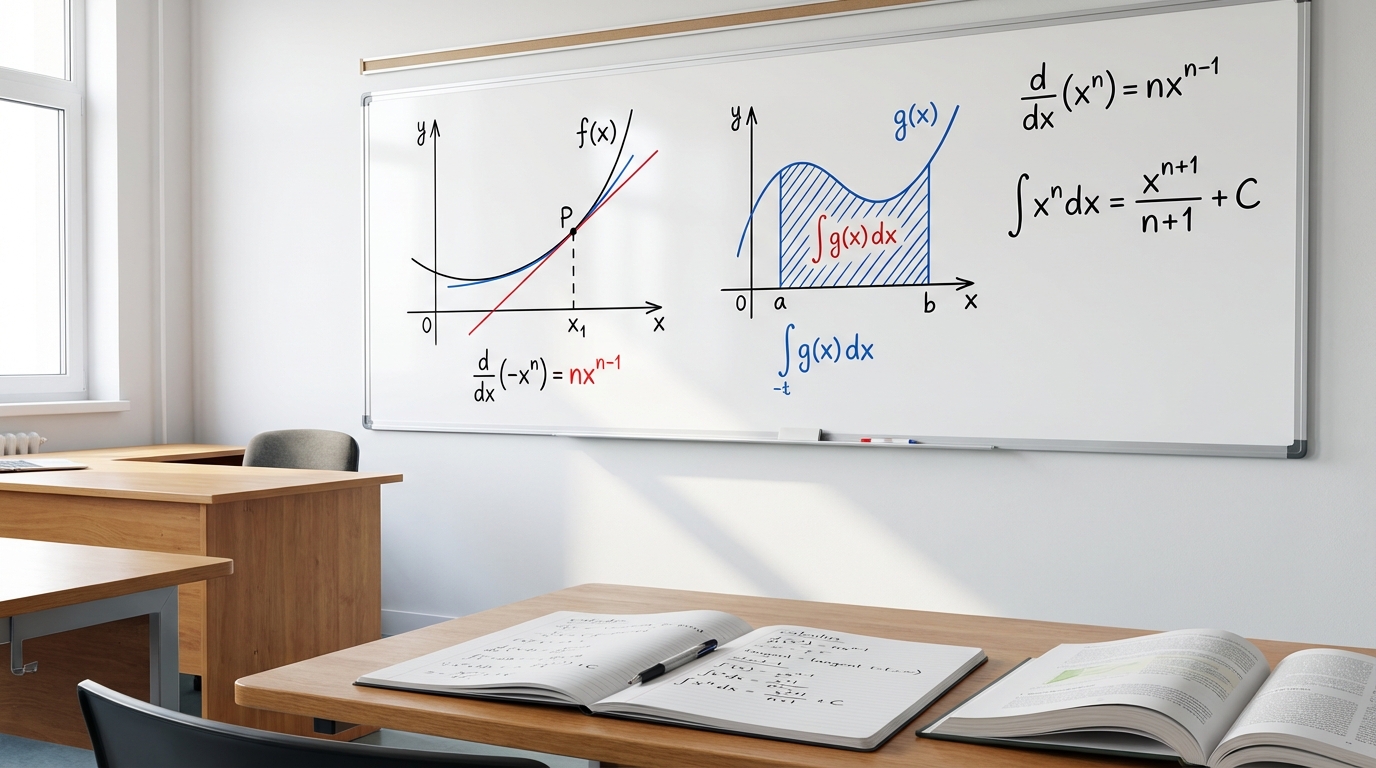
Calculus is one of the most important topics in IB Math Analysis and Approaches (AA).
It appears frequently in exams and often carries a significant number of marks. For many students, calculus is also one of the most challenging parts of the course.
In this guide, we’ll explain:
- The key concepts in IB Math AA calculus guide
- The difference between SL and HL calculus
- Important formulas you need to know
- Practical strategies to improve your performance
Understanding these concepts clearly can make a major difference in your exam results.
Table of Contents
What Is Calculus?
Calculus is the branch of mathematics that studies change and accumulation.
In IB Math AA, calculus mainly focuses on two major ideas:
- Derivatives: measuring how a function changes
- Integrals: measuring accumulated quantities such as area
These concepts are used to analyze graphs, model real-world situations, and solve optimization problems.
Core Calculus Topics in IB Math AA Calculus Guide
The IB Math AA syllabus includes several calculus topics.
1. Limits and the Idea of Change
Although limits are not always studied deeply in SL, they help explain the concept of derivatives.
Limits describe what happens to a function as the input approaches a certain value.
This idea forms the foundation of calculus.
2. Differentiation (Derivatives)
Differentiation measures the rate of change of a function.
In simple terms, the derivative tells us the slope of a curve at a specific point.
Common derivative rules include:
- Power rule
- Product rule
- Quotient rule
- Chain rule
Derivatives are often used to analyze graphs and determine how functions behave.
3. Applications of Derivatives
IB exams frequently include application questions.
These may involve:
- Finding maximum and minimum values
- Determining increasing or decreasing intervals
- Calculating tangent and normal lines
- Solving optimization problems
These applications connect calculus with real-world problems.
4. Integration
Integration is the reverse process of differentiation.
It allows us to find:
- The area under a curve
- Accumulated quantities such as distance or total change
In IB Math AA, students learn several integration techniques including basic antiderivatives and substitution methods.
5. Applications of Integration
Integration can be used to solve problems involving:
- Area between curves
- Total accumulated change
- Motion problems
These questions often appear in exam papers and require careful interpretation.
Differences Between SL and HL Calculus
Both SL and HL students study calculus, but HL covers the topic in greater depth.
SL Calculus Focus
SL students typically focus on:
- Basic differentiation rules
- Applications of derivatives
- Simple integration techniques
- Area under curves
HL Calculus Extensions
HL students study additional topics such as:
- Implicit differentiation
- Related rates
- More advanced integration techniques
- Differential equations
Because of this additional depth, HL calculus questions are usually more complex.
Important Calculus Formulas to Know
Some essential formulas include:
Derivative rules:
- dxd(sinx) = cosx
Integration rules:
Even though the formula booklet contains many formulas, understanding how to apply them is essential.
Common Calculus Mistakes IB Students Make
Students often lose marks in calculus because of:
- Algebra mistakes when simplifying expressions
- Forgetting to include constants of integration
- Misinterpreting optimization problems
- Incorrect use of differentiation rules
Practicing exam-style questions helps reduce these errors.
Tips to Improve Your Calculus Skills
Here are a few strategies used by high-scoring students:
Practice Graph Interpretation
Understanding how derivatives affect graph shapes is very important.
Solve Past Paper Questions
Past papers reveal the types of calculus questions IB examiners prefer.
Focus on Applications
Many exam questions involve interpreting calculus results in context.
Make sure you understand what your answer means, not just how to calculate it.
Need Help Mastering IB Math Calculus?
If you want structured support for calculus and other IB Math topics, our membership includes:
- Step-by-step topic explanations
- Guided past paper practice
- IA guidance and support
- Structured revision plans for AA and AI courses
You can explore the full support system here.
Having a clear learning system can make difficult topics much easier to manage.
Frequently Asked Questions About IB Math Calculus Guide
1. Is calculus difficult in IB Math AA?
It can be challenging at first, but consistent practice and understanding the concepts behind formulas make it much easier.
2. Do SL students study as much calculus as HL students?
No. HL students cover additional calculus topics and explore concepts in greater depth.
3. Are calculus questions common in IB exams?
Yes. Calculus appears frequently and often contributes a significant number of marks.
4. Should I memorize calculus formulas?
Most formulas are provided in the formula booklet, but you should still understand how to apply them.
5. What is the best way to improve in calculus?
Practice exam-style problems regularly and review mistakes carefully.
Conclusion
Calculus is a central part of the IB Math AA course and plays an important role in exam performance. By understanding derivatives, integrals, and their applications, students can analyze functions and solve complex problems effectively.
Regular practice, careful review of mistakes, and strong conceptual understanding will help you build confidence in calculus and improve your IB Math results.