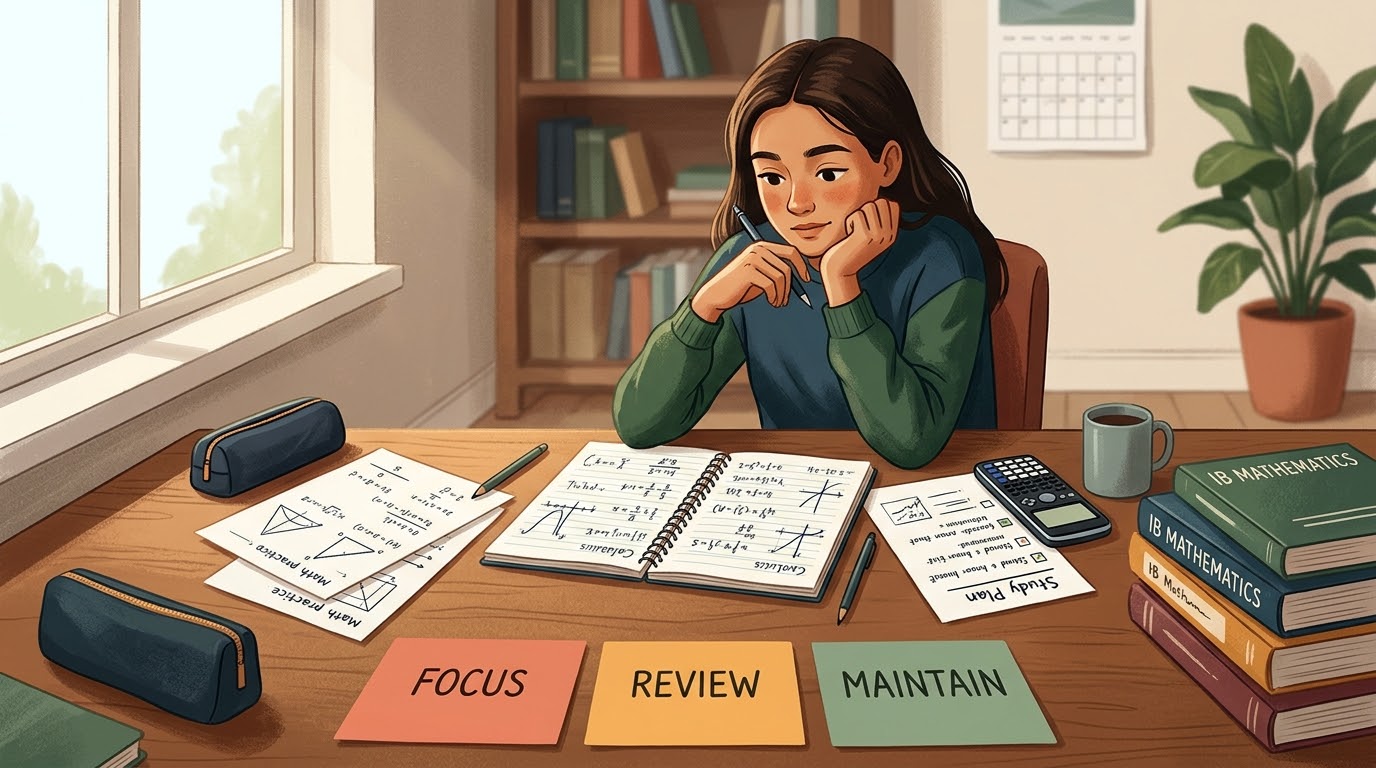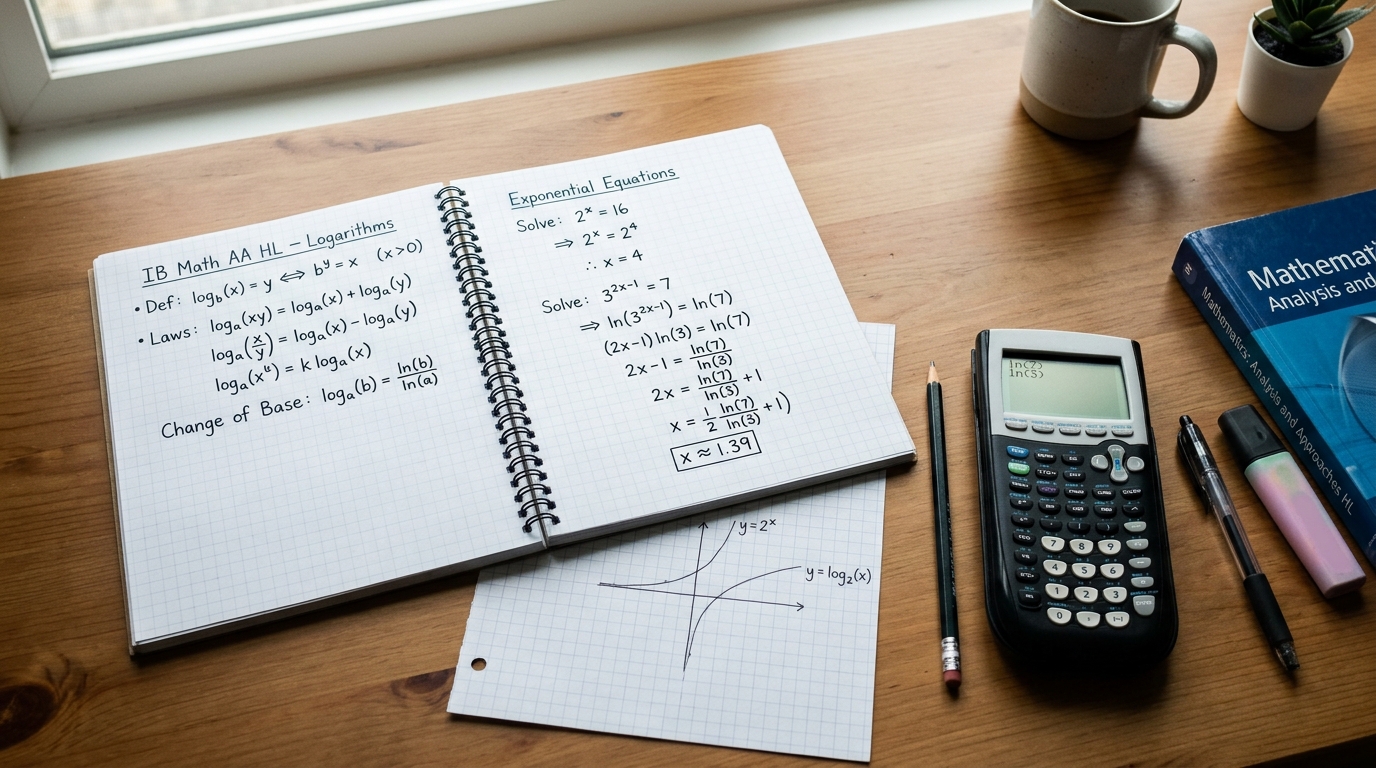
Getting one IB Math question right is a useful start. Being able to solve a different question that tests the same idea is a stronger sign that you understand the method.
That is why practising similar questions improve IB Math can help. It gives you a chance to use a skill more than once, notice what changes between questions, and find out whether you can apply the method without copying a worked example.
Table of Contents
Why one correct answer is not enough
When you study a worked solution, the steps can feel clear. But understanding a solution while reading it is different from choosing and carrying out the method yourself.
A single question may also be unusually familiar. You might recognize the setup or remember a technique from class. A new question can reveal whether you understand the idea behind those steps.
Similar questions let you practise the same core skill in slightly different situations. The goal is not to memorize one sequence of steps. It is to recognize when a method is useful and know how to adapt it.
What makes questions “similar”?
Similar questions usually test the same concept or method, but they do not have to look identical.
A follow up question might change:
- the values or expressions
- the way the information is presented
- the context of the problem
- the number of steps needed
- the method you must choose before solving
For example, two questions might both involve differentiation, but one may ask you to find a gradient at a point while another asks you to interpret the gradient in context. The underlying skill is related, but the second question asks you to apply it differently.
A practical way to practise similar questions
Use this sequence when you are working on a topic that feels difficult.
1. Attempt the first question yourself.
Give yourself time to choose a method and show your working. If you are stuck, identify the exact step that is causing difficulty.
2. Review the method, not just the answer.
Check why the method works and which part of the question tells you to use it. If you made an error, find the first step where your reasoning changed.
3. Try a related question without looking at the solution.
Use a question that tests the same skill, but changes the numbers, wording, or setup. Try to choose the method independently.
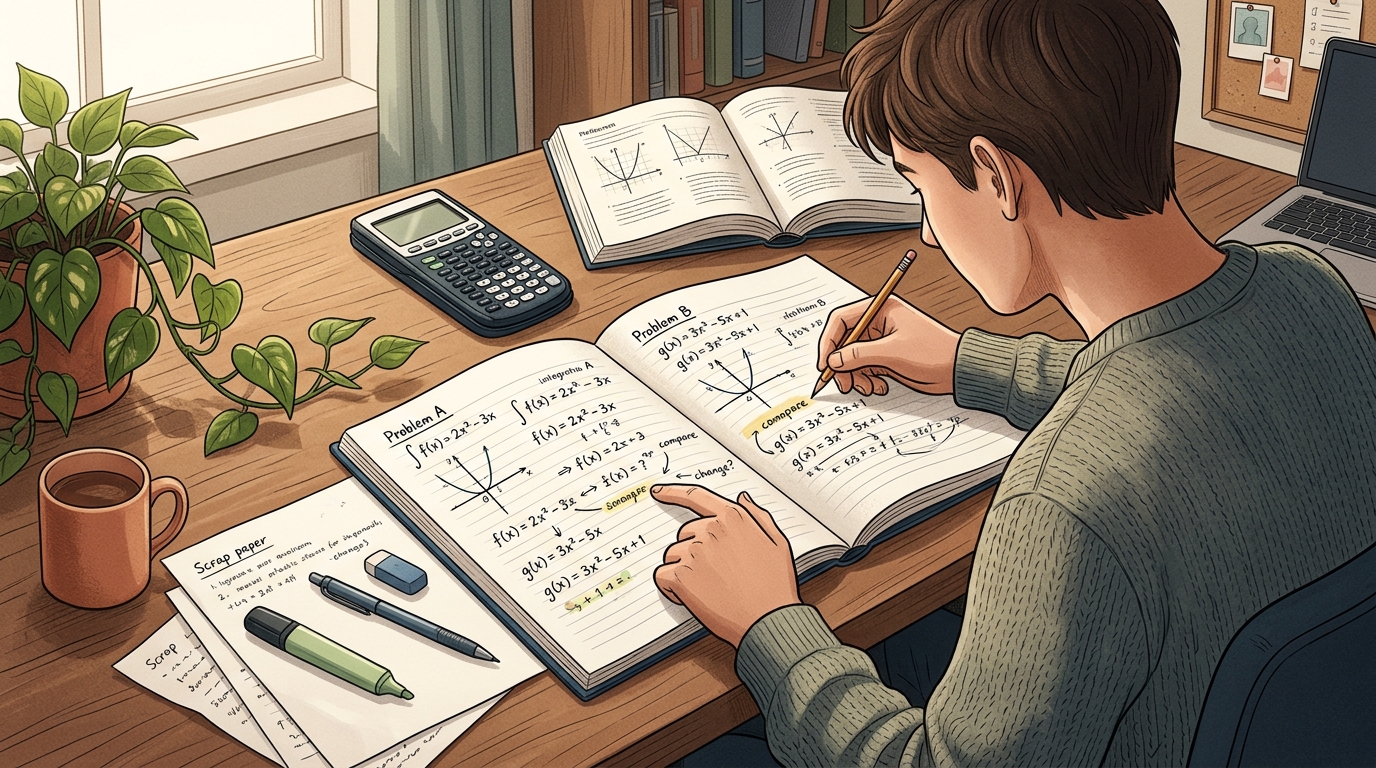
4. Compare the two attempts.
Ask what stayed the same and what changed. Did you recognize the right method? Did you make the same error? Did the new question require an extra step?
5. Repeat with a little more variation.
Once you can solve a straightforward version, try a question that requires more interpretation or combines the skill with another idea.
Learn from the differences
When practising similar questions, pay attention to the details that change. These differences often reveal whether you understand the method or are following a pattern without thinking.
If the question uses different values, check whether your method still works. If the wording changes, identify what the question is asking you to find. If the problem includes extra information, decide which details are relevant.
You do not need to make every practice question harder. Small changes can be enough to help you test whether you can apply the same idea independently.
What if you get the related question wrong?
A wrong answer can still make the practice useful. Compare your working with the earlier attempt and identify what caused the problem.
You may have:
- chosen a method that does not fit the new question
- understood the concept but made an algebraic or arithmetic error
- missed a condition or piece of information
- reached a result but not explained it clearly
Once you know the cause, practise that part again. If you keep making the same mistake, record it so you can check whether it appears in later questions.
Use feedback to choose the next question
Mathzem’s IB Practice lets you practise by course, topic, and focus area. When you are working on a question, the AI Tutor can guide you through the problem, and AI Examiner can review your submitted working with structured feedback.
Use that feedback to decide what kind of related question to try next. If you struggled to choose a method, practise recognizing the method in different setups. If your method was correct but your working contained an error, focus on checking that step. If you solved the question confidently, try a variation that asks you to apply the same idea in a new way.
Similar questions are most useful when each attempt gives you something to learn. Solve, review, adjust, and try again. Over time, you can build the confidence to use a method beyond the exact question you first practised.
Explore Mathzem at https://mathzem.com.