Probability is one of the core topics in IB Maths AA HL probability. It plays an important role in Paper 1, Paper 2, and Paper 3, where students are expected to calculate probabilities, interpret statistical information, and solve unfamiliar problems using logical reasoning.
Unlike topics that rely mainly on formulas, probability requires careful thinking. A small misunderstanding of the question can lead to the wrong method, even if your calculations are correct.
This guide explains the main probability topics in IB Maths AA HL, highlights common mistakes, and shares practical revision strategies to help you perform confidently in your exams.
Table of Contents
Why Probability Matters in IB Maths AA HL
Probability is much more than calculating the chance of an event.
The topic develops your ability to:
- Analyse uncertainty
- Interpret data
- Make logical decisions
- Solve multi step problems
- Apply mathematical reasoning
Many university courses in engineering, economics, finance, computer science, and data science also rely heavily on probability and statistics.
Topics Covered in AA HL Probability
The probability section includes several connected concepts.
Basic Probability
Students should understand:
- Sample spaces
- Events
- Mutually exclusive events
- Independent events
- Complementary events
These ideas form the foundation for more advanced probability questions.
Conditional Probability
Conditional probability is one of the most frequently tested concepts.
Students should be able to calculate:
- Probability given another event
- Independent events
- Dependent events
You should also understand how to interpret probability notation correctly.
Tree Diagrams
Tree diagrams help organise complex probability problems.
You should know how to:
- Construct probability trees
- Calculate combined probabilities
- Interpret multiple outcomes
Drawing a clear tree often makes difficult questions much easier.
Venn Diagrams
Venn diagrams are commonly used to represent relationships between events.
Students should confidently solve problems involving:
- Union
- Intersection
- Complements
- Set notation
Carefully label every region before performing calculations.
Binomial Distribution
The binomial distribution models situations with:
- Fixed number of trials
- Two possible outcomes
- Constant probability
You should know how to calculate:
- Exact probabilities
- Cumulative probabilities
- Expected values
Calculator skills are especially useful in this section.
Normal Distribution
The normal distribution is another major topic.
Students should understand:
- Mean
- Standard deviation
- Standardisation
- Probability calculations
- Interpreting normal curves
Many questions require students to use both mathematical reasoning and calculator functions.
Probability Formulae You Should Know
While the IB Formula Booklet provides several equations, understanding when to apply them is far more important than memorising them.
You should recognise situations involving:
- Addition rule
- Multiplication rule
- Conditional probability
- Binomial probability
- Normal distribution
Practice identifying the correct method before beginning calculations.
Common Probability Questions in IB Exams
IB questions often ask students to:
- Calculate probabilities
- Interpret probability statements
- Solve conditional probability problems
- Analyse probability distributions
- Compare different outcomes
- Explain reasoning using mathematical notation
Many questions combine multiple concepts into one problem.
Common Mistakes Students Make
Misreading the Question
Students sometimes calculate the probability of the opposite event.
Always underline key words such as the following:
- At least
- At most
- Exactly
- Given
- Independent
These words determine the method you should use.
Confusing Independent and Dependent Events
This is one of the most common errors.
Remember:
Independent events do not affect one another.
Dependent events change the probability of future outcomes.
Understanding this difference is essential.
Calculator Errors
Many students know the mathematics but enter incorrect values into their calculator.
Always check:
- Number of trials
- Probability value
- Mean
- Standard deviation
One incorrect input can change the entire answer.
Forgetting Complements
Sometimes calculating the complement is much faster than calculating every possible outcome.
For example:
Instead of finding:
“P(at least one)”
It may be easier to calculate:
“P(none)”
and subtract the result from one.
Incorrect Probability Notation
Clear notation helps both you and the examiner.
Write probabilities consistently and avoid skipping important mathematical steps.
How to Revise Probability Effectively
Understand Before Memorising
Probability questions often test reasoning rather than memorisation.
Focus on understanding why each formula works.
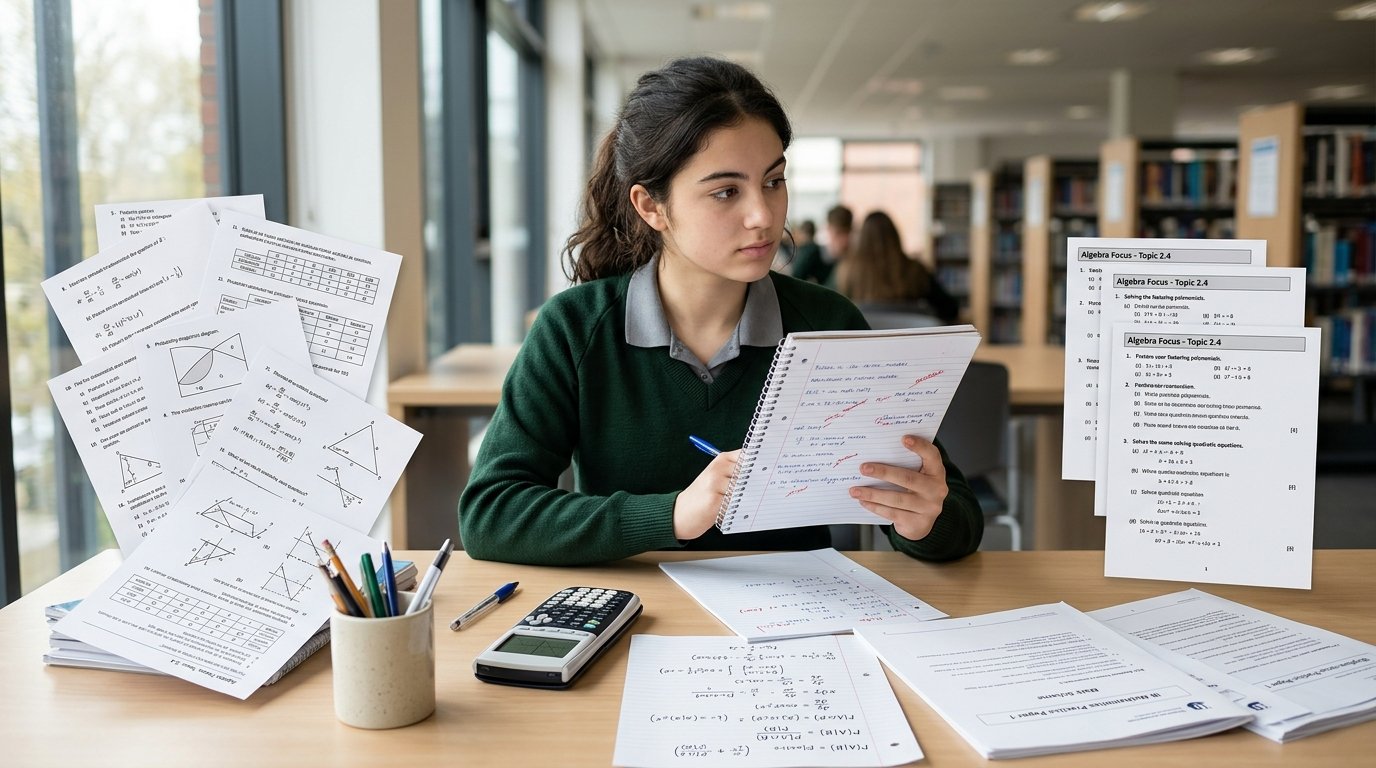
Practise Mixed Questions
Combine:
- Tree diagrams
- Conditional probability
- Binomial distribution
- Normal distribution
Real IB examinations rarely isolate one skill.
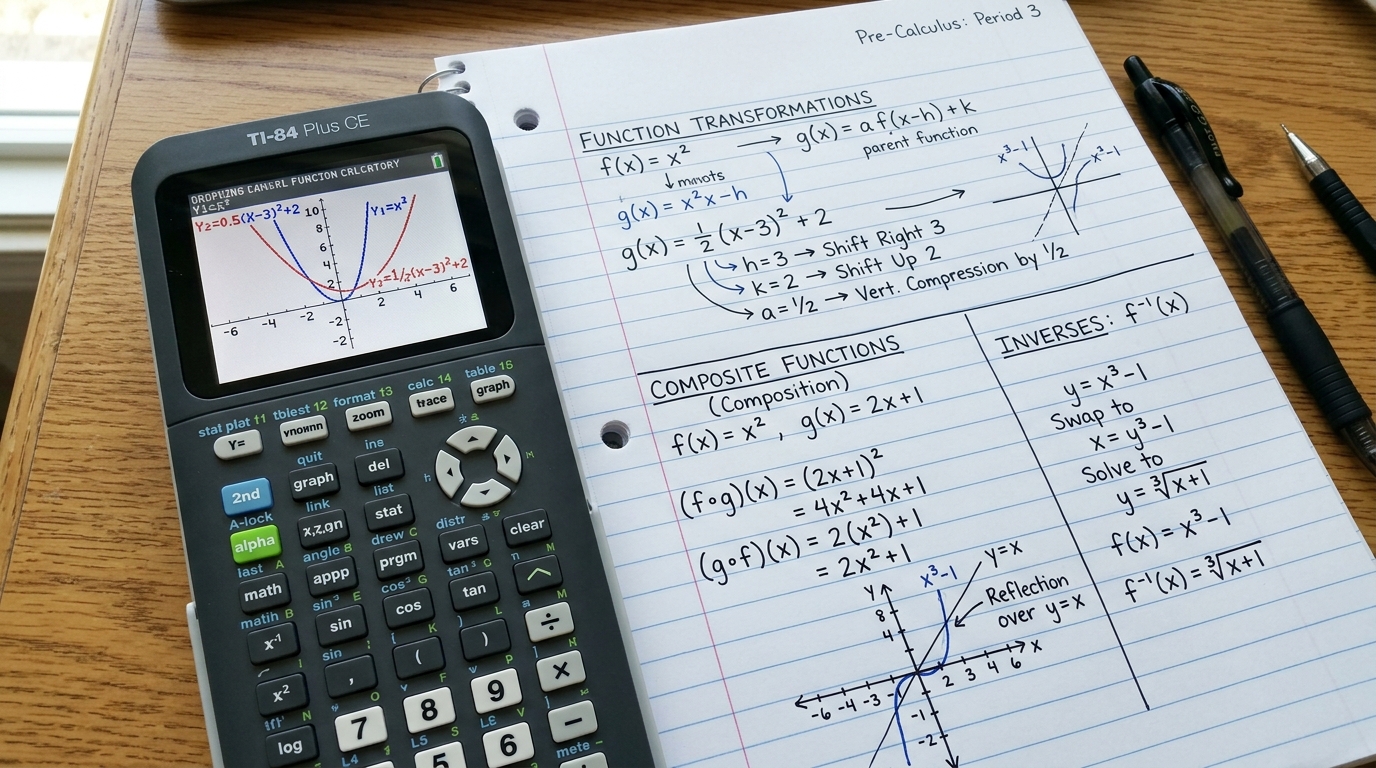
Use Your Calculator Correctly
Become familiar with calculator functions before the exam.
Practise entering probability distributions until the process feels natural.
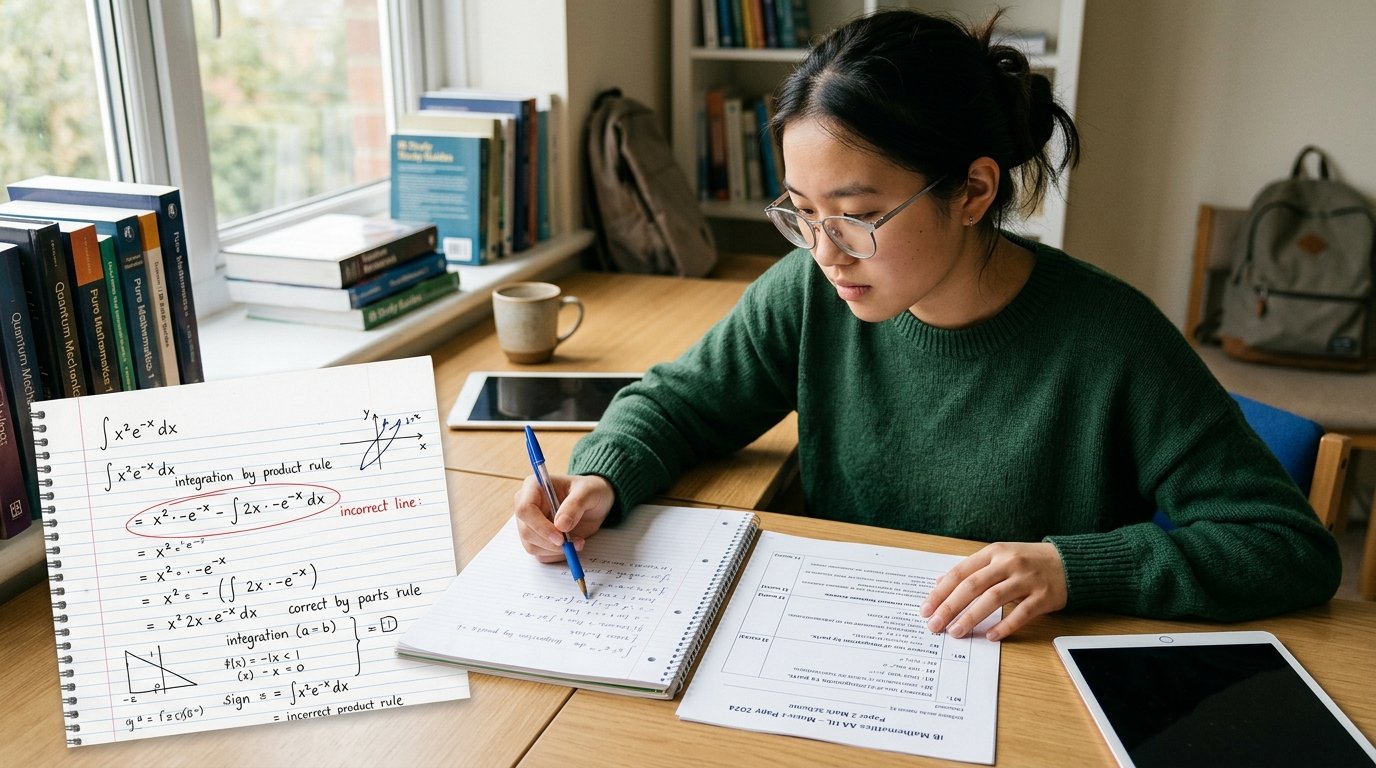
Review Every Mistake
After solving a question, ask yourself:
- Did I misunderstand the wording?
- Did I choose the wrong method?
- Was my calculator input correct?
- Did I lose method marks?
Learning from mistakes is one of the fastest ways to improve.
Probability Revision Checklist
Before your exam, make sure you can confidently:
- ✅ Calculate basic probabilities
- ✅ Solve conditional probability questions
- ✅ Draw and interpret tree diagrams
- ✅ Use Venn diagrams
- ✅ Solve binomial distribution problems
- ✅ Solve normal distribution questions
- ✅ Use calculator probability functions
- ✅ Explain your reasoning clearly
Exam Tips for Probability Questions
Read Every Word Carefully
Many probability questions include subtle wording that changes the solution.
Avoid rushing.
Show Your Working
Even if your calculator provides the answer, include important mathematical steps whenever appropriate.
Method marks matter.
Estimate Your Answer
Ask yourself:
“Does this probability make sense?”
Probabilities should always lie between zero and one.
If your answer falls outside this range, something has gone wrong.
Check Calculator Settings
Before the exam, make sure you know how to access probability functions on your approved graphing calculator.
This saves valuable time during the examination.
How Mathzem Helps You Improve Probability
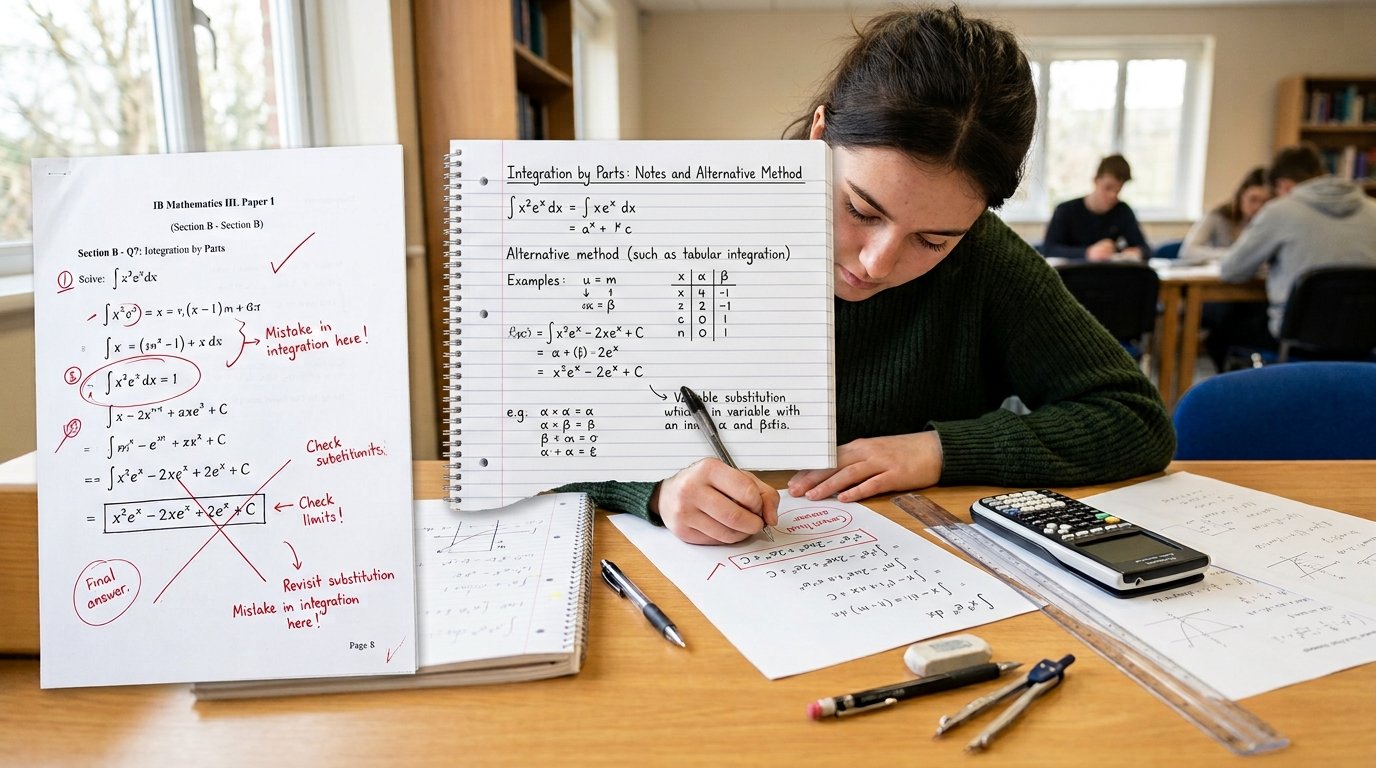
Many students know whether an answer is right or wrong, but they don’t know why they lost marks.
Mathzem helps you improve by analysing your complete solution using AI examiner style feedback.
After uploading your working, you’ll receive feedback on:
- Marks awarded
- Missing method marks
- Calculator mistakes
- Incorrect probability notation
- Weak syllabus topics
- Suggested next revision steps
Your personalised dashboard also helps you:
- Identify weak probability concepts
- Build a targeted revision plan
- Keep a mistake journal
- Track improvement over time
- Focus practice on the topics that need the most attention
Instead of repeating the same errors, every practice question becomes an opportunity to improve.
Frequently Asked Questions About AA HL Probability
Is probability difficult in IB Maths AA HL?
Many students find probability challenging because questions often require logical reasoning rather than straightforward calculations. Regular practice and careful reading of questions can make the topic much easier.
Which probability topic appears most often?
Conditional probability, probability distributions, and normal distribution questions appear frequently across IB examination papers.
Do I need to memorise probability formulas?
The IB Formula Booklet provides several important formulas, but understanding when and how to apply them is much more important than memorisation.
How can I improve my probability marks?
Practise IB style questions regularly, review every mistake, strengthen your understanding of probability concepts, and become confident using your graphing calculator.
Conclusion
Probability is a fundamental part of IB Maths AA HL and appears throughout the course in many different forms. Success comes from understanding concepts, interpreting questions carefully, and practising a wide variety of IB style problems.
Instead of focusing only on getting the correct answer, pay attention to your reasoning and the methods you use. Small improvements in probability can lead to significant gains in your overall exam score.
Want to find out which probability topics need the most attention? Start with the Math Skill Scanner:
Then upload your probability solutions to Mathzem IB Practice and receive AI examiner style feedback, identify your weak areas, and build a personalised revision plan based on your own performance: