Achieving a 7 in IB Maths AA SL is less about natural talent and more about consistent, focused preparation. Students who succeed typically build strong foundations in algebra, functions, and calculus, practice regularly with exam-style questions, and learn from their mistakes. By combining topic-based revision with past paper practice and effective exam technique, you can significantly improve your performance and confidence.
Table of Contents
What Makes IB Maths AA SL Challenging?
IB Maths AA SL is designed for students who enjoy mathematical reasoning and problem-solving.
The course focuses heavily on:
- Algebra
- Functions
- Trigonometry
- Calculus
- Statistics
- Mathematical reasoning
Unlike some mathematics courses that emphasize routine calculations, AA SL often requires students to apply concepts in unfamiliar situations.
Many students understand classroom examples but struggle when faced with complex exam questions.
The key difference between average and high-performing students is usually not intelligence; it’s preparation.
What Grade 7 Students Do Differently

Students who consistently achieve top marks often follow similar habits.
They:
- Practice regularly rather than cram.
- Focus on understanding concepts
- Complete past papers under timed conditions
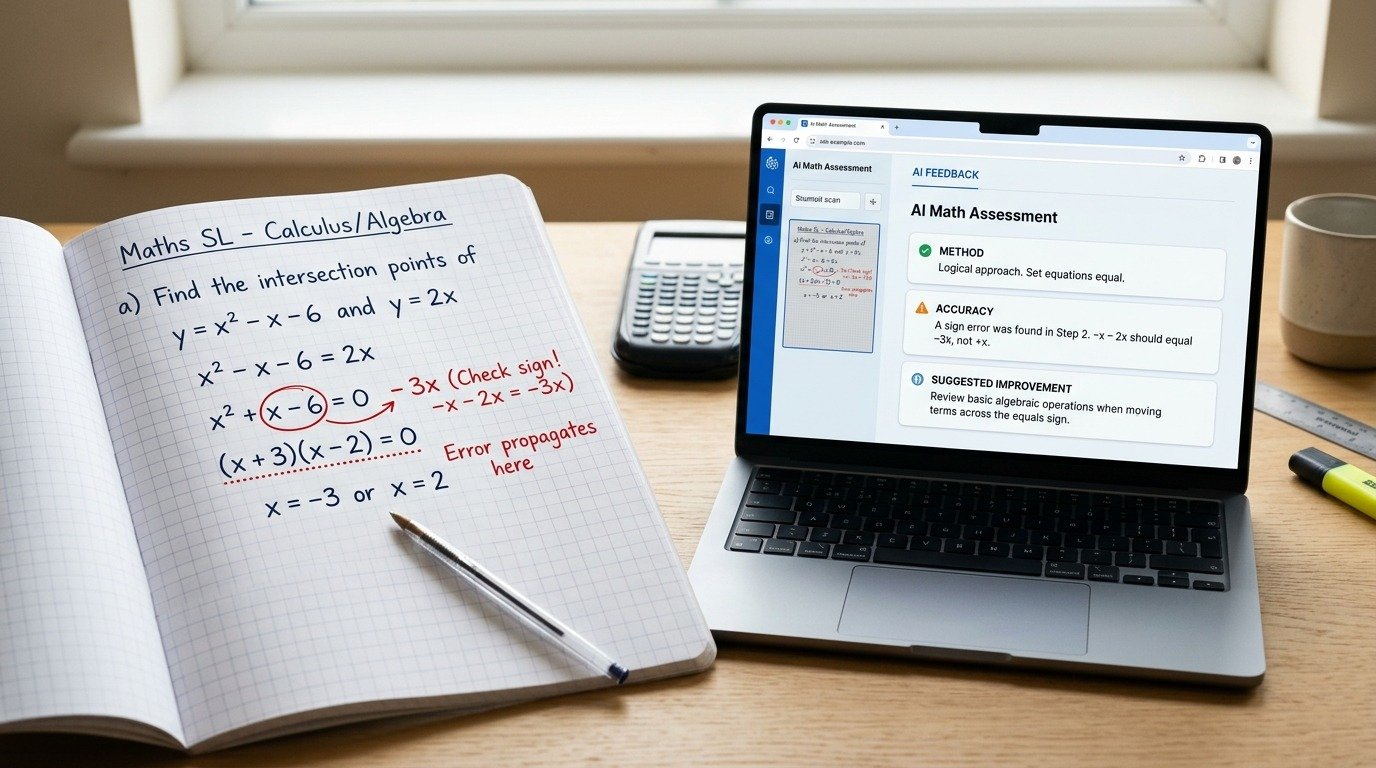
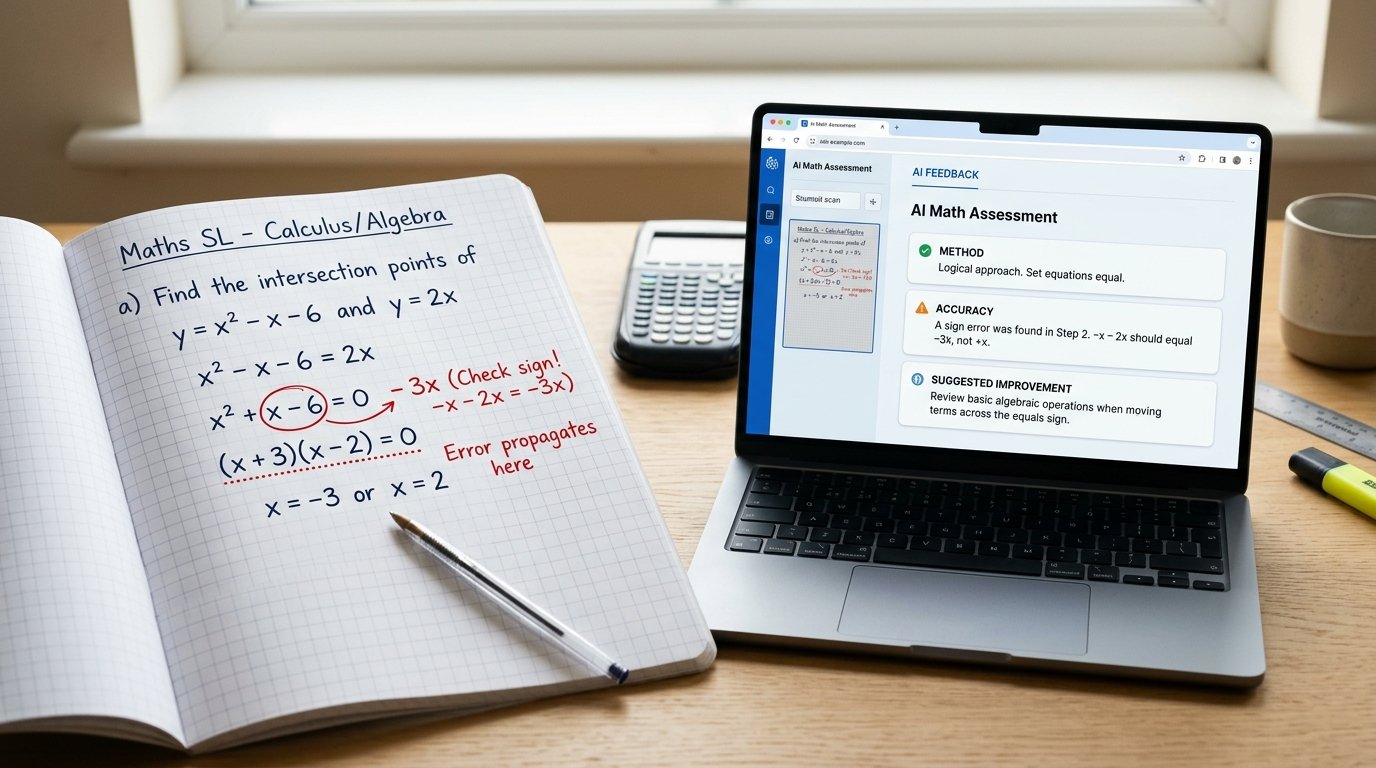
- Review mistakes carefully
- Target weak areas systematically
At Mathzem, we’ve observed that students who actively engage with problems improve much faster than those who spend most of their revision time reading notes.
The Most Important Topics in IB Maths AA SL
Algebra
Algebra forms the foundation of much of the course.
Students should be confident with:
- Equations
- Inequalities
- Logarithms
- Exponentials
- Algebraic manipulation
Weak algebra skills often affect performance across multiple topics.
Functions
Functions appear throughout the syllabus and frequently feature in examinations.
Focus on:
- Domain and range
- Composite functions
- Inverse functions
- Transformations
- Graph interpretation
Students who master functions often find other topics easier to understand.
Calculus
Calculus is one of the most heavily tested areas.
Key concepts include:
- Differentiation
- Integration
- Optimization
- Rates of change
Many students lose marks because they memorize procedures without understanding the underlying concepts.
Statistics and Probability
Statistics requires both calculation and interpretation.
Important areas include:
- Probability
- Data analysis
- Statistical measures
- Correlation
- Regression
Clear explanations are often just as important as correct calculations.
Step 1: Assess Your Current Level
Before creating a revision plan, determine where you stand.
Ask yourself:
- Which topics feel comfortable?
- Which questions take the longest?
- Where do you lose marks most frequently?
Discover Your Strongest and Weakest Topics
The Math Skill Scanner helps AA SL students quickly identify areas that need attention, allowing for more focused and efficient revision.
Knowing where to focus is often the fastest route to improvement.
Step 2: Create a Weekly Revision Schedule
Consistency is one of the most important factors in exam success.
A sample weekly plan might look like this:
Monday
Algebra
Tuesday
Functions
Wednesday
Calculus
Thursday
Statistics and Probability
Friday
Mixed Review
Saturday
Past Paper Practice
Sunday
Error Analysis and Revision Planning
Even short daily sessions can produce significant long-term gains.
Step 3: Use Active Revision Techniques
Passive revision rarely leads to top grades.
Instead, focus on:
Solving Questions
Mathematics is learned through doing.
Explaining Concepts
Teaching a concept to someone else often reveals gaps in understanding.
Creating Summary Notes
Condense key ideas into concise revision sheets.
Reviewing Mistakes
Every error is an opportunity to improve.
Why Past Papers Are Essential
Past papers help students:
- Understand question styles
- Improve timing
- Build confidence
- Identify weak areas
However, many students make the mistake of focusing only on their score.
The real value comes from analyzing mistakes and understanding why they occurred.
Common Mistakes That Prevent a Grade 7
Relying Too Much on Notes
Reading mathematics feels productive but often creates an illusion of understanding.
Avoiding Difficult Topics
Improvement usually comes from tackling weak areas directly.
Neglecting Timed Practice
Knowing how to solve questions is different from solving them under exam pressure.
Ignoring Error Analysis
Students who review mistakes consistently improve faster.
How to Improve Your Exam Technique
Read Questions Carefully
Many marks are lost because students misunderstand what is being asked.
Show Working Clearly
Method marks can significantly boost your score.
Manage Time Effectively
Do not allow one difficult question to consume too much time.
Check Your Answers
Use any remaining time to verify calculations and reasoning.
Turn Weak Topics into Strengths
After identifying areas that need improvement, use IB Practice Questions to focus on specific topics and develop confidence through targeted exam-style practice.
Consistent practice is often the difference between a 5 and a 7.
A Four-Week AA SL Revision Plan
Week 1
Assess strengths and weaknesses.
Week 2
Focus on weak topics.
Week 3
Complete multiple timed past papers.
Week 4
Review mistakes and refine exam strategy.
This structure ensures balanced preparation.
How Much Revision Is Enough?
Most students aiming for a 7 benefit from:
- 4–6 hours per week during the school year
- Increased revision during exam season
- Regular problem-solving practice
- Weekly past paper work
Quality matters more than quantity.
A focused hour is often more valuable than several distracted hours.
Frequently Asked Questions About IB Maths AA SL
Is AA SL difficult?
AA SL is challenging but manageable with consistent practice and a strong understanding of core concepts.
How many past papers should I complete?
Most students benefit from completing at least 6–10 papers and reviewing mistakes thoroughly.
Can I achieve a 7 if I’m struggling now?
Yes. Many students improve significantly by focusing on weak topics, practicing consistently, and developing better exam techniques.
Final Thoughts
Achieving a 7 in IB Maths AA SL requires a combination of strong mathematical understanding, effective revision, and smart exam strategy.
The students who achieve top grades are rarely perfect from the beginning.
They improve steadily by:
- Identifying weaknesses
- Practicing consistently
- Learning from mistakes
- Developing confidence over time
Start by assessing your current level with the Math Skill Scanner and strengthen key topics through focused work on IB Practice Questions.
Small daily improvements can lead to remarkable results by exam day.
Author Bio
Mathzem provides expert support for IB Mathematics students studying AA (Analysis and Approaches) and AI (Applications and Interpretation). Through targeted practice, structured revision resources, and exam-focused guidance, Mathzem helps students build confidence and achieve stronger academic results.