Online learning has made education more accessible than ever.
Students can watch lessons from anywhere, pause videos, replay explanations, and learn at their own pace.
These are valuable improvements.
But many students discover a problem after several weeks of studying.
Watching videos feels productive.
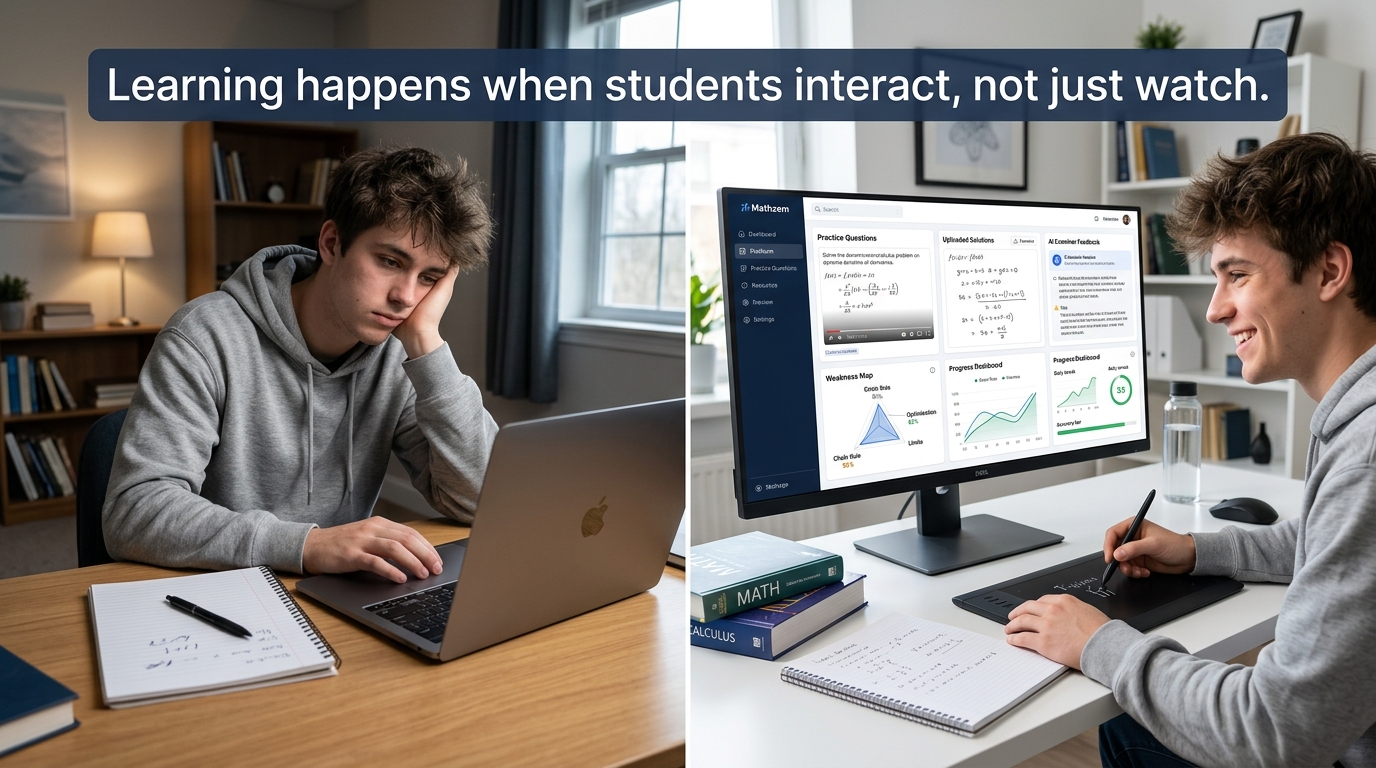
Unfortunately, watching and learning are not always the same thing.
Students often understand a topic while watching an explanation but struggle when they face a similar question on their own.
Table of Contents
Passive learning creates a false sense of progress
Watching someone else solve a problem feels very different from solving it yourself.
Many students experience this situation:
They watch a twenty-minute lesson on integration.
The explanation makes sense.
The examples seem easy.
Then they attempt a practice question and suddenly feel stuck.
The gap between recognition and understanding is larger than most students expect.
Recognising a solution is not the same as producing one.
Mathematics is learned by doing

Mathematics is a practical subject.
Students improve through repetition, correction, and refinement.
That process usually looks like this:
Attempt a question.
Make mistakes.
Understand those mistakes.
Try again.
Improve.
This cycle is where most learning happens.
Removing mistakes from the process removes one of the most valuable parts of learning.
Feedback is the missing part of online learning
Many online learning platforms stop after providing content.
Students receive:
• Video lessons.
• Worked examples.
• Answer keys.
What they often do not receive is feedback on their own work.
Without feedback, students struggle to answer important questions:
• Why did I lose marks?
• Which topic is causing problems?
• Am I improving?
• What should I practise next?
Good feedback turns practice into progress.
Interactive learning changes the role of the student
Traditional education often places students in a passive role.
Watch.
Listen.
Memorise.
Repeat.
Interactive learning changes that relationship.
Students become active participants in their own learning.
They solve questions, receive feedback, analyse mistakes, and make decisions about what to study next.
Learning becomes a conversation rather than a lecture.
Why instant feedback matters
Waiting days for marked work creates delays in the learning process.
By the time feedback arrives, students have often moved on to another topic.
Immediate feedback allows students to connect mistakes with the thinking that caused them.
That makes corrections much more effective.
Small misunderstandings can be fixed before they become long-term habits.
The future belongs to personalised learning
No two IB math students have exactly the same strengths and weaknesses.
One student struggles with calculus.
Another struggles with probability.
A third loses marks because of notation and communication.
Treating all students the same ignores these differences.
Modern learning platforms can adapt to the individual student rather than forcing every student through the same path.
How Mathzem creates an interactive learning experience
Mathzem was built around active participation.
Students do more than watch lessons or check answers.
They move through a learning cycle:
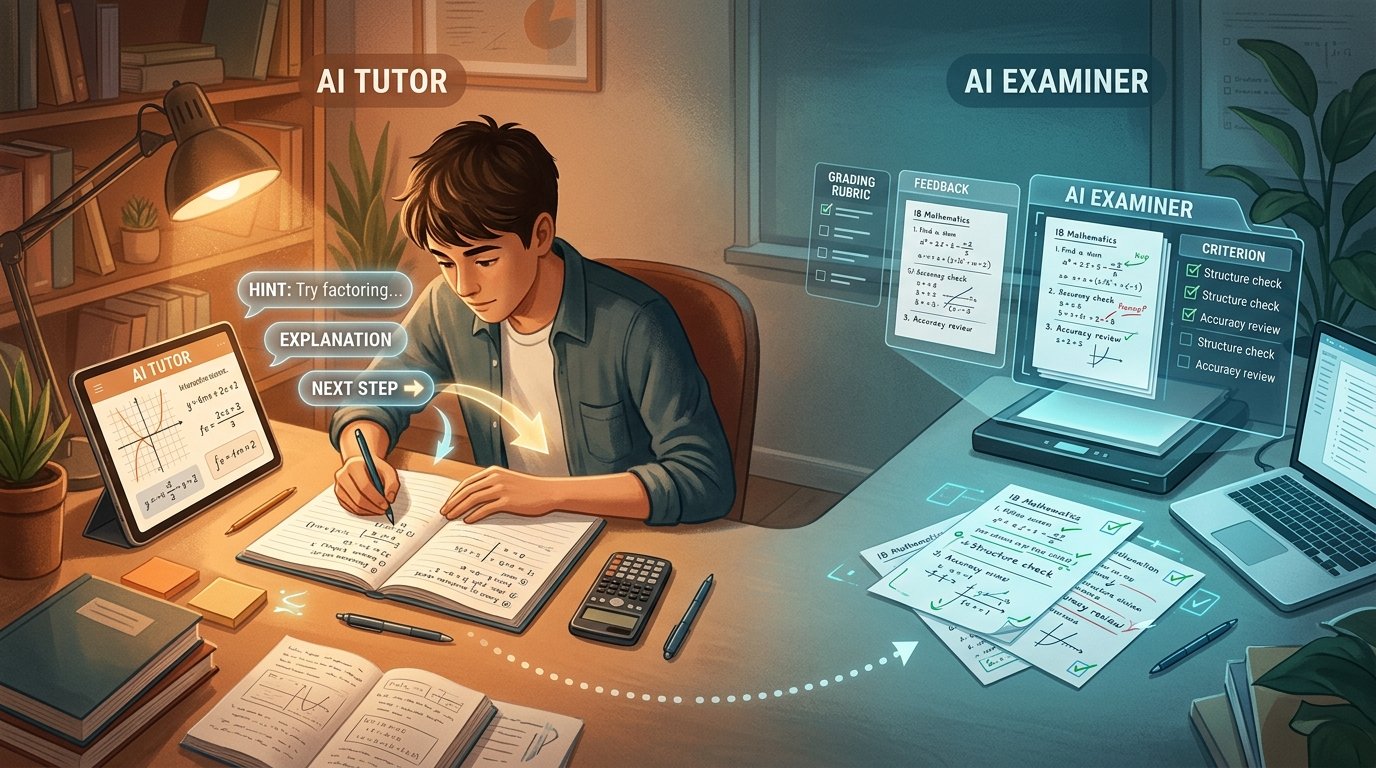
Practice questions.
Upload works.
Receive AI examiner feedback.
Review mistakes.
Track progress.
Improve weak areas.
Each stage builds on the previous one.
Every mistake becomes useful information rather than a failure.
The role of the Student Dashboard
Students need visibility into their learning.
A dashboard should answer simple questions:
• What have I completed?
• Which topics are improving?
• Which topics need attention?
• What should I practice next?
Without this information, revision often becomes guesswork.
With it, students can make informed decisions about their study time.
Interactive learning builds confidence
Confidence does not come from watching another video.
Confidence comes from solving difficult problems and understanding how to improve after mistakes happen.
Students become more confident when they can see progress clearly.
The combination of practice, feedback, and progress tracking creates that confidence.
Final thoughts
The future of maths learning is unlikely to look like the past.
Students still need teachers, explanations, and textbooks.
But they also need opportunities to practise actively, receive feedback quickly, and understand their own learning patterns.
The students who improve fastest are usually the students who interact most with the learning process.
Watching helps.
Doing changes results.
Frequently Asked Questions
What is interactive maths learning?
Interactive maths learning involves active participation through practice, feedback, mistake analysis, and progress tracking rather than passive content consumption.
Are video lessons enough for IB Maths?
Video lessons are useful for understanding concepts but students also need practice and feedback to improve exam performance.
Why is instant feedback important?
Immediate feedback helps students correct misunderstandings before they become habits and improves long term retention.
How does Mathzem support interactive learning?
Mathzem combines practice questions, AI examiner feedback, progress tracking, weakness analysis, and personalised revision recommendations.
Does interactive learning improve exam performance?
Research consistently shows that active learning methods improve retention and understanding more effectively than passive learning alone.