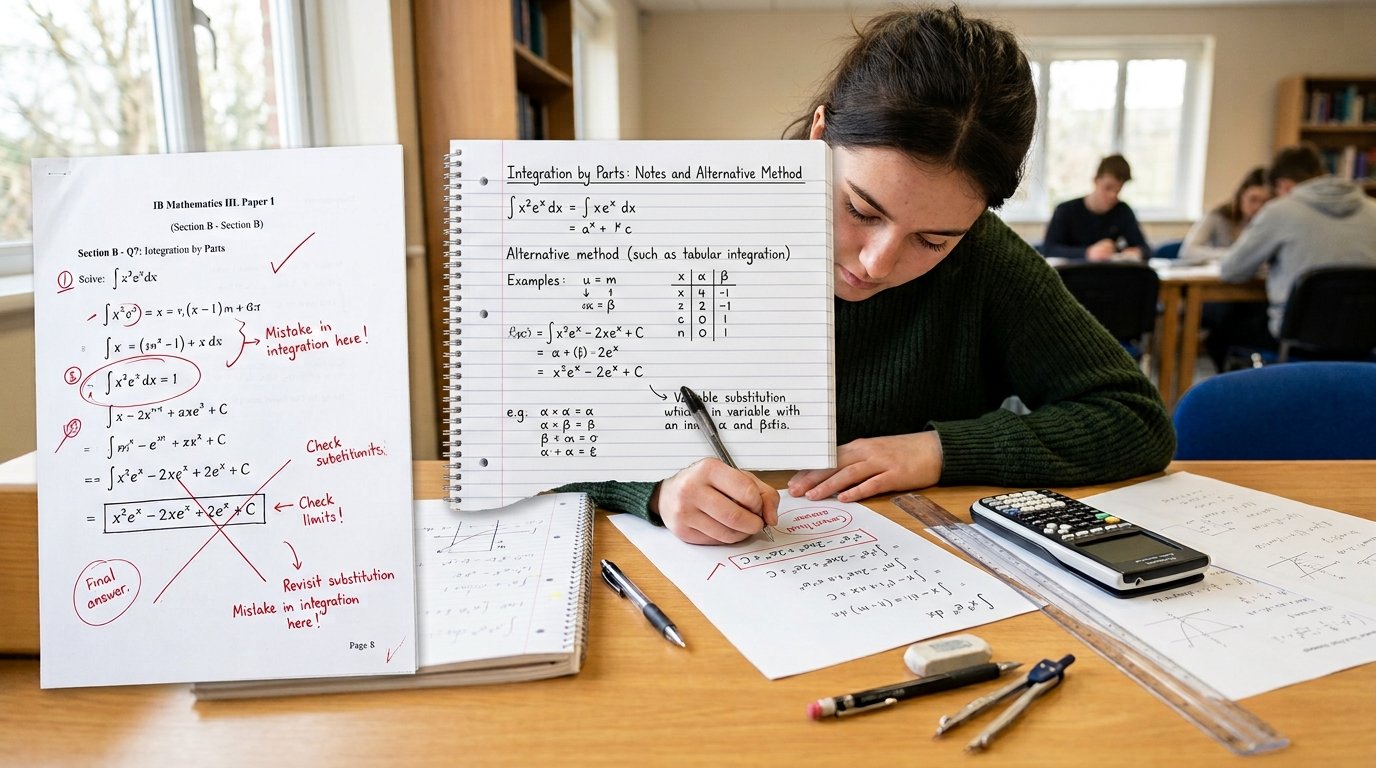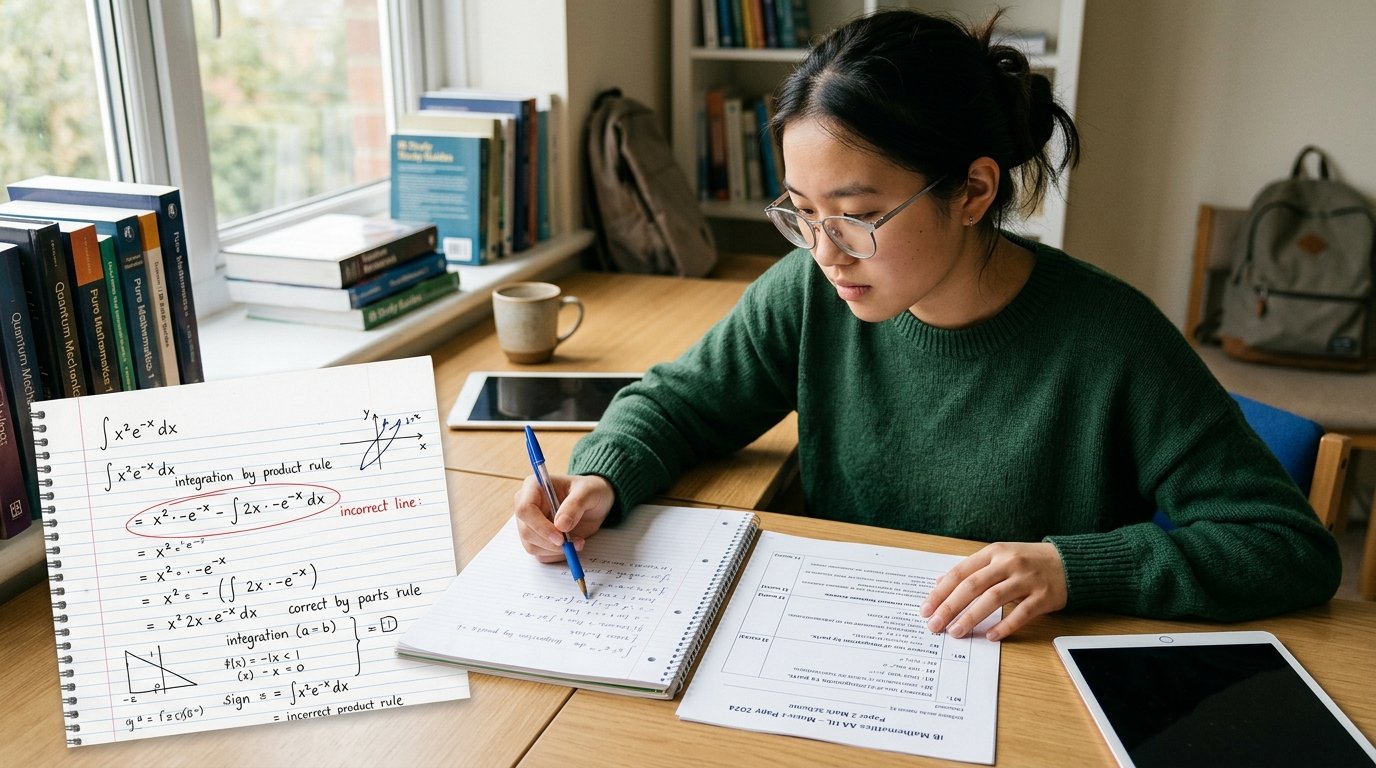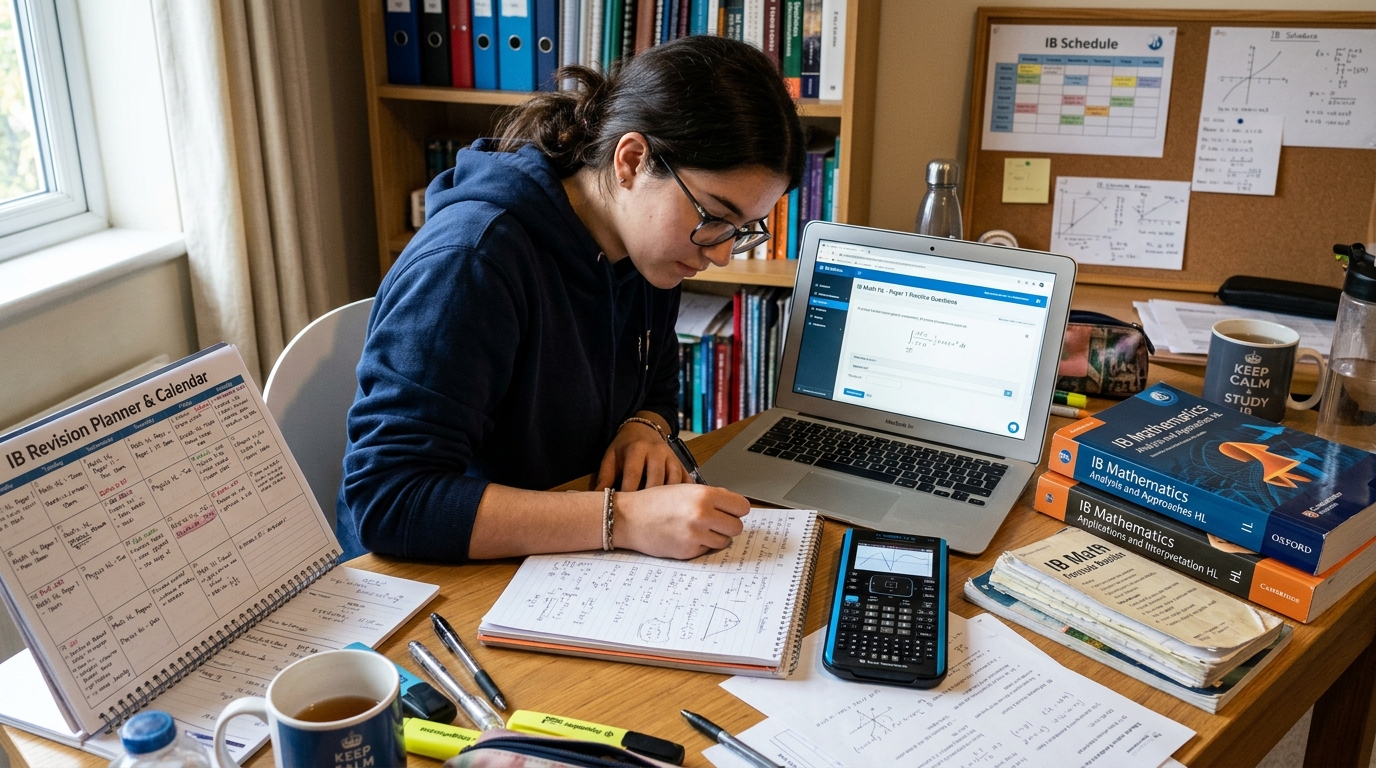
Preparing for IB Maths AA HL resources requires more than determination. It also requires the right study resources.
With so many textbooks, websites, videos, and practice platforms available, it can be difficult to know which ones are actually worth your time.
The best resources don’t simply give you more questions. They help you understand concepts, identify mistakes, and improve your problem solving skills.
This guide highlights some of the most useful resources for IB Maths AA HL students and explains how to use them effectively throughout the school year.
Table of Contents
What Makes a Good IB Math AA HL Resource?
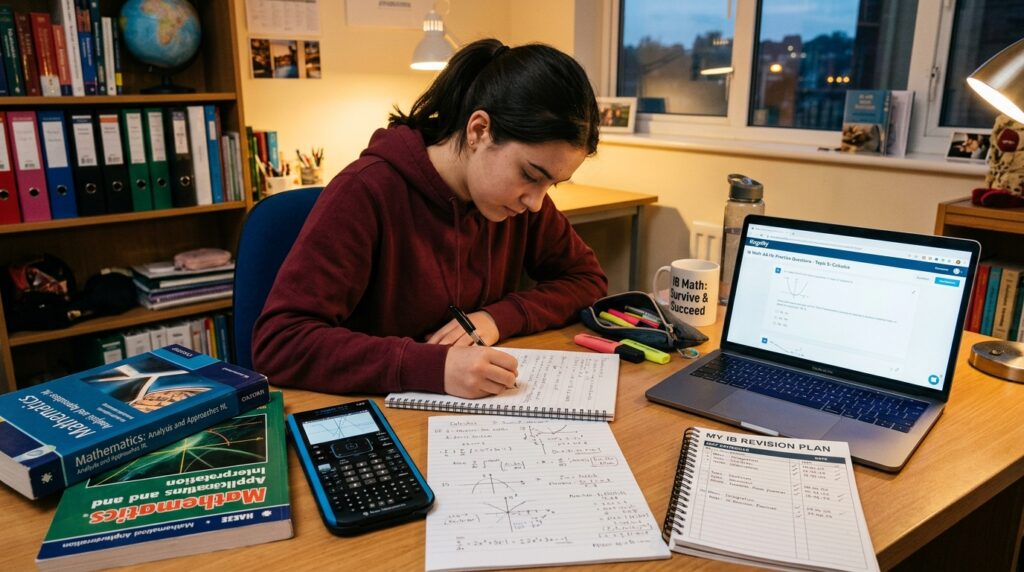
Not every resource supports learning in the same way.
The best resources should help you:
- Understand mathematical concepts
- Practise IB style questions
- Learn exam techniques
- Review mistakes
- Track your progress
- Prepare for assessments
Using several high quality resources together usually produces better results than relying on a single textbook.
1. The Official IB Mathematics Guide
Your first resource should always be the official IB course guide and Formula Booklet.
These documents help you understand:
- The syllabus
- Assessment objectives
- Command terms
- Formulae available during exams
Reviewing these regularly ensures your revision stays focused on examinable content.
2. Your Class Notes
Teacher explanations often include useful insights that cannot be found in textbooks.
Well organised notes can help you:
- Review difficult concepts
- Remember class discussions
- Prepare before assessments
- Summarise key ideas
Update your notes throughout the course instead of waiting until exam season.
3. IB Maths Textbooks
A good textbook provides:
- Clear explanations
- Worked examples
- Practice exercises
- Challenge questions
When choosing a textbook, look for one that closely follows the current IB syllabus.
Remember that textbooks build understanding, but they should be combined with IB style exam questions.
4. Past Paper Questions
Past papers remain one of the most valuable revision resources.
They help you:
- Understand question styles
- Practice time management
- Recognise recurring topics
- Improve exam confidence
Rather than completing many papers quickly, carefully analyse every mistake after marking your work.
5. Revision Notes
Summary notes are useful for reviewing topics before exams.
Effective notes should include:
- Key definitions
- Important formulas
- Common methods
- Typical mistakes
- Helpful diagrams
Avoid replacing practice with reading. Notes should support revision, not become your entire study strategy.
6. Video Lessons
Video tutorials can help explain difficult topics such as the following:
- Calculus
- Functions
- Probability
- Complex numbers
- Differential equations
Watching different explanations often helps students understand concepts that previously seemed confusing.
Pause videos regularly and solve examples yourself before continuing.
7. Graphing Calculator
Your calculator is one of your most important learning tools.
Use it to:
- Check graphs
- Solve equations
- Perform statistical calculations
- Calculate probability distributions
- Verify answers
However, avoid becoming dependent on calculator shortcuts.
Understanding the mathematics behind each calculation remains essential.
8. Study Groups
Working with classmates provides opportunities to:
- Explain concepts aloud
- Solve difficult questions together
- Learn alternative methods
- Stay motivated
Teaching someone else is often one of the best ways to strengthen your own understanding.
9. Personal Mistake Journal
Many students keep revision notes but never record their mistakes.
A mistake journal helps you identify patterns such as the following:
- Algebra errors
- Calculator mistakes
- Misreading questions
- Missing method marks
Reviewing these mistakes regularly prevents them from becoming long-term habits.
10. Mathzem AI Practice Platform
Traditional resources often stop after showing the correct answer.
Mathzem goes a step further.
Instead of only checking whether your answer is correct, you can upload your complete working and receive AI examiner style feedback.
This allows you to understand:
- Why marks were lost
- Which methods were correct
- Which topics need more revision
- What to practise next
This transforms every practice question into a personalised learning opportunity.
How to Combine Your Resources
Instead of using every resource every day, combine them strategically.
| Revision Activity | Best Resource |
|---|---|
| Learn new concepts | Textbook and teacher notes |
| Understand difficult topics | Video lessons |
| Build confidence | Topic based practice questions |
| Prepare for exams | Past papers |
| Review mistakes | Mistake journal |
| Personalised improvement | Mathzem AI feedback |
Using each resource for its intended purpose makes revision more efficient.
Common Resource Mistakes
Many students unintentionally slow their progress by:
- Collecting too many books
- Watching videos without practising
- Completing questions without reviewing mistakes
- Ignoring weak topics
- Switching resources too often
Remember that consistent use of a few excellent resources is usually better than constantly searching for new ones.
Build Your Own Revision System
An effective weekly routine might look like this:
Monday
Learn a new topic using your textbook and class notes.
Tuesday
Complete topic based practice questions.
Wednesday
Watch a video explanation for any concepts you still find difficult.
Thursday
Review mistakes and update your mistake journal.
Friday
Complete mixed IB style questions.
Saturday
Attempt timed past paper questions.
Sunday
Review weak topics and plan the following week’s revision.
A structured routine helps you cover the syllabus steadily without feeling overwhelmed.
How Mathzem Complements Traditional Resources
Books, notes, and videos help you learn mathematics.
Mathzem helps you improve your performance.
After uploading your working, you’ll receive AI examiner style feedback showing:
- Marks awarded
- Missing method marks
- Incorrect reasoning
- Weak syllabus topics
- Suggested next steps
Your personalised dashboard also includes the following:
- A weakness map
- A personalised revision plan
- Progress tracking
- A mistake journal
- Topic level performance insights
Instead of wondering what to revise next, you’ll know exactly where to focus your efforts.
Frequently Asked Questions About IB Maths AA HL Resources
What is the best resource for IB Maths AA HL?
There isn’t a single best resource. The most effective approach combines textbooks, past papers, teacher guidance, and personalised feedback.
Should I only use past papers?
No. Past papers are excellent for exam preparation, but they should be combined with concept learning and topic based practice.
Are video lessons enough?
Videos are helpful for learning concepts, but they should always be followed by active problem solving.
How can I find my weakest topics?
Review your mistakes regularly or use a platform that tracks your performance across the syllabus and identifies areas that need improvement.
Conclusion
The best IB Maths AA HL resources help you do more than complete practice questions. They help you understand concepts, improve exam technique, and learn from your mistakes.
By combining textbooks, past papers, revision notes, calculator practice, and personalised AI feedback, you can create a balanced revision strategy that prepares you for every part of the IB Maths AA HL course.
Start by identifying your current strengths and weaknesses with the Math Skill Scanner:
Then upload your IB Maths solutions to Mathzem IB Practice for AI examiner style feedback, personalised revision recommendations, and a learning dashboard designed to help you improve with every question: