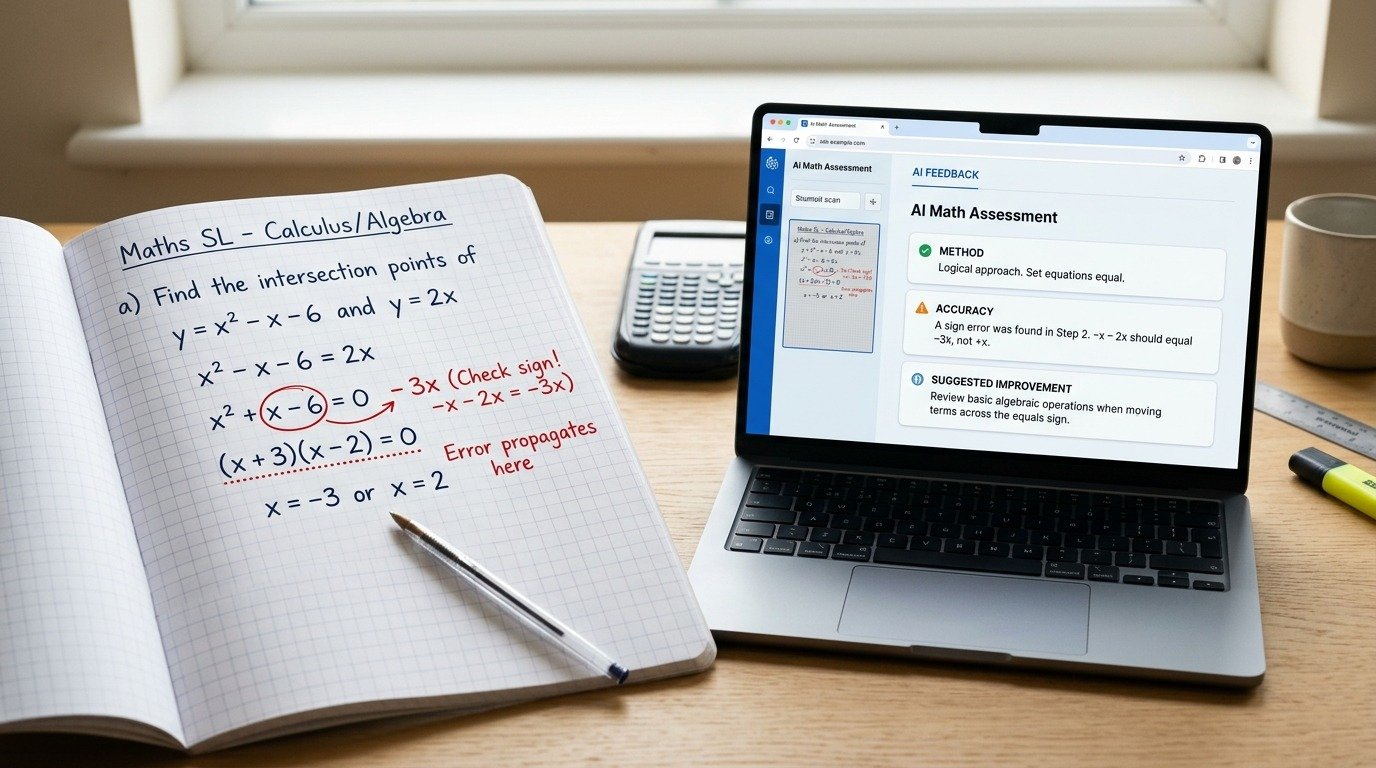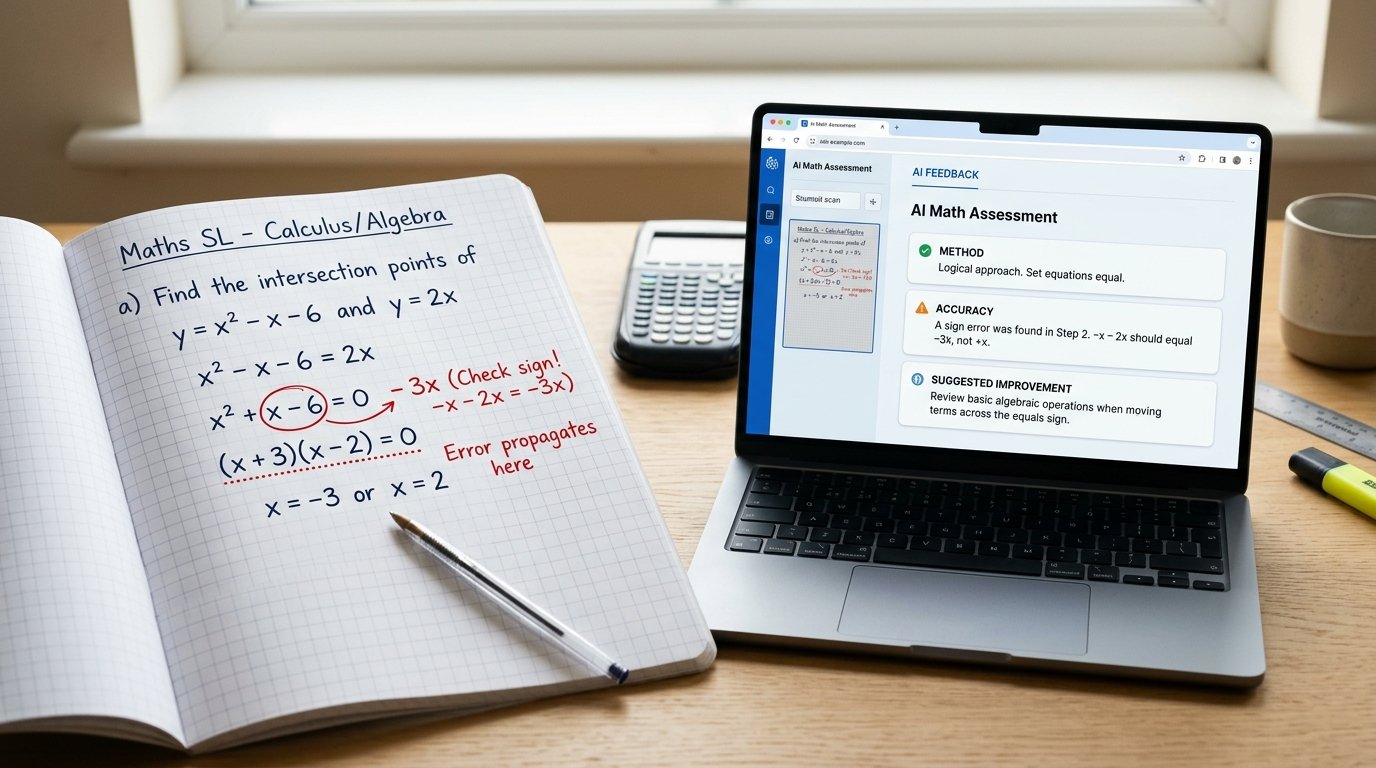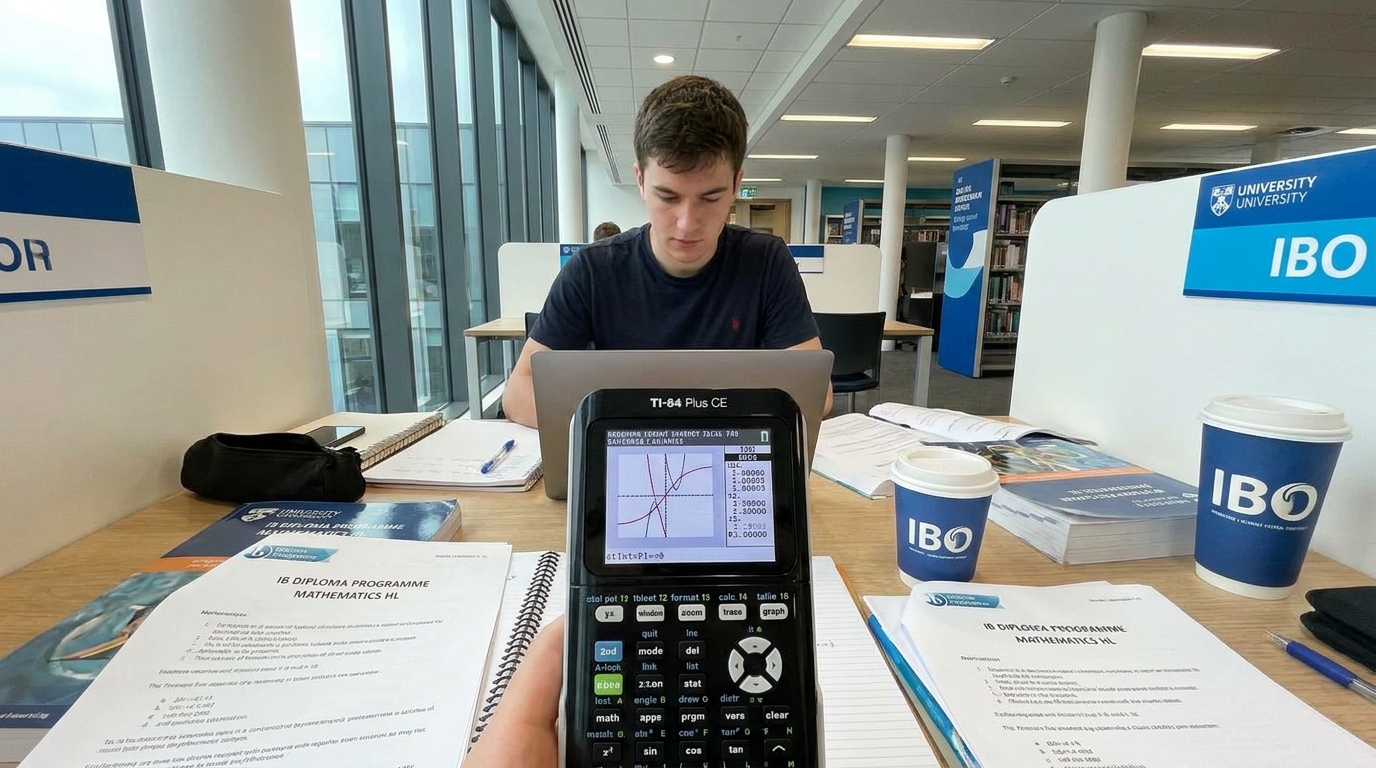
Your graphing calculator is one of the most powerful tools available in IB maths calculator, but owning a calculator and using it effectively are two different things. Students who understand calculator functions can solve problems faster, reduce errors, verify answers, and approach exams with greater confidence. Whether you study Analysis and Approaches (AA) or Applications and Interpretation (AI), developing calculator skills should be an essential part of your revision strategy.
Table of Contents
Why Calculator Skills Matter in IB Maths
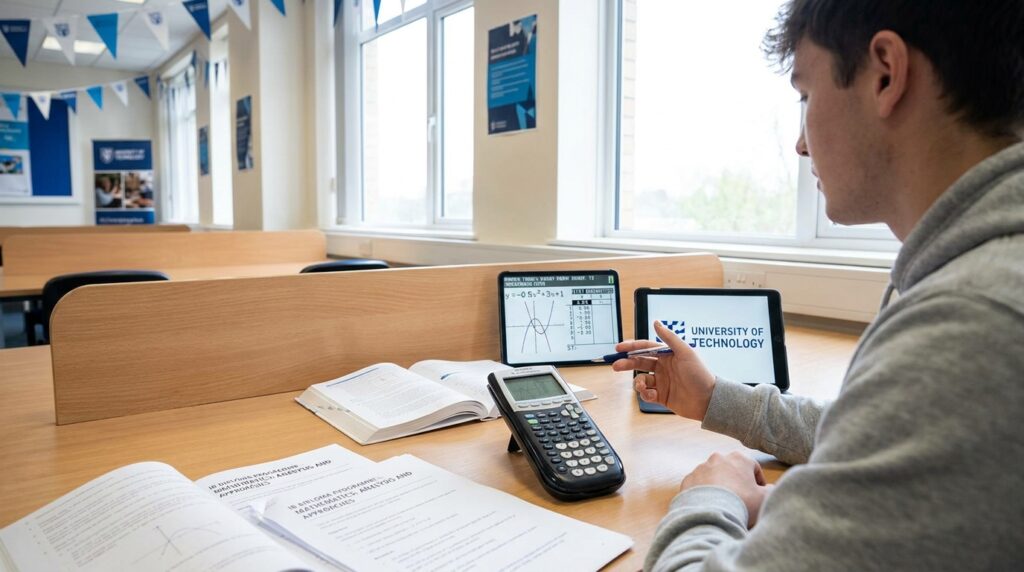
Many students spend hundreds of hours revising mathematics but only a few hours learning their calculators.
This is a mistake.
In IB Mathematics, calculators are not simply devices for arithmetic. They are mathematical tools that can help with:
- Graphing functions
- Solving equations
- Statistical analysis
- Regression modeling
- Matrix operations
- Probability calculations
- Numerical methods
Students who use calculators efficiently often save valuable exam time and reduce avoidable mistakes.
Which Calculator Is Best for IB Maths?
The most commonly used graphing calculators include:
TI-Nspire CX II
Popular among both AA and AI students due to its advanced capabilities and intuitive interface.
TI-84 Plus CE
Widely used and well-supported with many educational resources available.
Casio CG50
A strong alternative that offers excellent graphing functionality and exam-approved features.
The best calculator is usually the one you know how to use confidently.
The Biggest Calculator Mistake Students Make
Many students only use their calculator for basic arithmetic.
As a result, they miss opportunities to:
- Verify answers
- Analyze data quickly
- Visualize functions
- Solve equations efficiently
Your calculator should become an active part of your mathematical toolkit.
Essential Calculator Skills Every IB Student Should Learn
Graphing Functions
Graphing helps students:
- Understand transformations
- Identify intercepts
- Estimate solutions
- Visualize behavior
Being able to interpret graphs quickly is particularly valuable during exams.
Solving Equations Numerically
Many calculators can find numerical solutions efficiently.
This is useful when algebraic methods become lengthy or complex.
However, students should still understand the mathematics behind the solution.
Statistical Calculations
Students should know how to calculate the following:
- Mean
- Median
- Standard deviation
- Correlation coefficients
- Regression equations
These functions are especially important for AI students.
Working with Lists and Data
Efficient data entry can save significant time during examinations.
Practice entering and organizing data accurately.
Identify the Topics Where Calculator Skills Matter Most
Not every student struggles with the same areas.
The Math Skill Scanner helps identify strengths and weaknesses across key IB maths topics, allowing you to focus your calculator practice where it can have the greatest impact.
This makes revision more targeted and efficient.
Calculator Skills for AA Students
Students studying Analysis and Approaches should focus on the following:
Function Analysis
Understanding graph behaviour and key features.
Numerical Methods
Approximating solutions when exact methods are difficult.
Calculus Applications
Verifying derivatives, integrals, and graphical interpretations.
Equation Solving
Checking algebraic solutions quickly.
Although AA emphasizes mathematical reasoning, calculator proficiency still provides a significant advantage.
Calculator Skills for AI Students
Applications and interpretation students often rely more heavily on technology.
Key areas include:
Statistics
Efficient use of statistical functions.
Regression Analysis
Interpreting relationships between variables.
Financial Mathematics
Calculating interest and investment growth.
Mathematical Modeling
Exploring real-world scenarios through technology.
Strong calculator skills can dramatically improve performance in AI examinations.
Common Calculator Mistakes
Entering Data Incorrectly
Small input errors often lead to incorrect conclusions.
Blindly Trusting Outputs
Technology can produce results, but interpretation remains the student’s responsibility.
Forgetting Calculator Settings
Incorrect modes can cause avoidable mistakes.
Common issues include:
- Degrees vs. radians
- Graph window settings
- Statistical configurations
Waiting Until Exam Season
Calculator skills should be developed throughout the course.
How to Practice IB Maths Calculator Skills
The best approach is to integrate calculator use into regular revision.
For each topic:
- Solve questions manually.
- Use the calculator to verify results.
- Explore alternative approaches.
- Review calculator functions used.
Over time, efficiency improves naturally.
Why Calculator Confidence? Reduces Exam Stress
Students often become anxious when unfamiliar calculator functions are required during exams.
Confidence comes from repetition.
When calculator operations become automatic, more mental energy can be devoted to problem-solving and interpretation.
This often improves both speed and accuracy.
Strengthen Calculator-Based Topics Through Practice
Once you’ve identified areas that need improvement, use IB Practice Questions to develop confidence with exam-style problems that require calculator skills and mathematical reasoning.
Regular practice is the fastest route to mastery.
A Calculator Training Plan
Week 1
Review basic functions and settings.
Week 2
Practice graphing and equation solving.
Week 3
Focus on statistics and probability functions.
Week 4
Integrate calculator use into full past papers.
This structured approach helps students build confidence gradually.
Exam-Day Calculator Tips
Check Settings Before the Exam
Verify:
- Angle mode
- Graph settings
- Battery level
Use Calculator Features Strategically
Technology should support reasoning, not replace it.
Verify Answers
When possible, use multiple methods to confirm solutions.
Stay Calm
If a calculator issue occurs, focus on the mathematics you understand rather than panicking.
Frequently Asked Questions About IB Maths Calculator
Which calculator is best for IB Maths?
The TI-Nspire CX II, TI-84 Plus CE, and Casio CG50 are among the most popular options. The best choice is often the calculator you know how to use effectively.
Do AA students need strong calculator skills?
Yes. Although AA emphasizes mathematical reasoning, calculator proficiency improves efficiency and accuracy.
Can calculator skills improve exam scores?
Absolutely. Faster calculations, improved verification, and better data analysis often translate into stronger exam performance.
Final Thoughts
Your graphing calculator is one of the most valuable tools available in IB mathematics.
Students who learn to use it effectively gain several advantages:
- Faster problem-solving
- Improved accuracy
- Better data analysis
- Greater confidence
However, calculator skills should complement mathematical understanding, not replace it.
Start by identifying your strongest and weakest topics with the Math Skill Scanner and reinforce your understanding through targeted work on IB Practice Questions.
The combination of strong mathematical knowledge and effective calculator use can make a significant difference when exam day arrives.
Author Bio
Mathzem helps IB Mathematics students succeed in Analysis and Approaches (AA) and Applications and Interpretation (AI) through structured revision resources, targeted practice questions, exam strategies, and practical study guidance.