Many IB math revision techniques students believe math success comes from natural talent.
But when you talk to students who score 6s and 7s, a different pattern appears.
They don’t just study more.
They study smarter.
High scorers focus on methods that maximize understanding, retention, and exam performance.
Here you will learn revision techniques that consistently help IB students succeed.
Table of Contents
1. Active Learning Instead of passive Reading
One of the biggest mistakes students make is spending too much time reading notes.
Math is not a subject you can master by reviewing theory.
High-scoring students spend most of their study time solving problems.
A strong revision session should include:
- Solved exam-style questions
- Practicing mixed-up problems
- Applying formulas to real questions
If your revision feels comfortable, you are probably not practicing enough.
2. Learn from mistakes
Top students treat mistakes as valuable feedback.
Instead of moving on quickly after checking the answers, they analyze what was wrong.
Ask yourself:
- Did I misunderstand the question?
- Did I apply the wrong formula?
- Was it a calculation error?
- Did I run out of time?
Keeping track of mistakes prevents repeating them during exams.
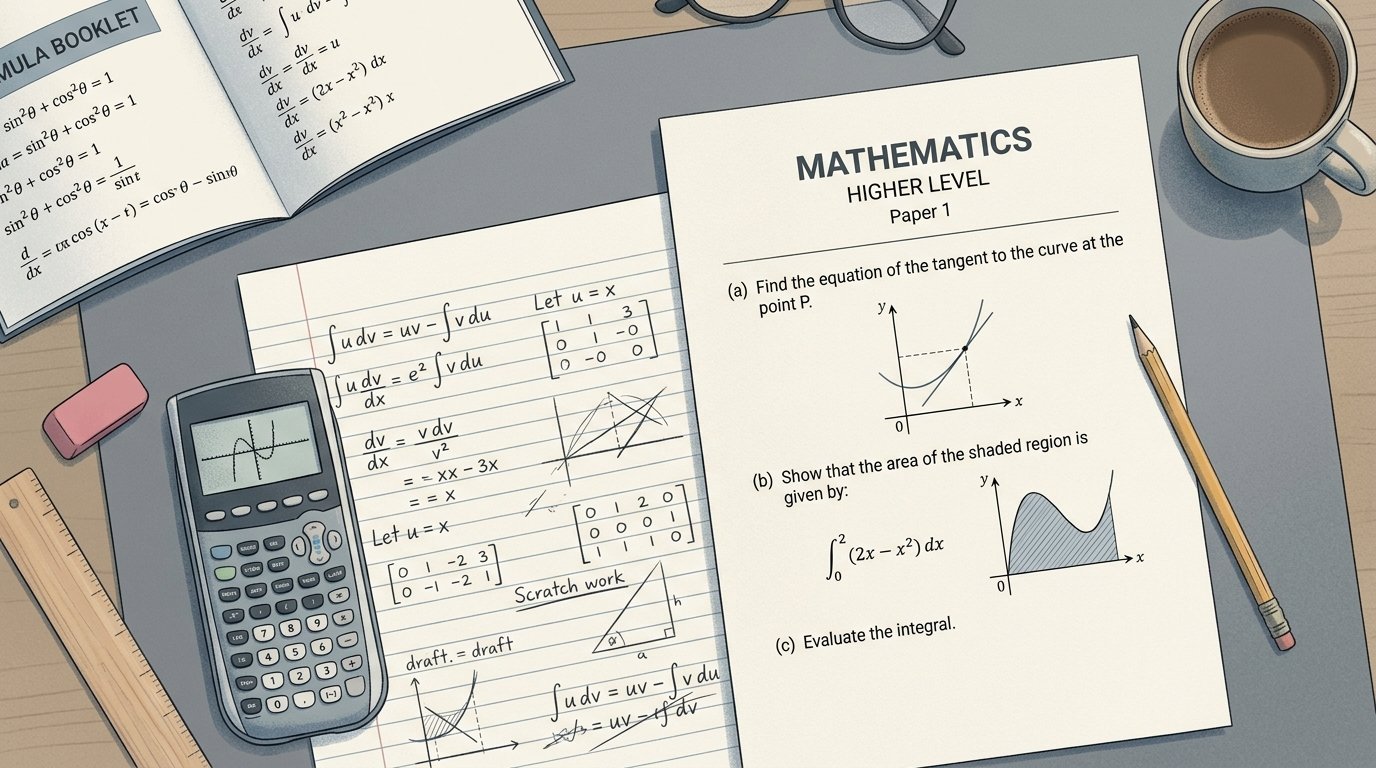
3. Use Your Past Papers Strategically
Past papers are essential for IB Math revision techniques.
High scorers don’t solve them randomly.
They follow a structured approach:
- Start with topic-based questions.
- Move to mixed question sets.
- PRACTICING FULL TIME EXAM PAPER
This progression builds both understanding and exam confidence.
4. Focus on Weak Topics First
Many students revise topics they already understand.
High scorers do the opposite.
They identify weak areas early and spend extra time improving them.
Examples of common weak areas include:
- Calculus applications
- Algebraal manipulation
- Probability questions
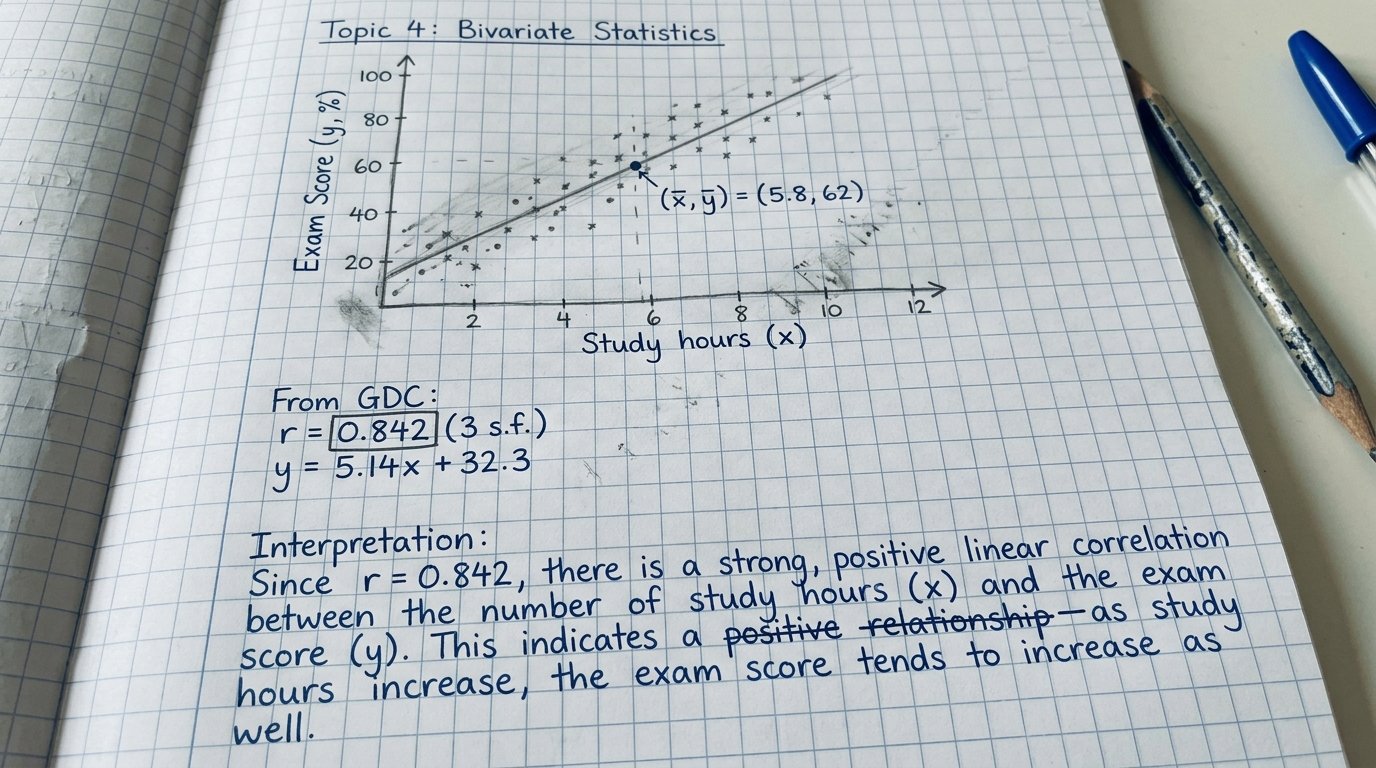
- Statistical interpretation
Improving weak areas often produces the largest score increases.
5. Practice Explaining Your Thinking
IB Math exams reward clear reasoning.
When solving problems, try to explain each step as if you were teaching someone else.
This is to help you:
- Understand the logic behind these methods
- Improve mathematical communication
- Reduce careless errors
Teaching a concept is one of the most effective ways to learn it.
6. Use short, consistent study sessions
Long study sessions often lead to fatigue and reduced focus.
High-performing students usually study in shorter focused sessions.
For example,
- 60–90 minutes per session
- Clear goals for each session
- Regular breaks to maintain concentration
Consistency over weeks is more effective than occasional long study days.
7. Simulate real exam conditions.
In the final weeks before exams, practice under realistic conditions.
This means that:
- Time yourself strictly
- Working without notes:
- Completed the full exam papers
This type of practice builds confidence and improves time management.
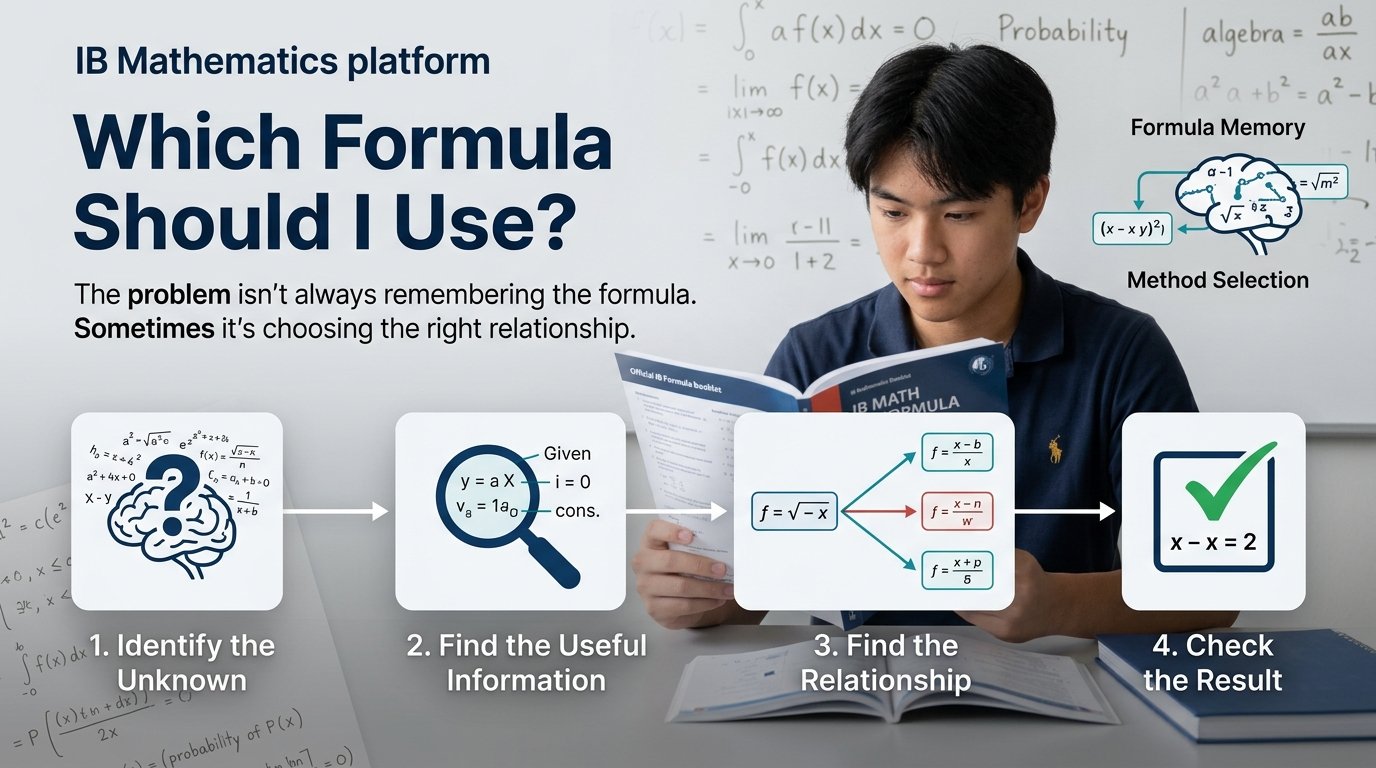
8. Review Key Formulas Regularly
Although IB exams often provide formula booklets, you still need to know:
- When to apply formulas?
- How does formula relate to concepts?
- How to manipulate them in complex problems?
Quick weekly reviews reinforce these connections.
9. Stay Organized With a Study Plan
Successful students rarely study randomly.
They use structured revision plans that include:
- Weekly topic goals
- Scheduled past paper practice
- Time for reviewing mistakes
Planning reduces stress and keeps revision consistent.
Need a structured IB Math Revision System?
If you want a clear system instead of planning everything yourself, our IB Math membership includes:
- Structured revision roadmap for AA and AI courses
- Topic-by-topic practice frameworks
- Past paper on solving strategies
- IA support and guidance
You can explore our full support system here.
A structured revision approach can dramatically improve your IB Math performance.
Frequently Asked Questions About IB Math Revision Techniques
1. What is the most effective way to review IB Math?
Active problem solving and past paper practice are the best revision methods.
2. How many hours should I study for IB Math each week?
Most students benefit from 4–8 focused hours per week, depending on their level and exam timeline.
3. Is it better to study alone or with friends?
Both can work. Studying alone helps you focus, while group study can explain difficult concepts.
4. How early should I start serious revision?
Ideally 2–3 months before exams, with consistent weekly practice.
5. How do high scorers prepare differently?
They focus on solving exam-style problems, analyzing mistakes carefully, and practicing under timed conditions.
Conclusion
Achieving a high score in IB Math is not just about intelligence. It is about using the right revision techniques consistently.
Focus on active practice, learn from your mistakes, and use past papers strategically. Short, regular study sessions combined with structured planning can make revision more effective.
With the right approach, even challenging topics become manageable, and exam performance improves significantly.