Introduction to IB Math Study Schedule
Most IB students pass math because they’re good at math.
They struggle because their revision is random.
One day they revise calculus.
Next week they panic about statistics.
Then they do a past paper without reviewing mistakes.
A good study schedule removes chaos.
It gives you structure, direction, and confidence.
Here’s how to build one properly.
Table of Contents
Step 1: Know Your Course (AA vs AI)
Before planning, understand what needs more time.
AA students often need:
- Algebra practice
- Calculus drills
- Proof-style reasoning
AI students often need:
- Statistics practice
- Modeling questions
- Calculator fluency
Your schedule should reflect your course strengths and weaknesses.
Step 2: Decide Your Study Frequency
Be realistic.
For most IB students:
- During the school term: 3–4 sessions per week
- During exam season: 5–6 sessions per week
Each session should be 60–90 minutes.
Longer is not better. Consistency is.
Step 3: Use the 3-Block Study Method
Every study session should include three parts:
1. Concept Review (20–30 minutes)
- Revisit theory
- Review class notes.
- Summarize formulas
Keep it focused.
2. Active Practice (30–45 minutes)
- Solve textbook or exam-style questions.
- Mix simple tasks and moderate problems.
- Avoid just reading solutions.
Math improves through doing.
3. Error Review (15–20 minutes)
- Analyze mistakes
- Write corrections
- Identify patterns
This is where improvement actually happens.
Step 4: Build a Weekly Study Structure
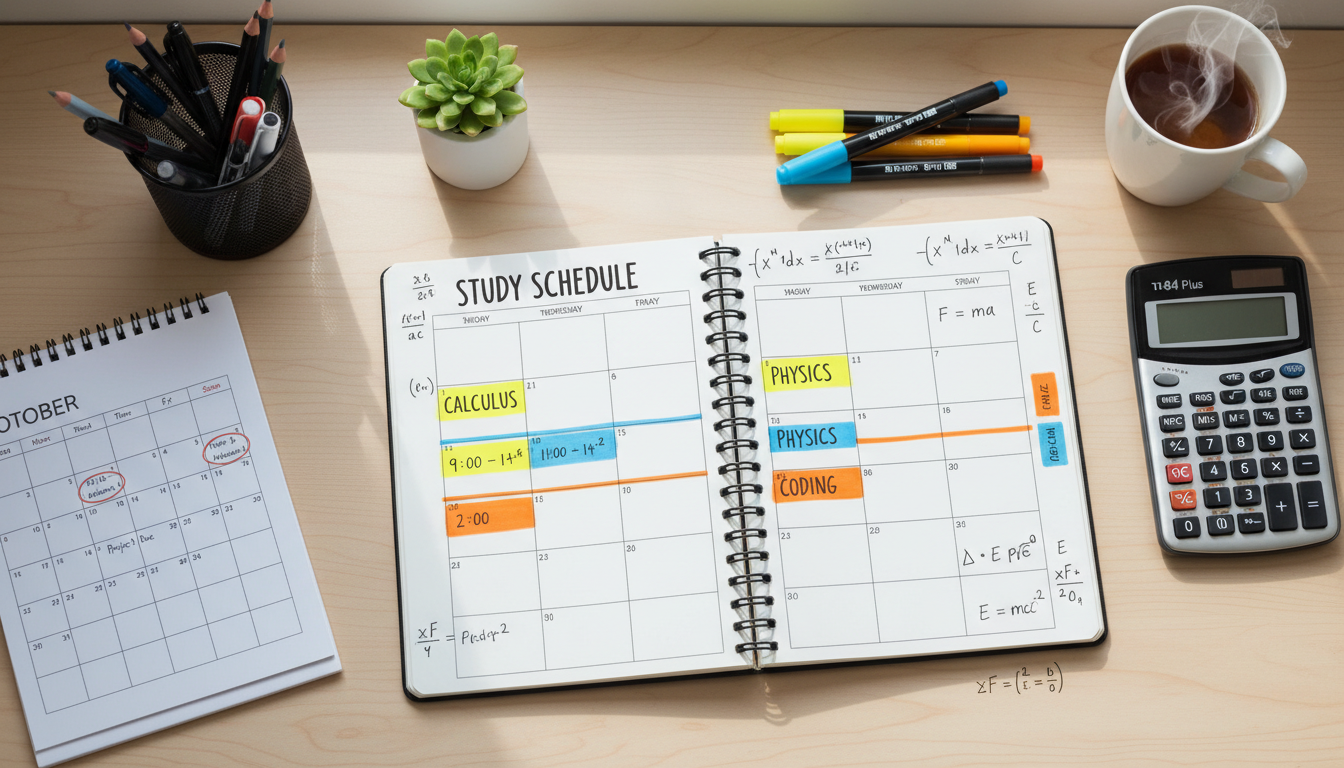
Here’s a sample weekly schedule during the school term:
Monday: Functions practice
Wednesday: Statistics or calculus
Friday: Mixed topic revision
Sunday: Past paper questions + review
The key is rotation.
Don’t study only what feels comfortable.
Step 5: Add Past Papers Strategically
Past papers are powerful, but timing matters.
Early Phase
- Do topic-by-topic past questions.
Mid Phase
- Do mixed section practice.
Final 6–8 Weeks Before Exams
- Full-time papers
- Strict exam conditions
- Deep review of mark schemes
Never do a past paper without reviewing it carefully.
Step 6: Plan Monthly Focus Areas
Instead of random revision, assign themes.
Example:
Month 1 → Algebra & Functions
Month 2 → Statistics & Probability
Month 3 → Calculus & Mixed Practice
This step prevents last-minute cramming.
Step 7: Protect Your Weakest Area
Be honest.
Most students avoid what they struggle with.
If vectors confuse you, schedule them weekly.
If hypothesis testing feels unclear, revisit it often.
Improvement comes from discomfort.
Step 8: Adjust During Exam Season
During the final revision:
- Increase timed practice
- Reduce passive note reading
- Simulate exam pressure
- Track time per question
You are training for performance, not just understanding.
Common Study Schedule Mistakes
- Studying only before tests
- Overloading weekends
- Ignoring review sessions
- Doing practice without checking answers
- Not using the calculator effectively (AI students especially)
Your schedule should reduce stress, not create it.
Example Daily IB Math Study Session (90 Minutes)
Here’s a practical example:
0–20 min → Review derivative rules
20–60 min → Solve 10 mixed calculus problems
60–75 min → Check solutions and correct mistakes.
75–90 min → Summarize key insights.
Simple. Focused. Effective.
How Early Should You Start?
Ideally:
- Light weekly revision from Year 1
- Structured plan 4–5 months before exams
- Intensive revision 2 months before finals
The earlier you build consistency, the easier exam season becomes.
Need a Structured IB Math Study Schedule Plan?
If you want a ready-made structure instead of building everything from scratch, our IB Math membership includes:
- Topic-by-topic study roadmaps
- 30-day structured revision plans
- IA guidance
- Past paper breakdown strategies
- Targeted practice for AA and AI
Instead of guessing what to study next, follow a clear system:
https://mathzem.com/membership-pricing/
Consistency beats cramming. A structured plan beats random effort.
Frequently Asked Questions About IB Math Study Schedule
1. How many hours per week should I study IB Math?
During term time, 3–6 focused hours per week is usually enough. This could go up to 7–10 hours during exam season, depending on your level.
2. Should I study IB Math every day?
Not necessarily. 3–5 structured sessions per week are more sustainable and effective than daily burnout.
3. Is it better to revise one topic deeply or mix topics?
Mixing topics improves exam readiness because IB papers combine concepts.
4. When should I start past papers?
Start topic-based past questions early. Move to full-time papers 6–8 weeks before exams.
5. How do I stay consistent with my schedule?
Keep sessions short, track progress weekly, and review mistakes regularly. Consistency comes through manageable routines.