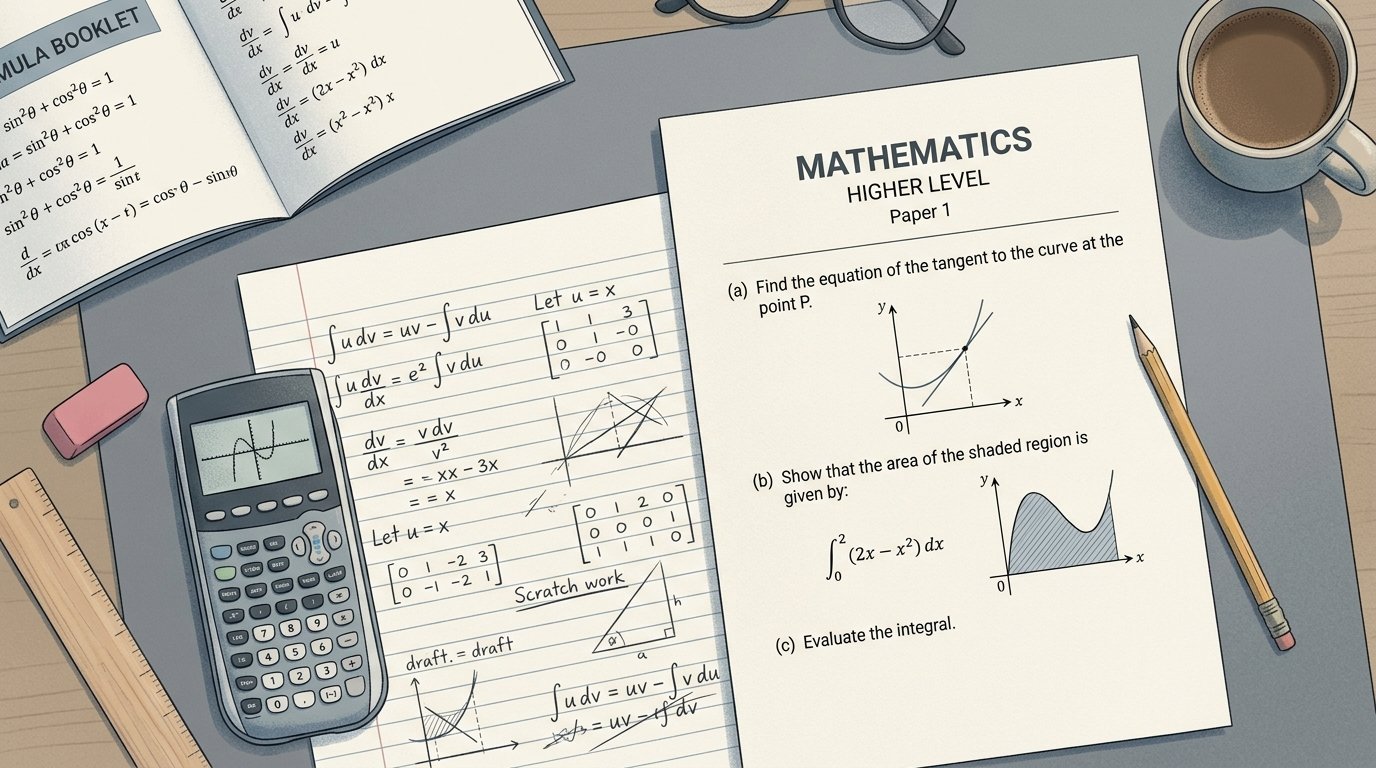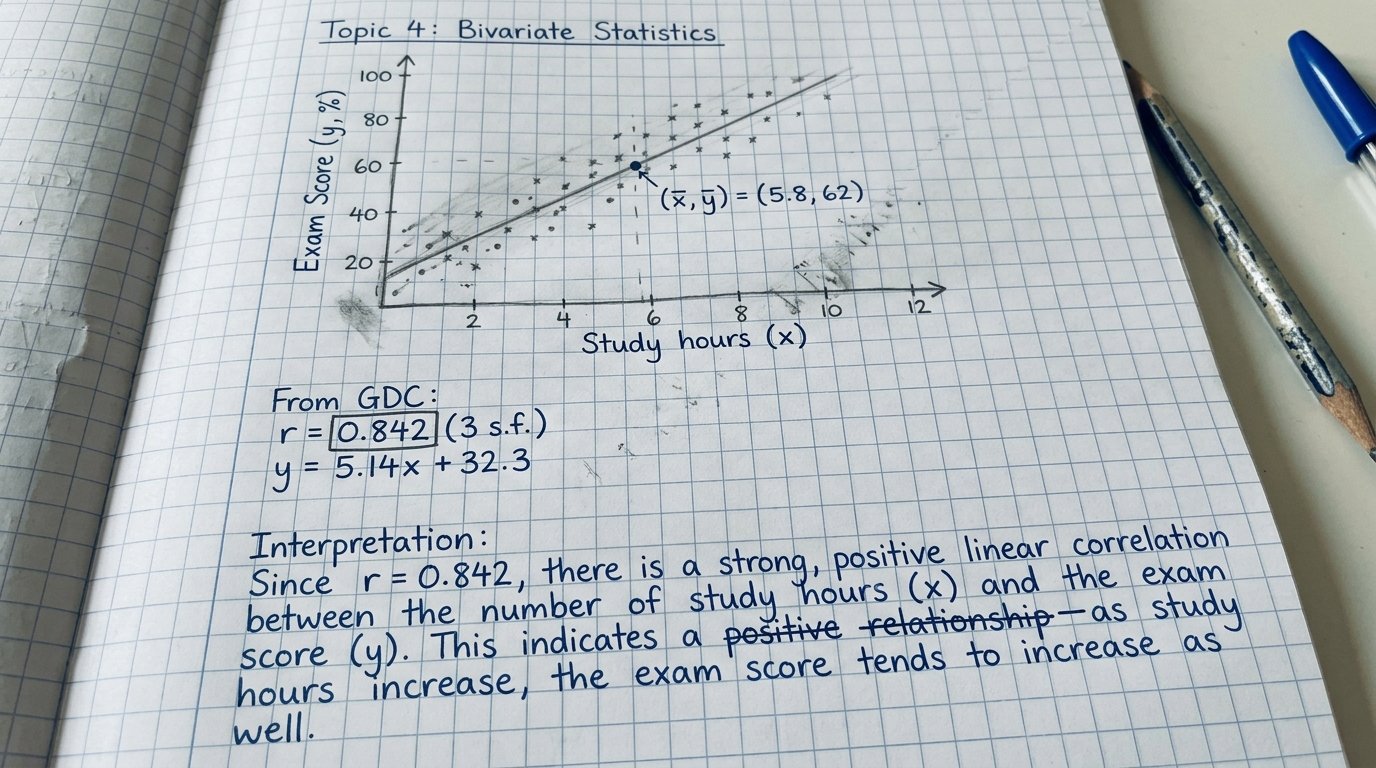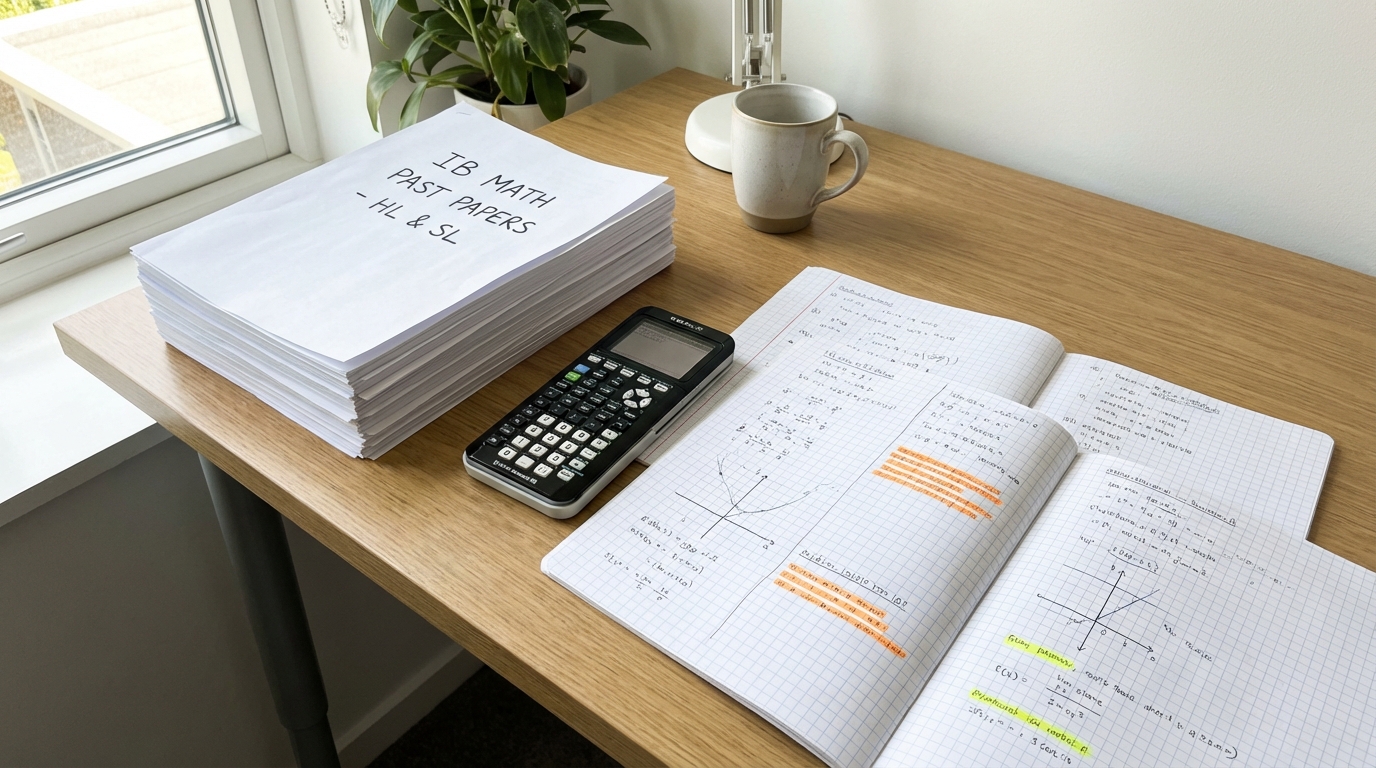
Most IB students know they should practice past papers.
But many use them the wrong way.
They solve questions, check answers quickly, and move on. Unfortunately, this approach doesn’t improve performance very much.
Used correctly, past papers can help you:
- Understand exam patterns
- Improve problem-solving speed
- Identify weak topics
- Build confidence before the exam
Let’s look at how to use IB Math past papers the right way.
Table of Contents
Why IB Math Past Papers Are So Important
IB exams follow recognizable patterns.
Topics repeat.
Question styles repeat.
Common mistakes repeat.
Past papers allow you to:
- Experience real exam difficulty
- Practice time management
- Learn how questions are structured
This is why high-scoring students rely heavily on past papers during revision.
Step 1: Start With Topic-Based Practice
If you begin with full exam papers immediately, you may feel overwhelmed.
Instead, start with topic-focused questions.
For example:
- Practice only calculus questions
- Then try algebra questions
- Then statistics or probability
This helps strengthen your understanding before attempting full exams.
Step 2: Transition to Mixed Practice
After reviewing individual topics, begin solving mixed problems.
Real IB exams combine many topics in one paper.
Mixed practice helps you learn to:
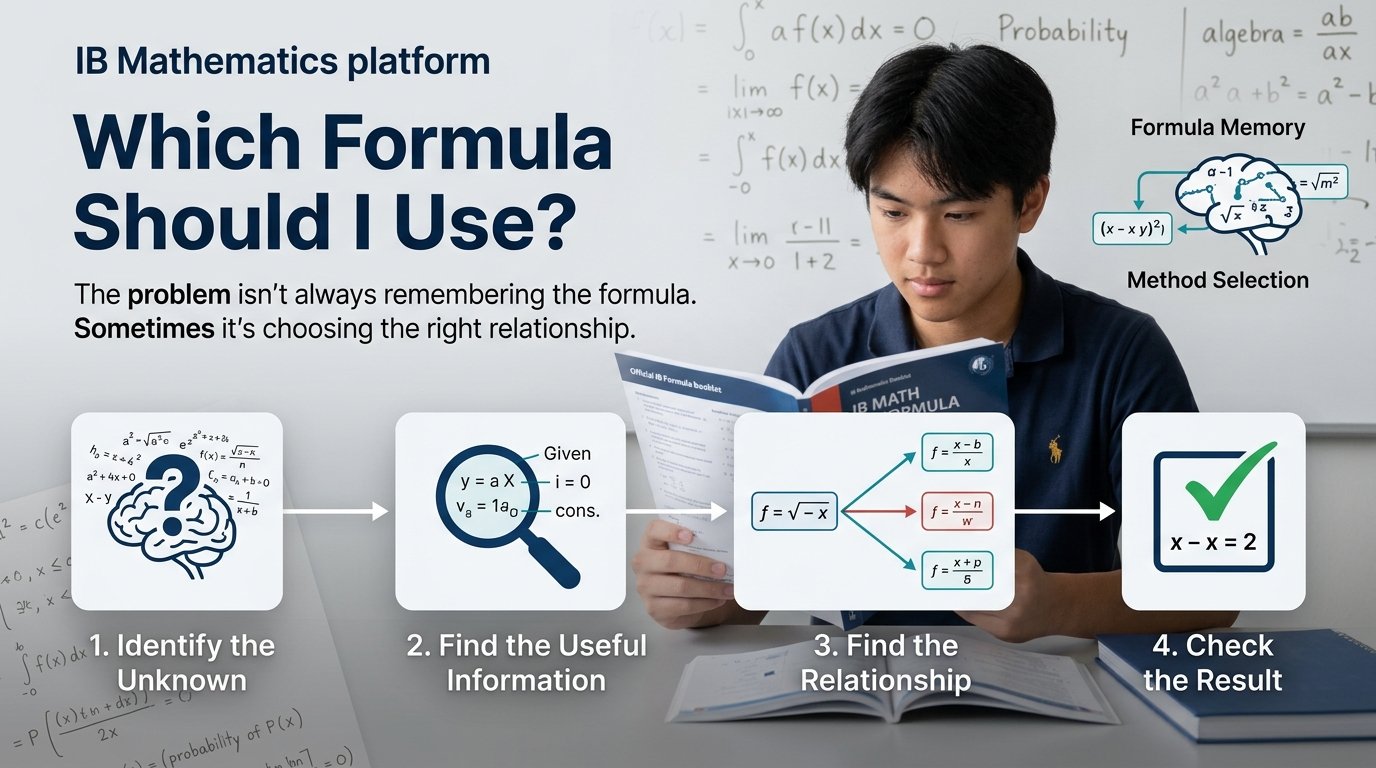
- Recognize which method to apply
- Switch between topics quickly
- Build flexibility in problem solving
This stage prepares you for real exam conditions.
Step 3: Simulate Real Exam Conditions
About 4–6 weeks before your exam, begin full timed papers.
During these sessions:
- Set the exact exam time limit
- Avoid checking notes
- Use only allowed calculators
- Work in a quiet environment
Treat these sessions like real exams.
Step 4: Spend Time Reviewing Mistakes
This step is where most improvement happens.
After completing a paper:
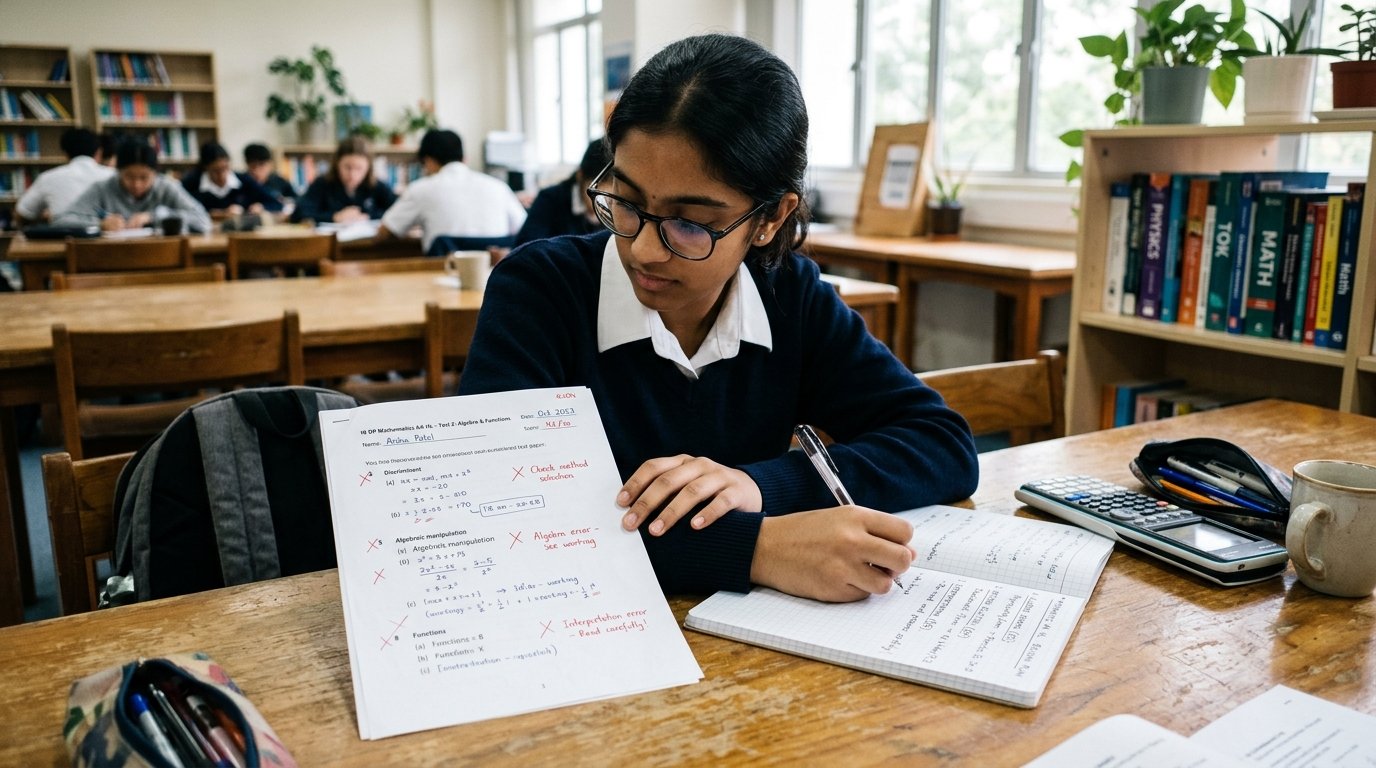
- Mark it carefully using the mark scheme
- Identify incorrect questions
- Rewrite full solutions
- Understand why your answer was wrong
Simply checking answers is not enough.
You must analyze mistakes deeply.
Step 5: Track Your Weak Areas
Keep a small notebook or document listing common errors.
Examples might include:
- Algebra manipulation mistakes
- Misinterpreting word problems
- Incorrect calculator usage
- Running out of time
Review this list regularly so the same mistakes do not repeat.
How Many Past Papers Should You Complete?
A good target before the exam is:
- 4–6 full papers for SL students
- 6–8 full papers for HL students
Quality matters more than quantity.
Careful correction is more valuable than rushing through many papers.
Best Time to Start Past Paper Practice
A common question is when to begin.
Here is a simple guideline:
Early revision: Topic-based questions
Mid revision: Mixed practice sets
Final month: Full timed papers
This gradual approach builds both knowledge and exam confidence.
Common Past Paper Mistakes
Many students reduce the effectiveness of past papers by:
- Checking solutions too early
- Skipping difficult questions
- Not reviewing mistakes
- Practicing without time limits
- Doing too many papers too quickly
Past papers are not just practice. They are a learning tool.
Past Paper Strategy for AA vs AI Students
Different courses benefit from slightly different approaches.
AA Students
Focus on:
- Algebra manipulation
- Calculus problem solving
- Proof-style reasoning
AI Students
Focus on:
- Statistical interpretation
- Modeling problems
- Calculator-based solutions
Understanding your course emphasis helps you practice more effectively.
Recommended Study Session Using Past Papers
A productive revision session could look like this:
30 minutes: Solve exam questions
30 minutes: Continue solving under time pressure
30 minutes: Check answers and correct mistakes
This structure improves both speed and understanding.
Need Help Practicing IB Math Past Papers Effectively?
If you want structured guidance while solving past papers, our IB Math membership provides:
- Step-by-step past paper walkthroughs
- Exam strategy explanations
- Topic-specific practice sessions
- IA guidance and revision support
You can explore the full support system here: https://mathzem.com/membership-pricing/
A clear strategy can make past paper practice far more effective.
Frequently Asked Questions About IB Math Past Papers
1. Are IB Math past papers the best way to revise?
Yes. Past papers help you understand exam style, question patterns, and time management.
2. Should I start with full past papers?
No. Start with topic-based practice first, then move to full exam papers later.
3. How often should I practice past papers?
During the final month before exams, aim for one or two full papers each week.
4. What if I score poorly on early past papers?
That’s normal. Early mistakes help identify weak areas and improve before the final exam.
5. Should I redo past papers?
Yes. Re-solving difficult questions helps reinforce understanding and reduce repeated mistakes.
Conclusion
Past papers are one of the most powerful tools for IB Math AI Hl revision. However, their effectiveness depends on how you use them.
Start with topic-based questions, gradually move to mixed practice, and finally simulate real exam conditions with timed papers. Most importantly, spend time analyzing your mistakes and improving weak areas.
With consistent practice and thoughtful review, past papers can significantly improve your confidence and performance in the IB Math exam.