If you’re taking IB Math AI HL Syllabus guide, you already know it’s not the “easy math.” Higher Level in Applications and Interpretation still demands strong reasoning, solid calculator skills, and the ability to apply math to real-world contexts.
This guide breaks down:
- What’s in the syllabus
- How the course is structured
- What makes HL different from SL
- How the exams are set up
- What you should focus on when studying
Let’s go step by step.
Table of Contents
What Is IB Math AI HL Syllabus Guide?
IB Mathematics: Applications and Interpretation (AI) HL is designed for students who enjoy using math to model real-world problems. It focuses more on statistics, data analysis, modeling, and interpretation than pure algebraic theory.
Compared to Math AA (Analysis and Approaches), AI HL:
- Emphasizes technology use (GDC is essential)
- Focuses heavily on statistics and probability
- Includes real-world modeling
- Still contains calculus and algebra, but applied
AI HL is ideal for students considering degrees in:
- Economics
- Business
- Social sciences
- Psychology
- Data science
- Some engineering pathways
IB Math AI HL Syllabus Topics
The AI HL syllabus is organized into five core topic areas, plus additional HL content.
1. Number and Algebra
This forms the foundation.
You’ll cover:
- Laws of exponents and logarithms
- Sequences and series
- Financial mathematics (interest, loans, annuities)
- Algebraic manipulation
- Complex numbers (HL extension)
What makes HL harder?
More depth in sequences and financial models, plus complex number work.
2. Functions
Functions are central to AI HL.
Topics include:
- Linear, quadratic, cubic, exponential, and logarithmic functions
- Function transformations
- Modeling real-world relationships
- Composite and inverse functions
- Rational functions (HL depth)
You’ll need to interpret graphs and explain what they mean in context.
In AI HL, interpretation matters just as much as calculation.
3. Geometry and Trigonometry
This area focuses on spatial understanding and modeling.
You’ll study:
- Trigonometric ratios and identities
- Radians
- The unit circle
- Vectors (a major HL component)
- 3D geometry
Vectors are especially important at HL. Expect questions involving:
- Vector equations of lines
- Scalar product
- Angle between vectors
- Applications in geometry
Many students find vectors challenging at first, but once you see the structure, they become predictable.
4. Statistics and Probability (Major Focus)
This is where AI HL stands out.
You’ll learn:
- Descriptive statistics
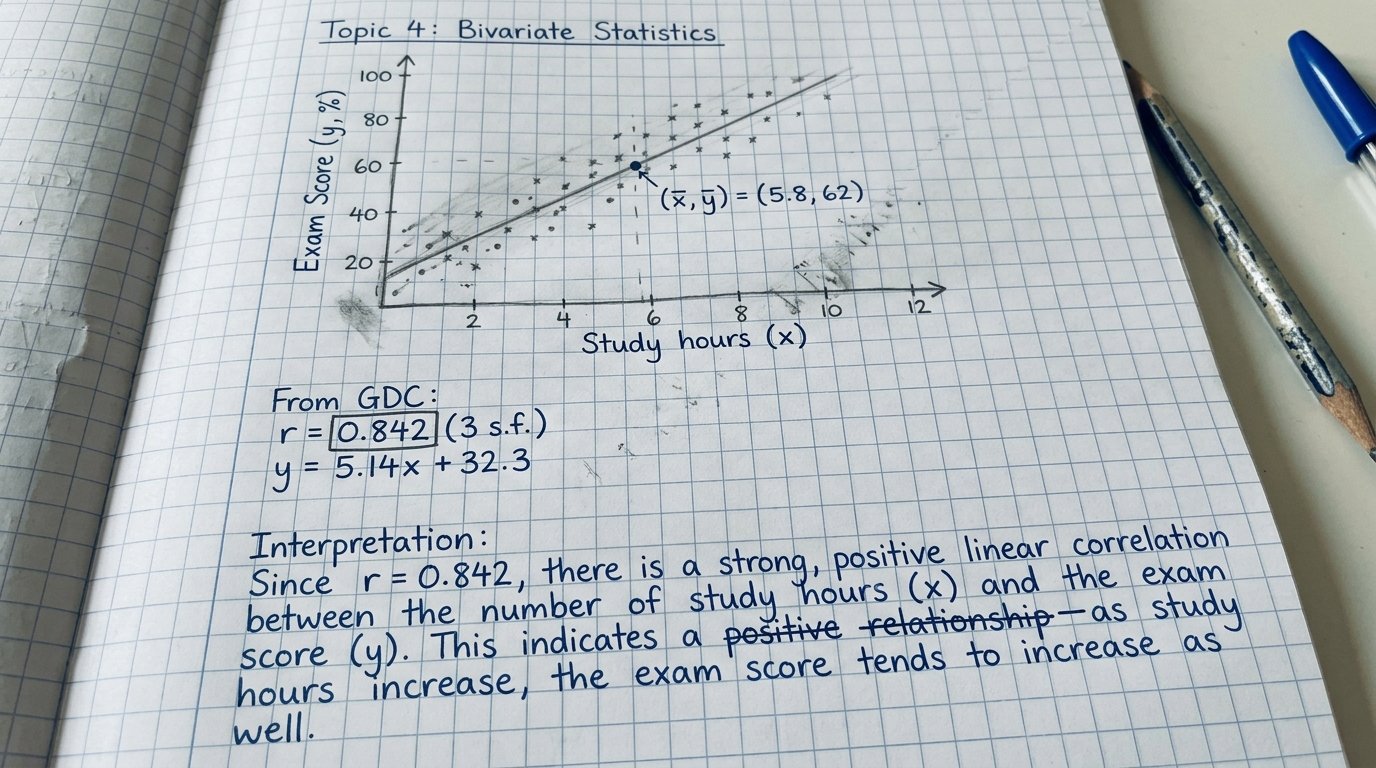
- Regression models
- Correlation
- Probability rules
- Discrete and continuous random variables
- Normal distribution
- Binomial distribution
- Hypothesis testing (HL depth)
HL students go deeper into:
- Statistical tests
- Probability distributions
- Interpretation of data in context
If you’re strong in statistics, AI HL may suit you well.
5. Calculus
Yes, AI HL includes calculus. It’s not as proof-heavy as AA HL, but it is still substantial.
You’ll cover:
- Limits (conceptually)
- Derivatives
- Applications of derivatives
- Integrals
- Area under curves
- Differential equations (HL content)
In AI HL, calculus is often applied to real-world modeling problems rather than abstract proofs.
How AI HL Differs from AI SL
Here’s a simple breakdown:
| Area | AI SL | AI HL |
|---|---|---|
| Statistics | Strong | Very deep |
| Calculus | Basic | Extended + differential equations |
| Vectors | Limited | Major focus |
| Complex Numbers | No | Yes |
| Exam Difficulty | Moderate | High |
HL requires more depth, longer multi-step problems, and stronger interpretation skills.
IB Math AI HL Assessment Structure
Your final grade comes from two components:
1. External Exams (80%)
You sit two main papers:
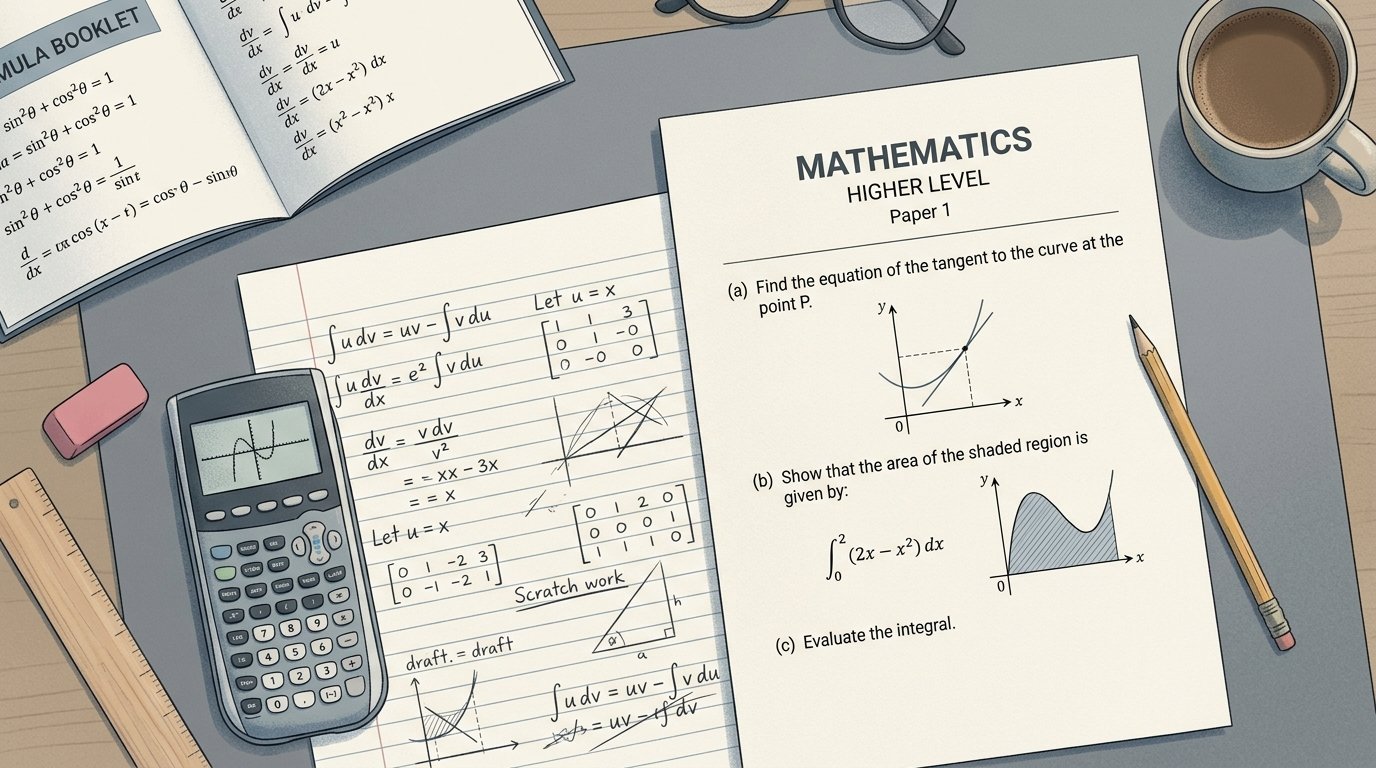
Paper 1
- Short and extended response
- Calculator allowed
- Mix of all topics
Paper 2
- Longer modeling and problem-solving questions
- Heavy calculator use
- Real-world context questions
Both papers test understanding, not just procedures.
2. Internal Assessment (20%)
The IA is an individual exploration.
You choose a math topic, investigate it, and write a report.
In AI HL, good IA topics often involve:
- Statistical modeling
- Real-world data analysis
- Optimization problems
- Predictive modeling
The IA rewards clarity, communication, and reflection, not just complexity.
What Makes AI HL Challenging?
Students usually struggle with:
- Interpreting long word problems
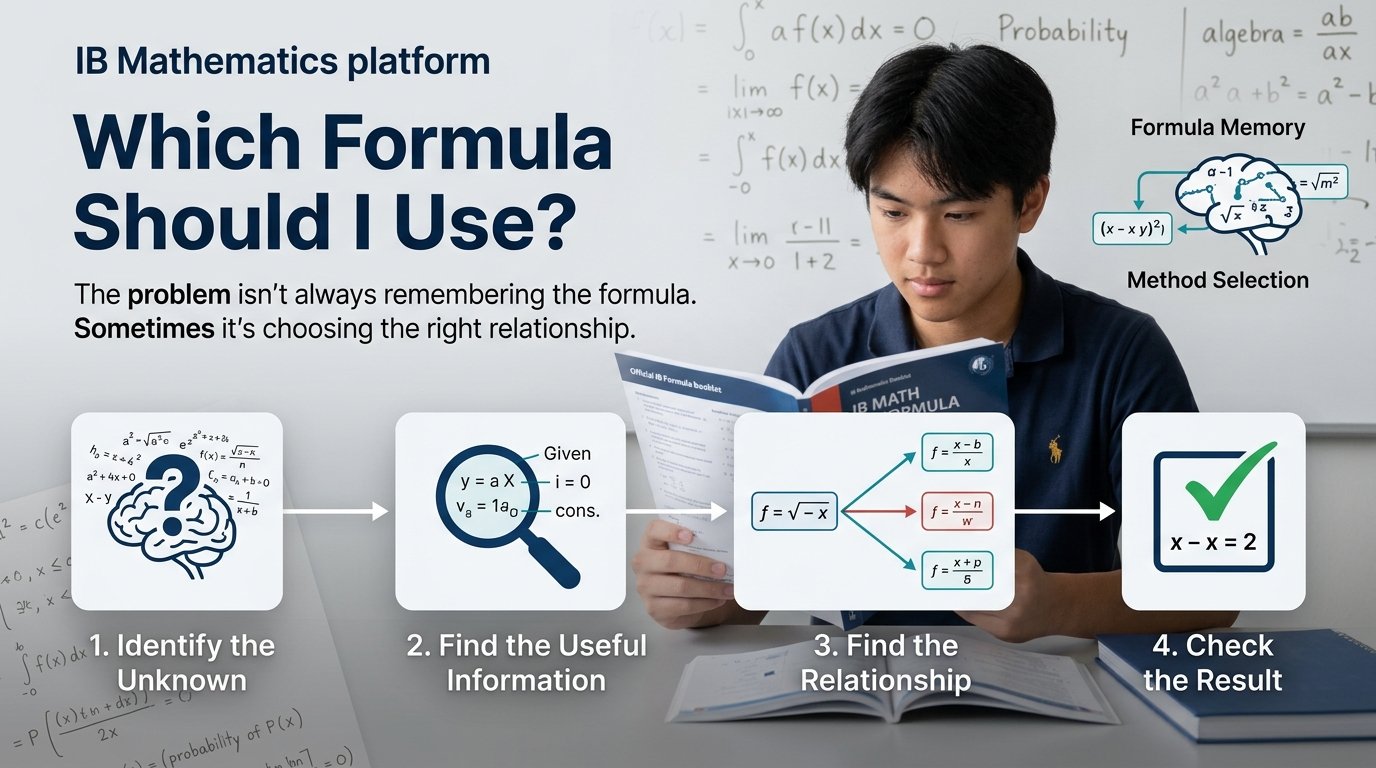
- Knowing which statistical test to use
- Vector geometry
- Managing time in exams
The math itself is manageable. The application is what raises the difficulty.
How to Study IB Math AI HL Effectively
Here’s what works:
1. Master Your GDC
You should know how to:
- Run regressions
- Calculate distributions
- Solve equations numerically
- Graph and analyze intersections
If your calculator skills are weak, AI HL becomes very hard.
2. Practice Mixed Questions
Don’t study topics in isolation. IB exams mix concepts.
For example:
- Calculus + modeling
- Statistics + probability
- Functions + regression
Train yourself to switch thinking modes.
3. Focus on Interpretation
Always ask:
- What does this answer mean?
- What are the units?
- Does this make sense in context?
AI HL rewards explanation.
4. Use Past Papers Strategically
Start topic-based.
Then move to full timed papers.
Review mark schemes carefully. IB wording is very specific.
Is IB Math AI HL Right for You?
AI HL is a strong, respected course. It’s not the “easy option.”
Choose it if:
- You enjoy applied math
- You’re comfortable with statistics
- You like using technology
- You’re heading toward business, economics, or data-related fields
If you prefer abstract proofs and pure algebra, AA HL may suit you better.
Need Structured Support for IB Math AI HL?
If you’re feeling overwhelmed by the syllabus, you’re not alone. AI HL is manageable when you have:
- Clear topic-by-topic guidance
- Structured revision plans
- IA support
- Past paper strategy
- Step-by-step problem breakdowns
If you want focused, structured help instead of random YouTube videos and scattered notes, check out our full support system here:
https://mathzem.com/membership-pricing/
Inside, you’ll find resources built specifically for IB Math students who want to improve efficiently and confidently.
Final Thoughts
IB Math AI HL is about applying mathematics intelligently to real-world problems.
It demands consistency more than raw genius.
If you understand the structure of the syllabus and study strategically, the course becomes far less intimidating.